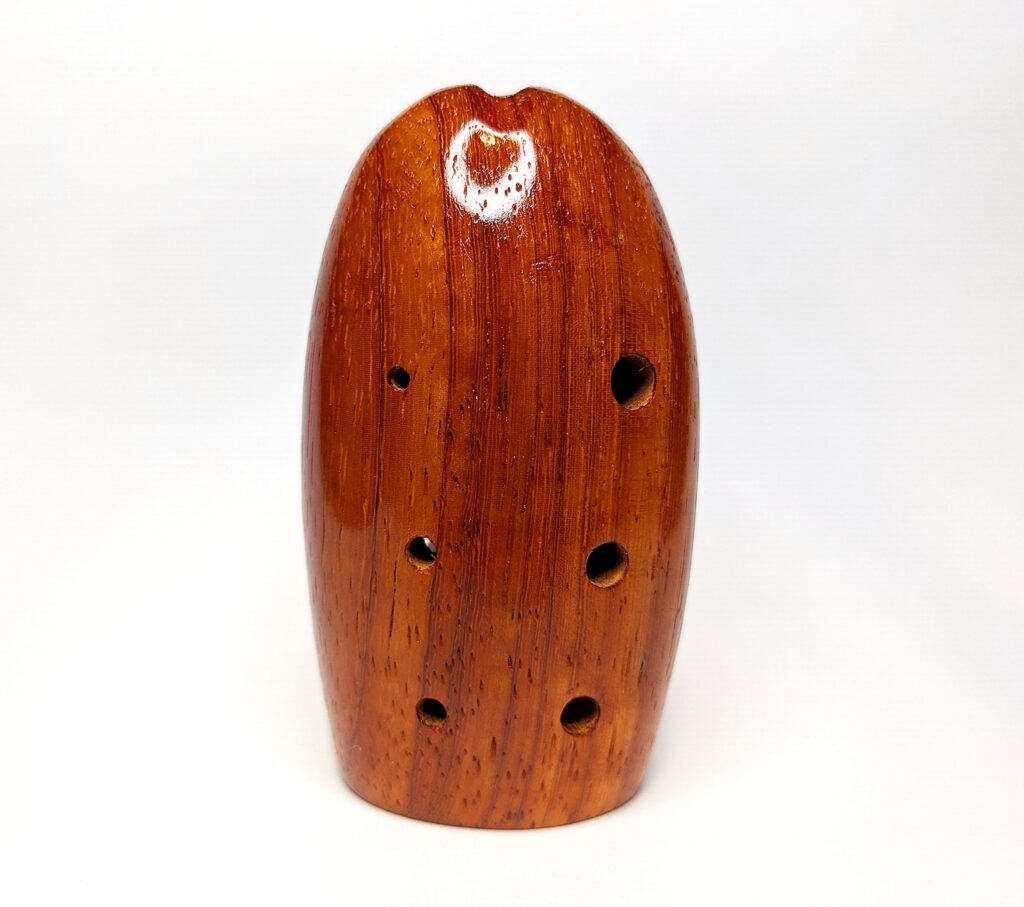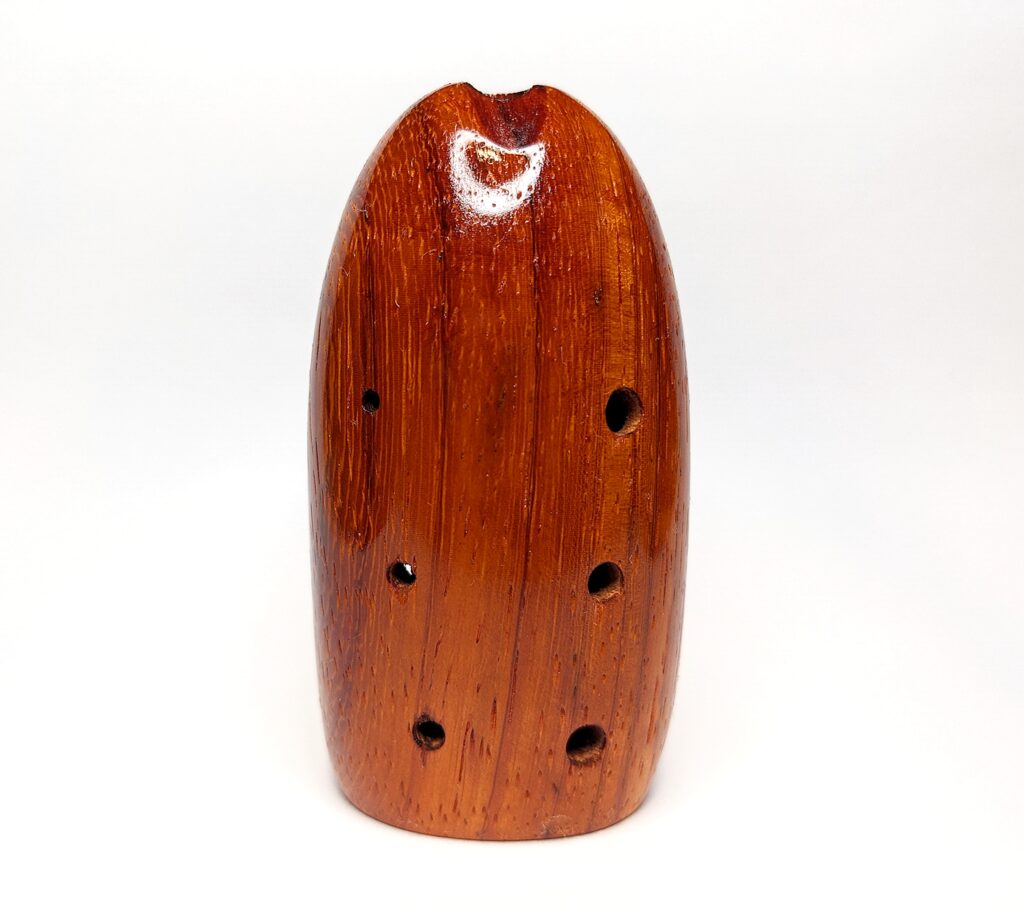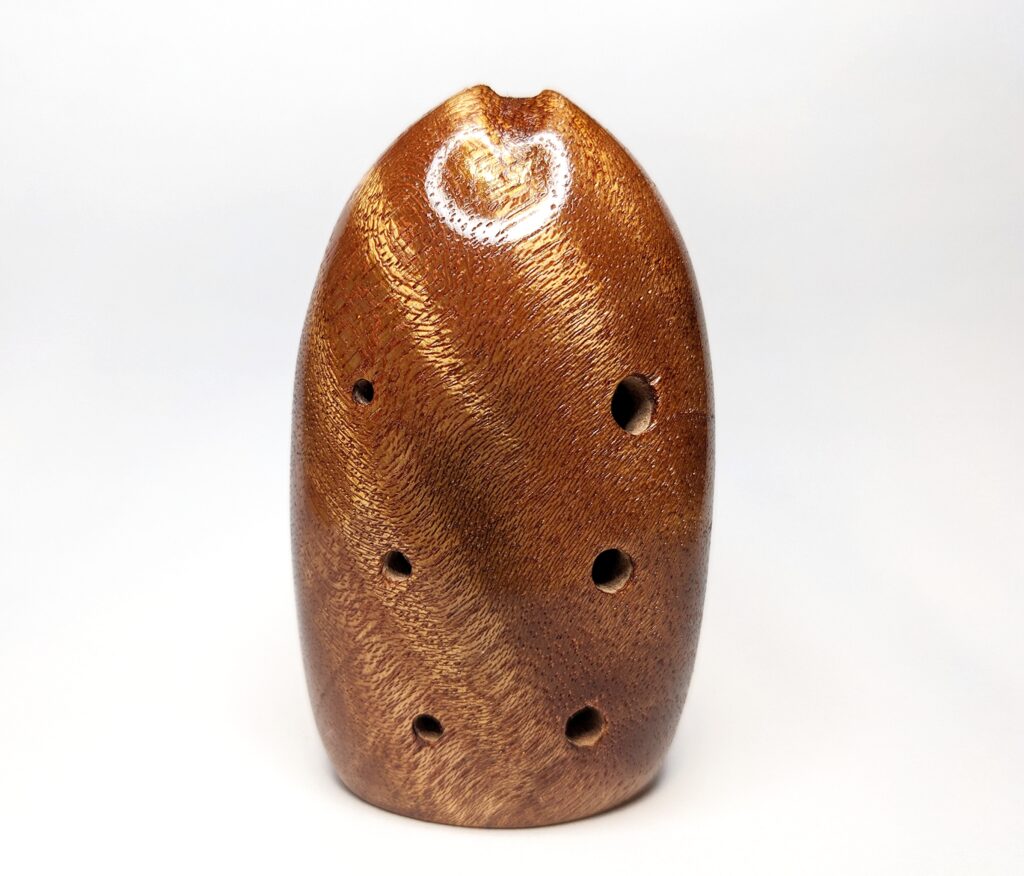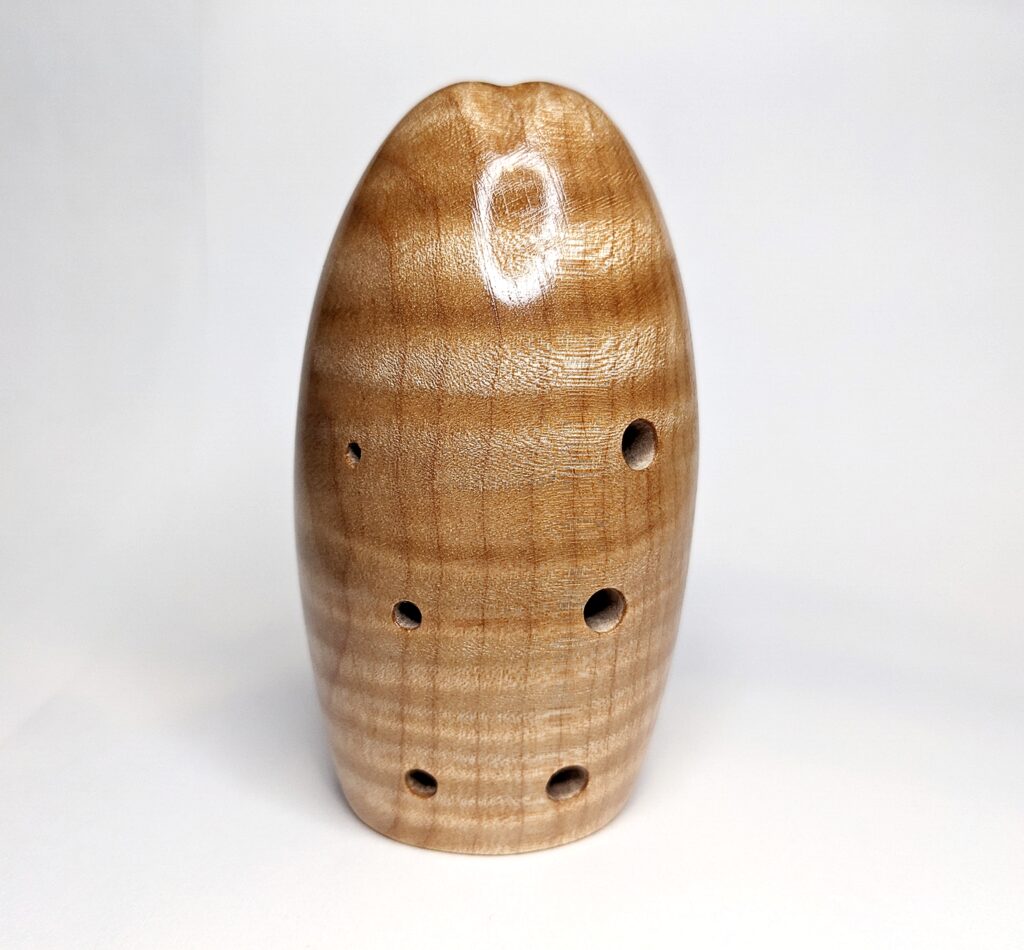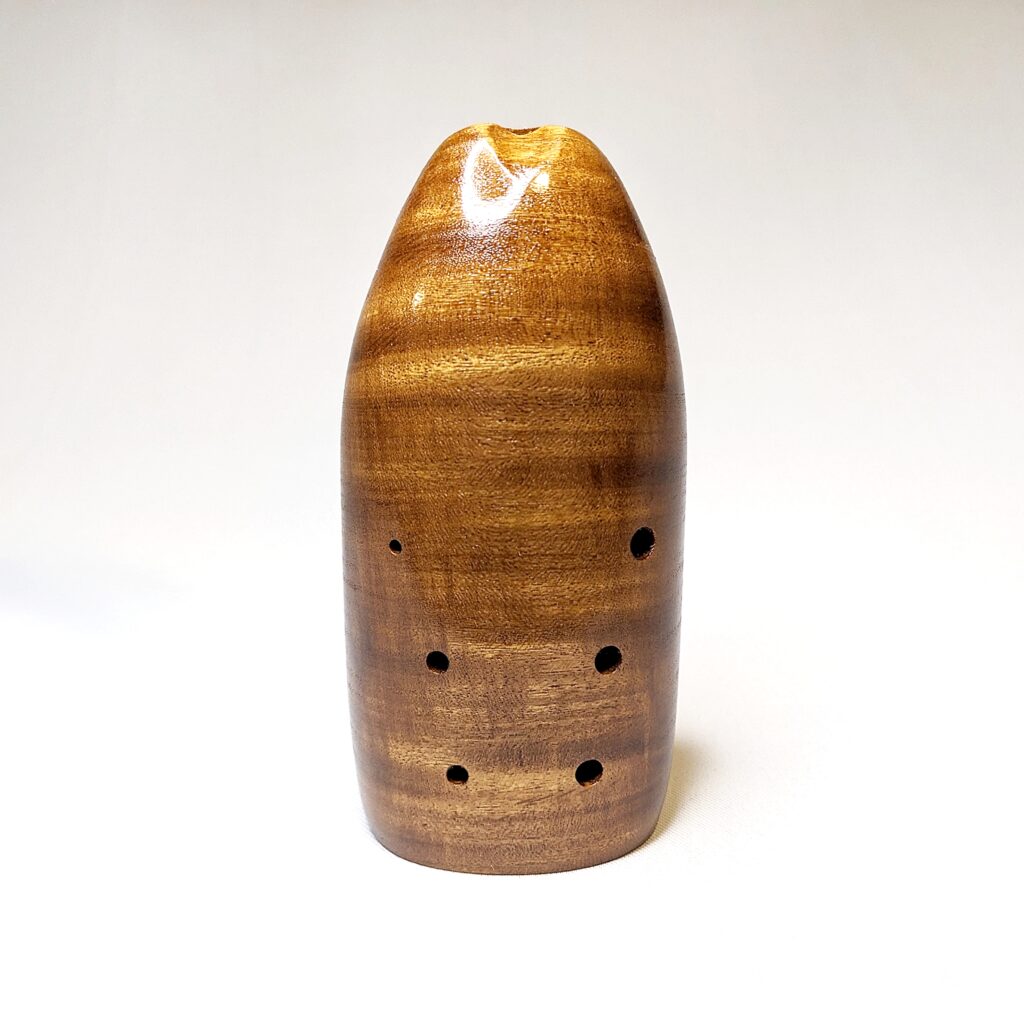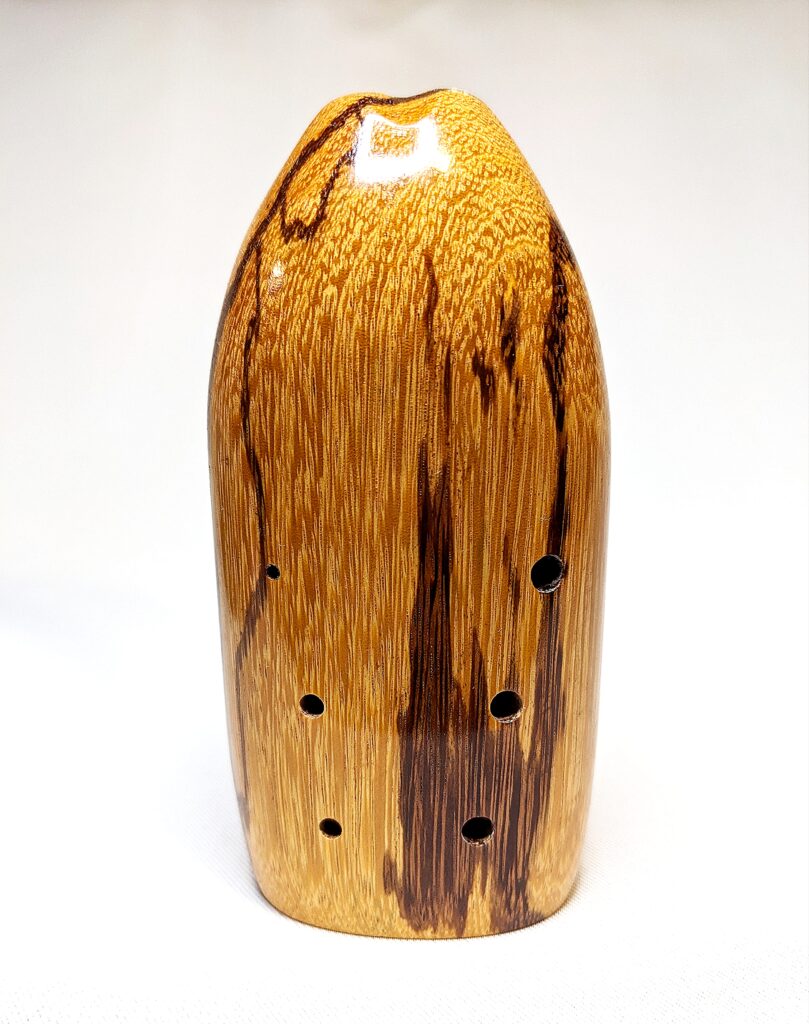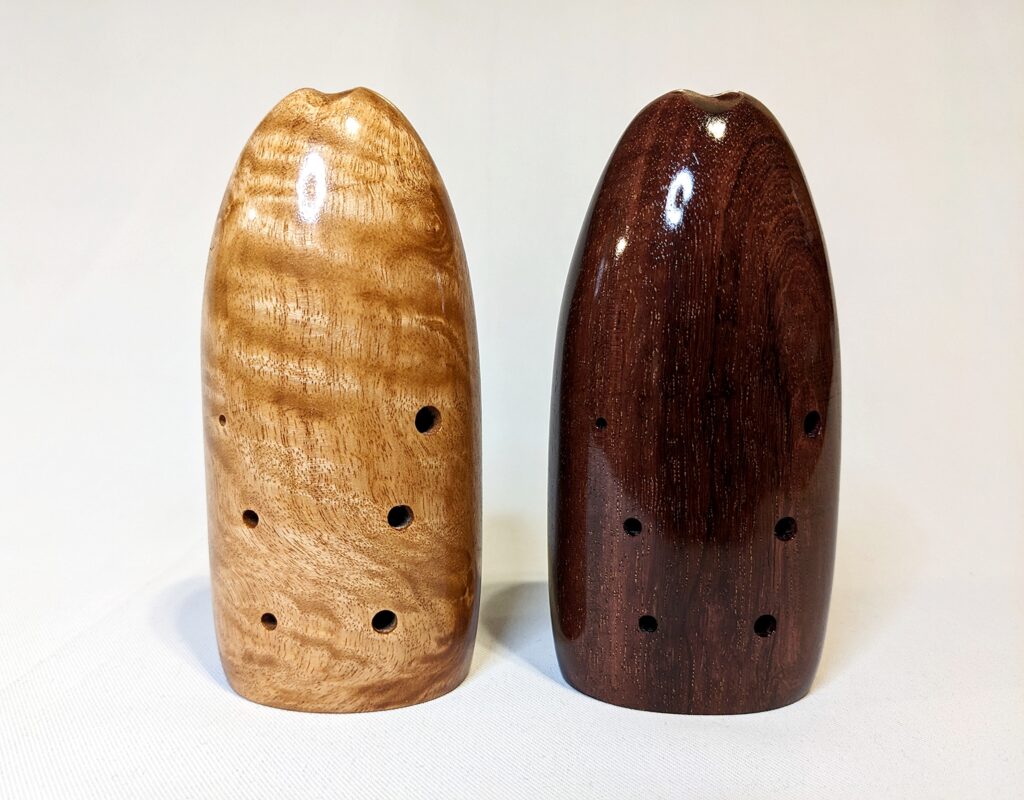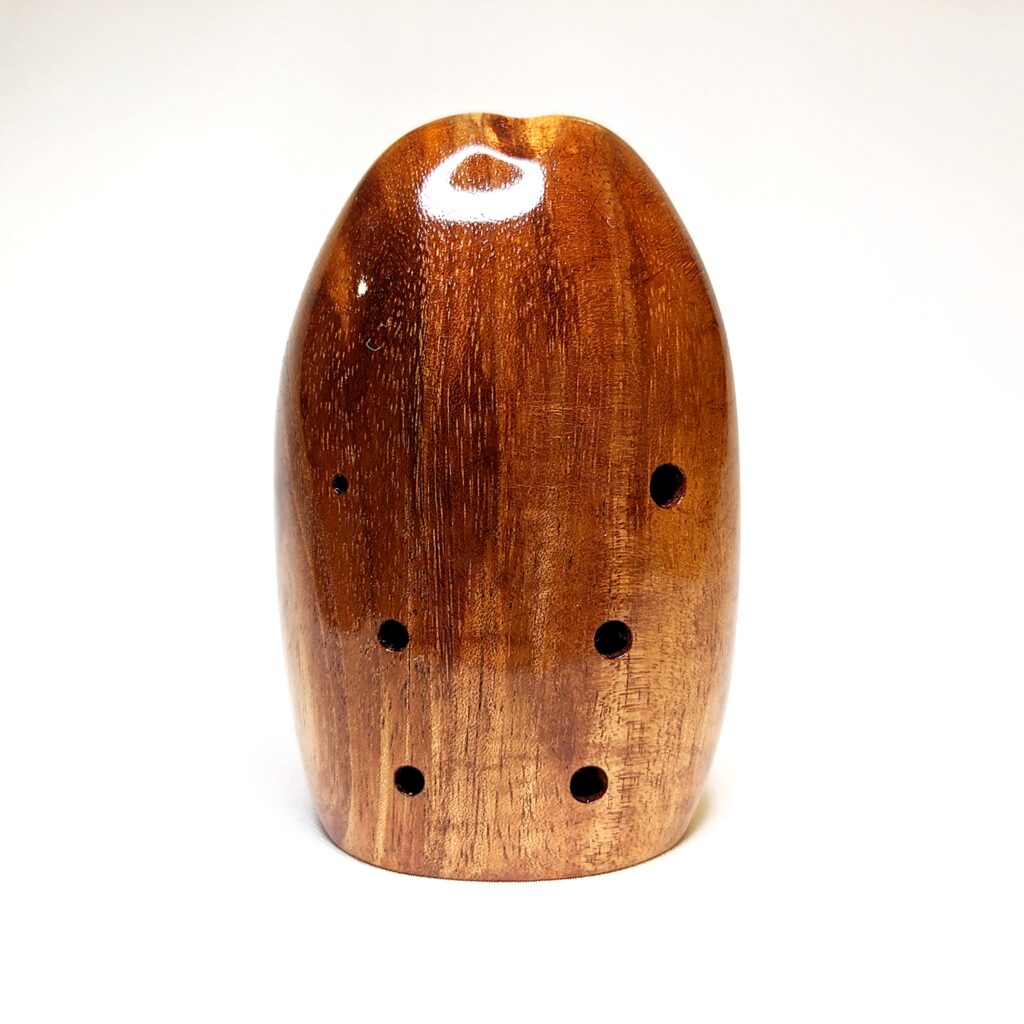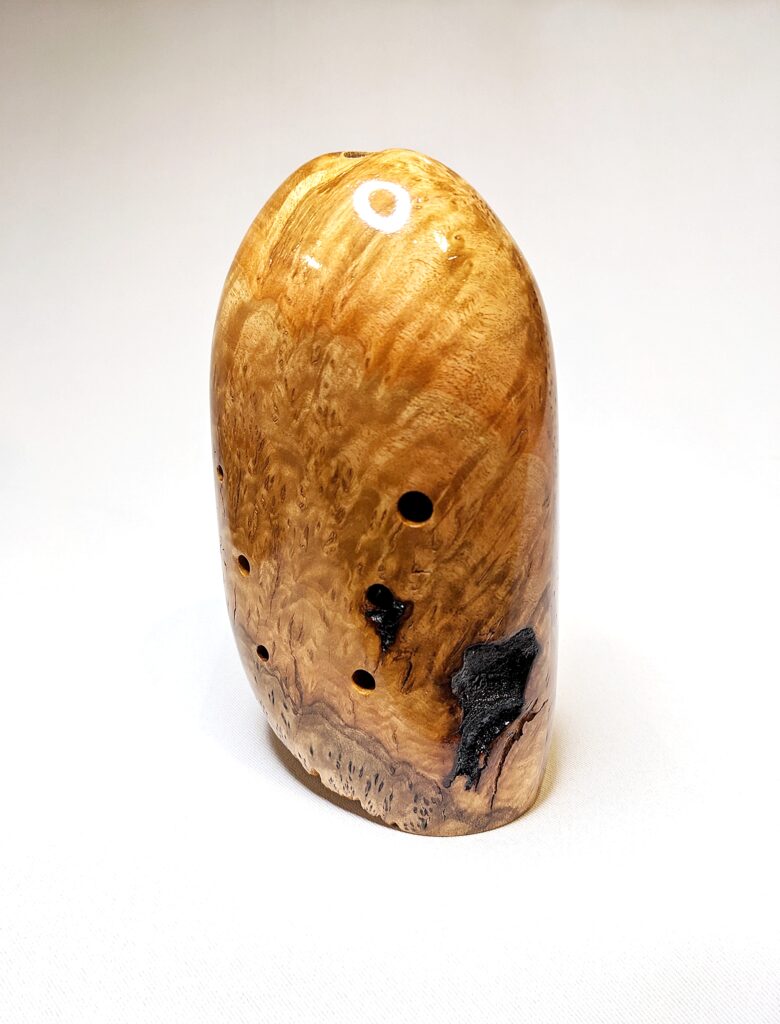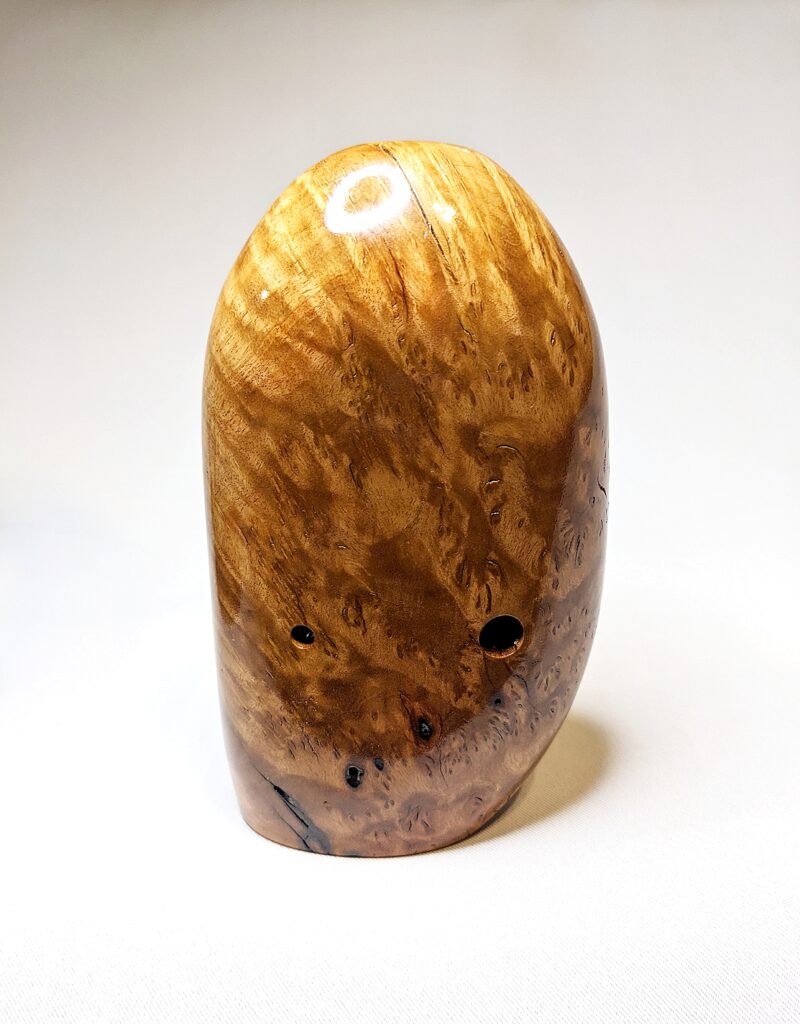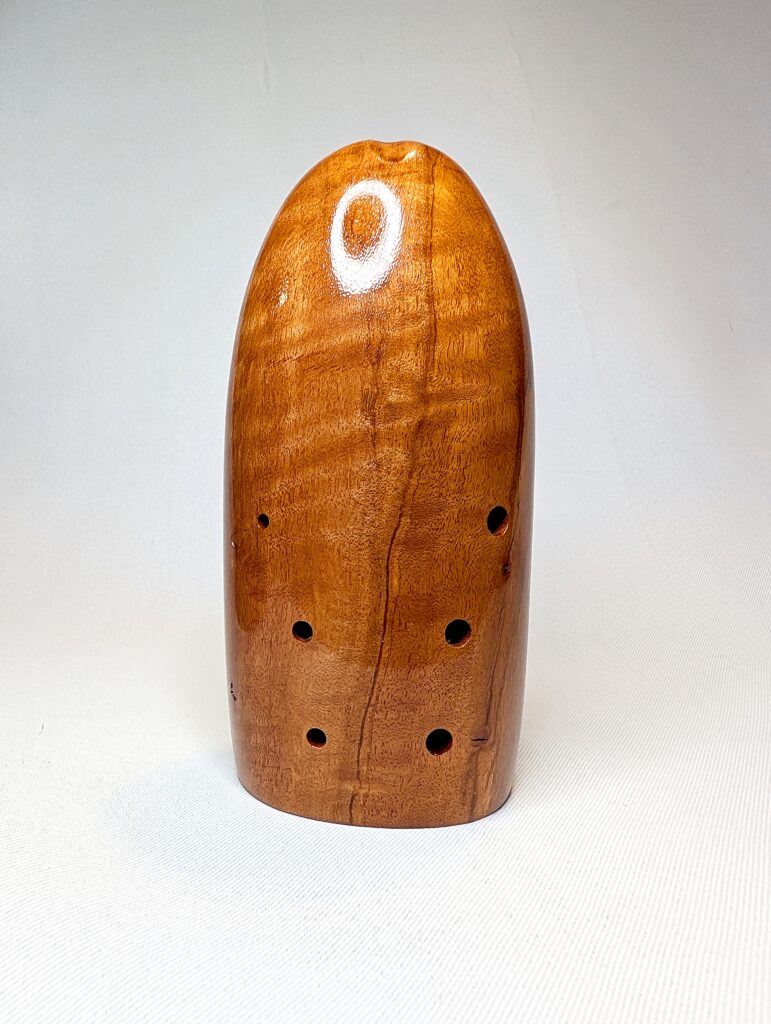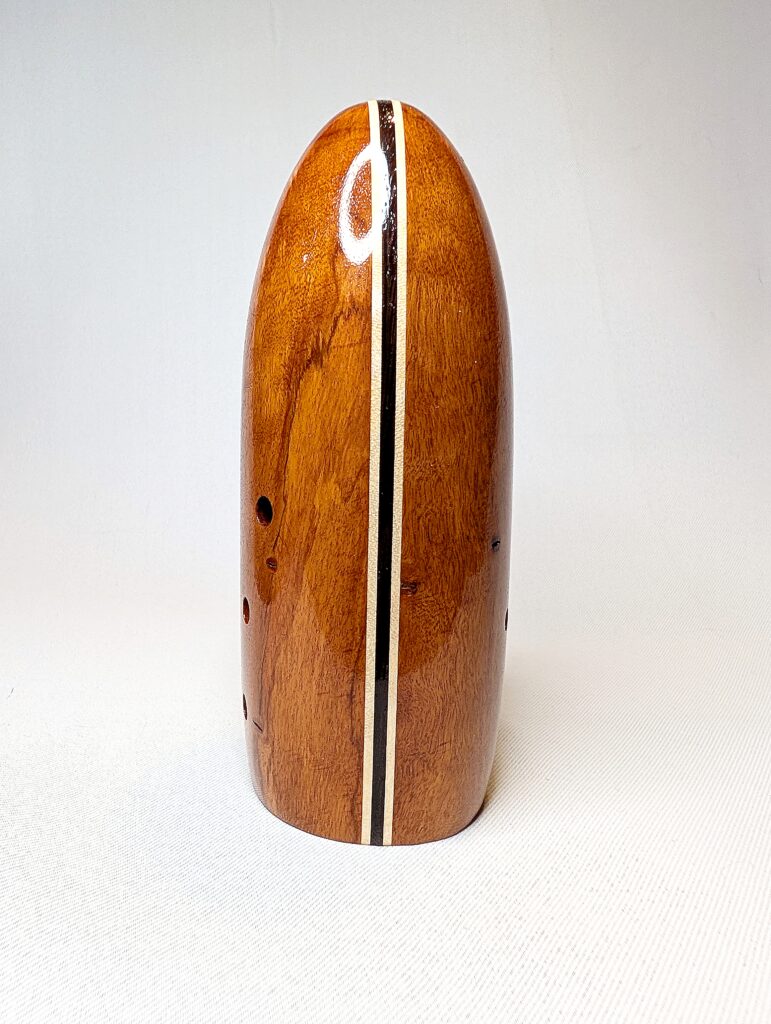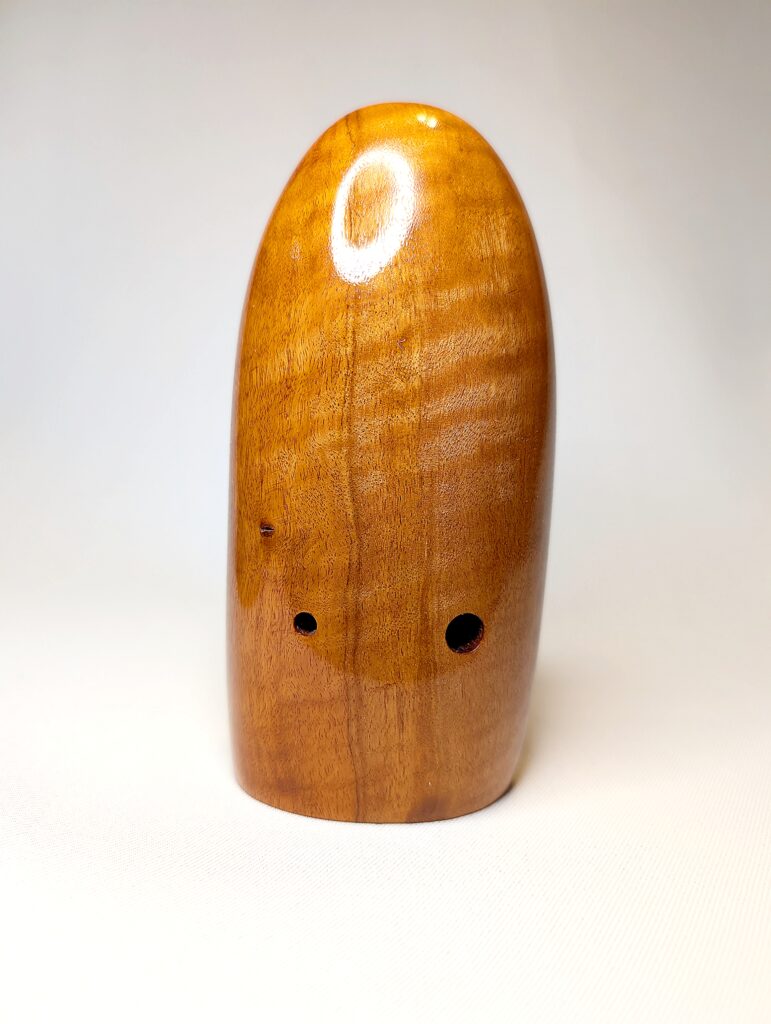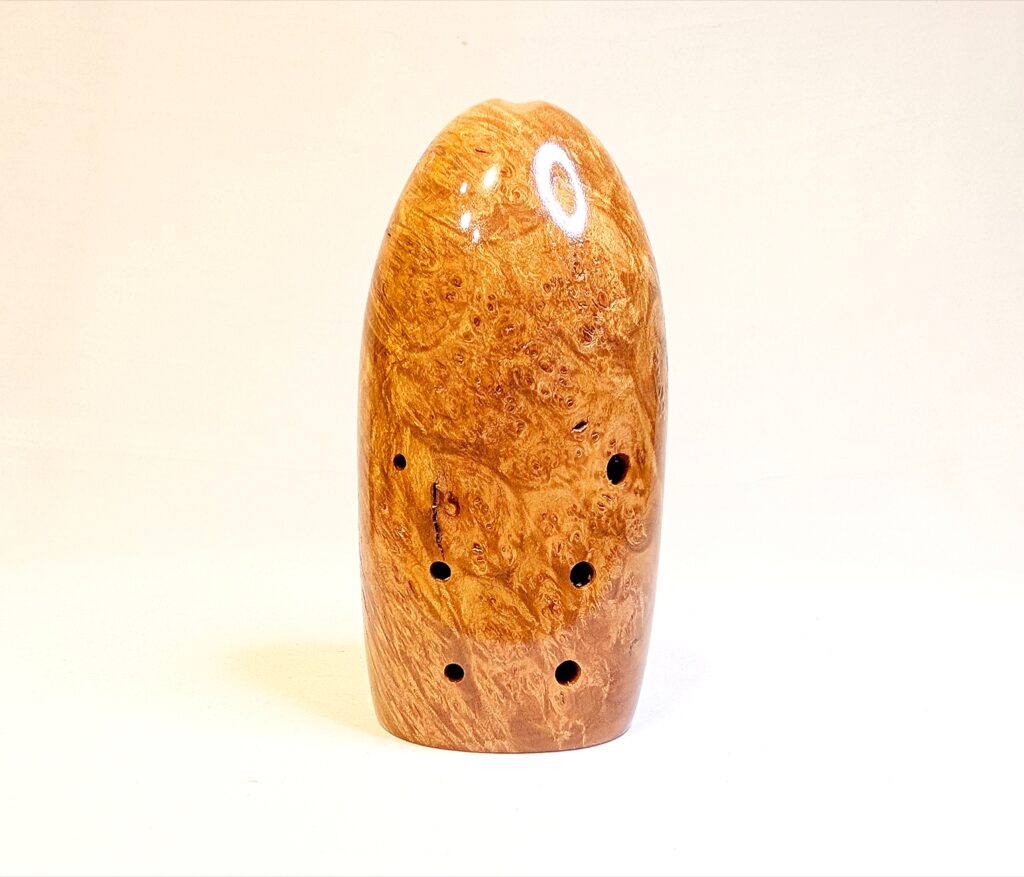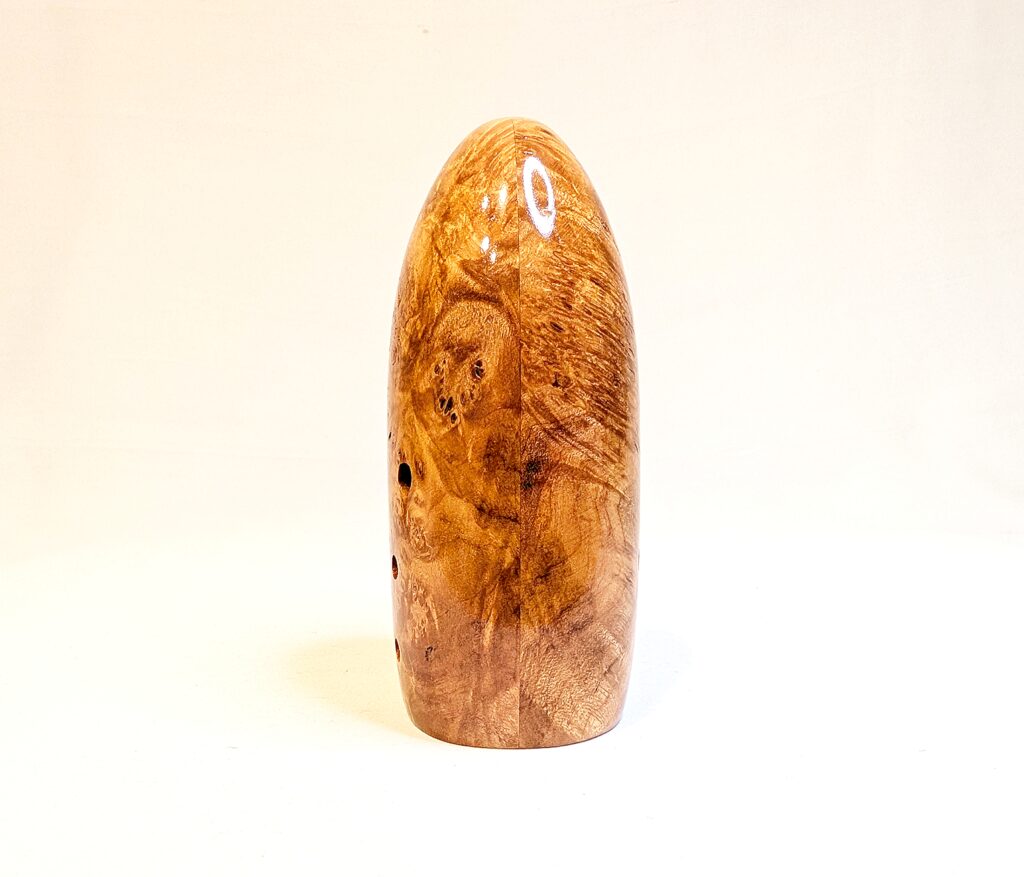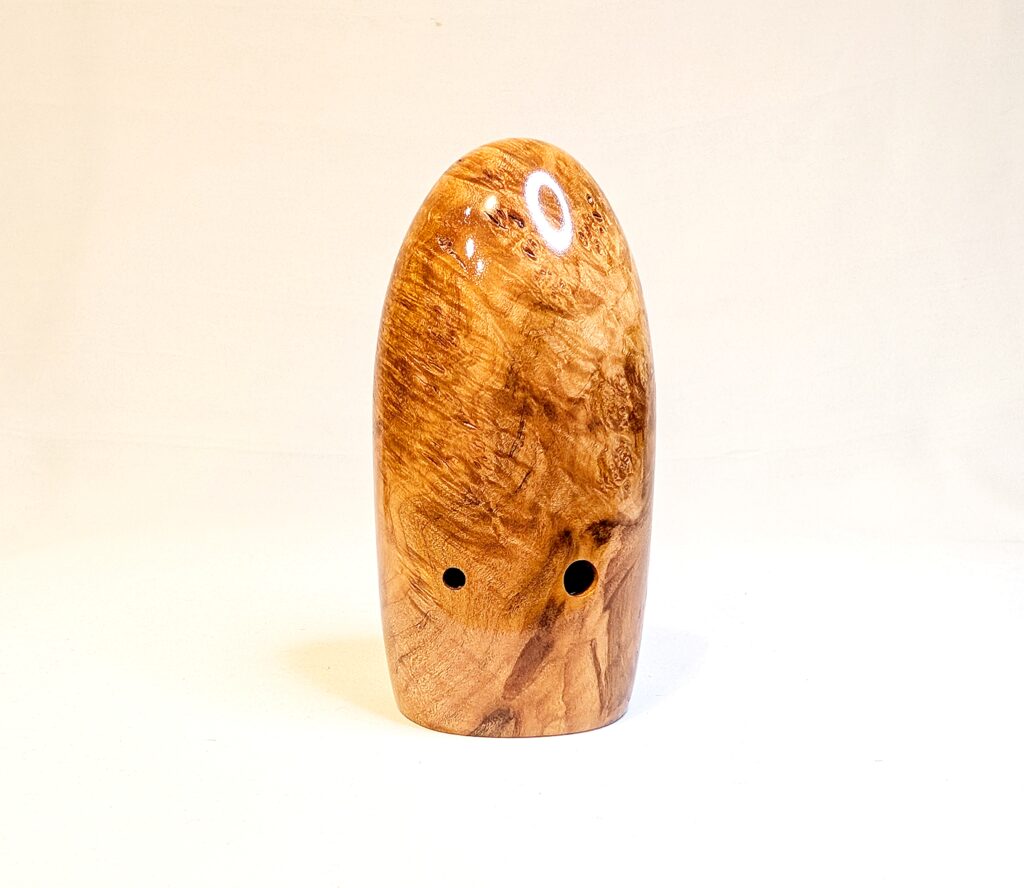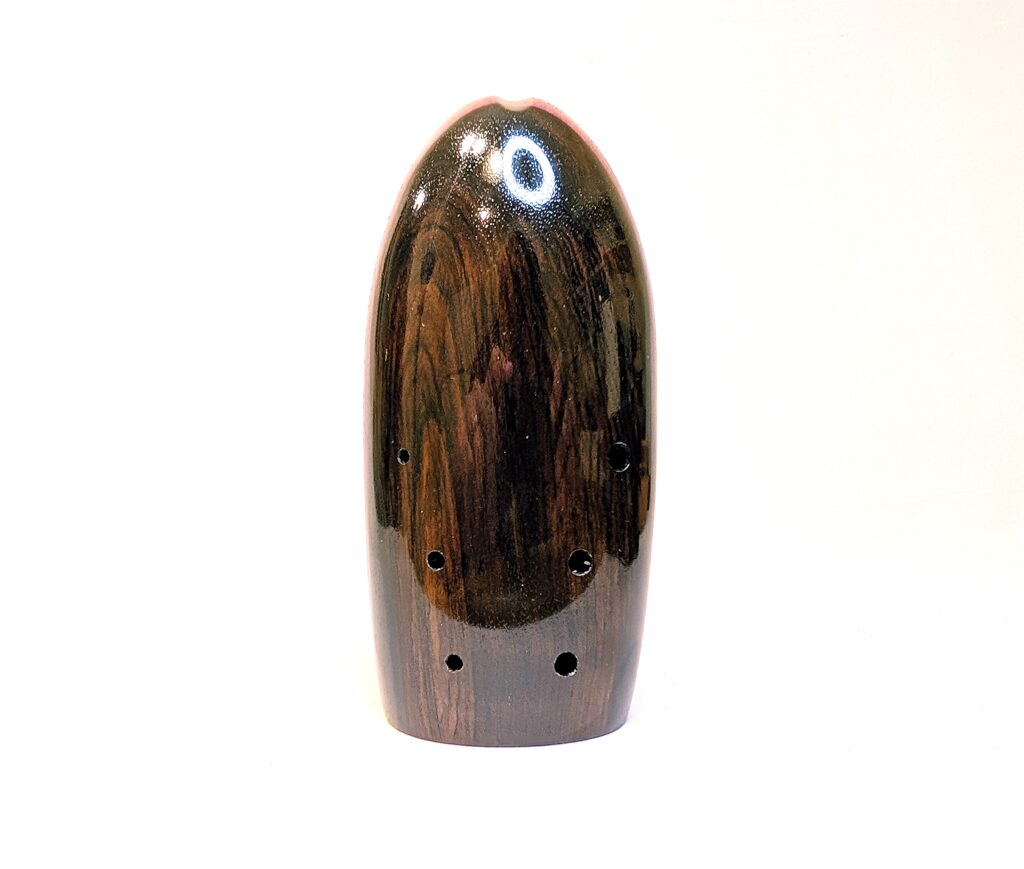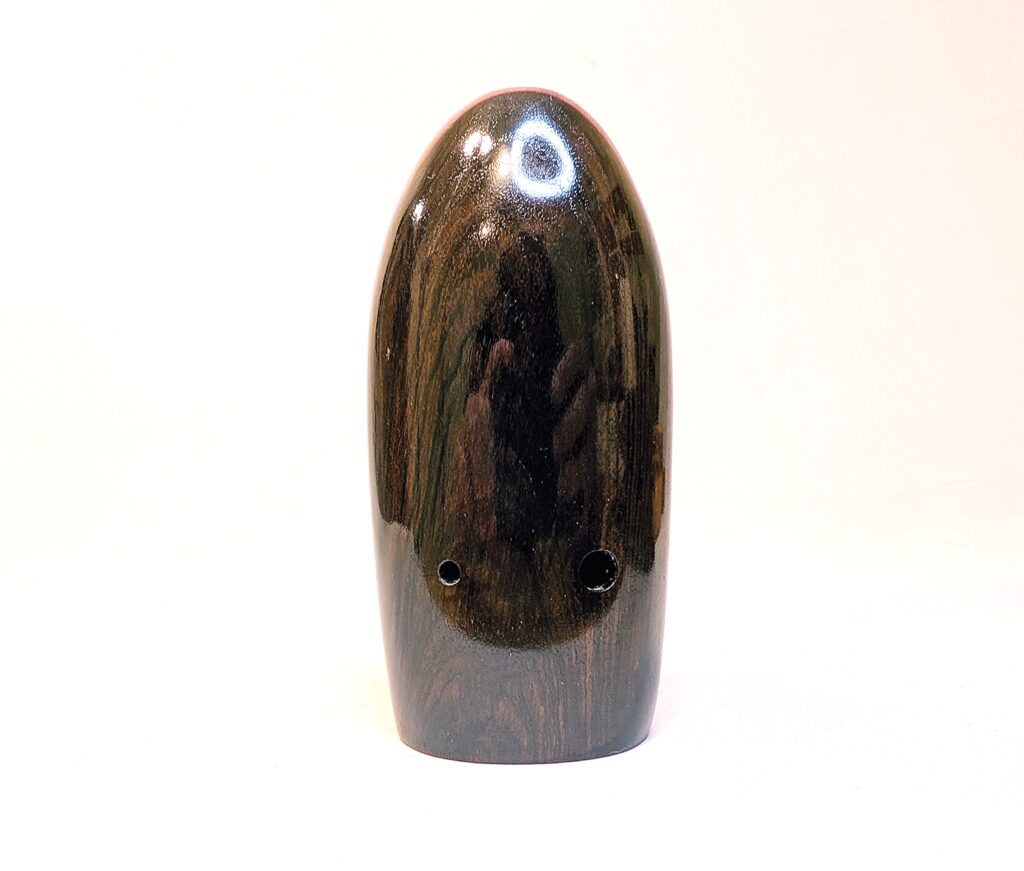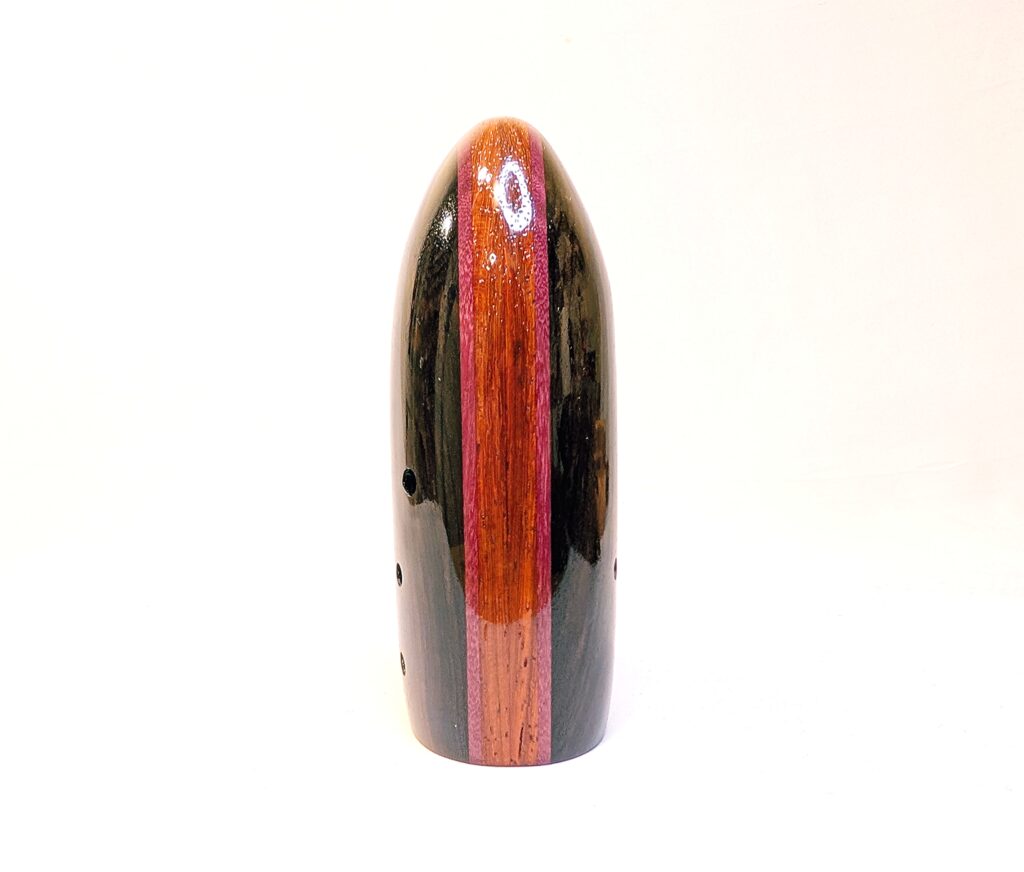
The xun is a relatively rare and little-known ancient neolithic-era vessel flute from China, and is one of the oldest Chinese instruments, dating back over 7,000 years. Similar flutes can be found in other cultures, such as the tsuchibue from Japan, the hun from Korea, and the Runik ocarina from Kosovo. While a vessel flute like the ocarina, the xun differs drastically in how it is played, requiring an embouchure to blow across the blowing edge located at the top of the instrument (similar to that of blowing across a bottle, but with a much tighter and more focused embouchure typical of other end-blown flutes like the shakuhachi, xiao, quena, etc). While this makes it a bit more challenging to learn, this results in a distinct and unique tone quality of its own, with a haunting breathiness and expressiveness. Well-made xun also allow for bending of notes by changing the blowing angle, which can further extend the range below the fundamental. Xun come in a wide range of sizes and shapes, with a variety of holes ranging from 6 holes to 11, with 8 and 10 hole instruments being the most common.
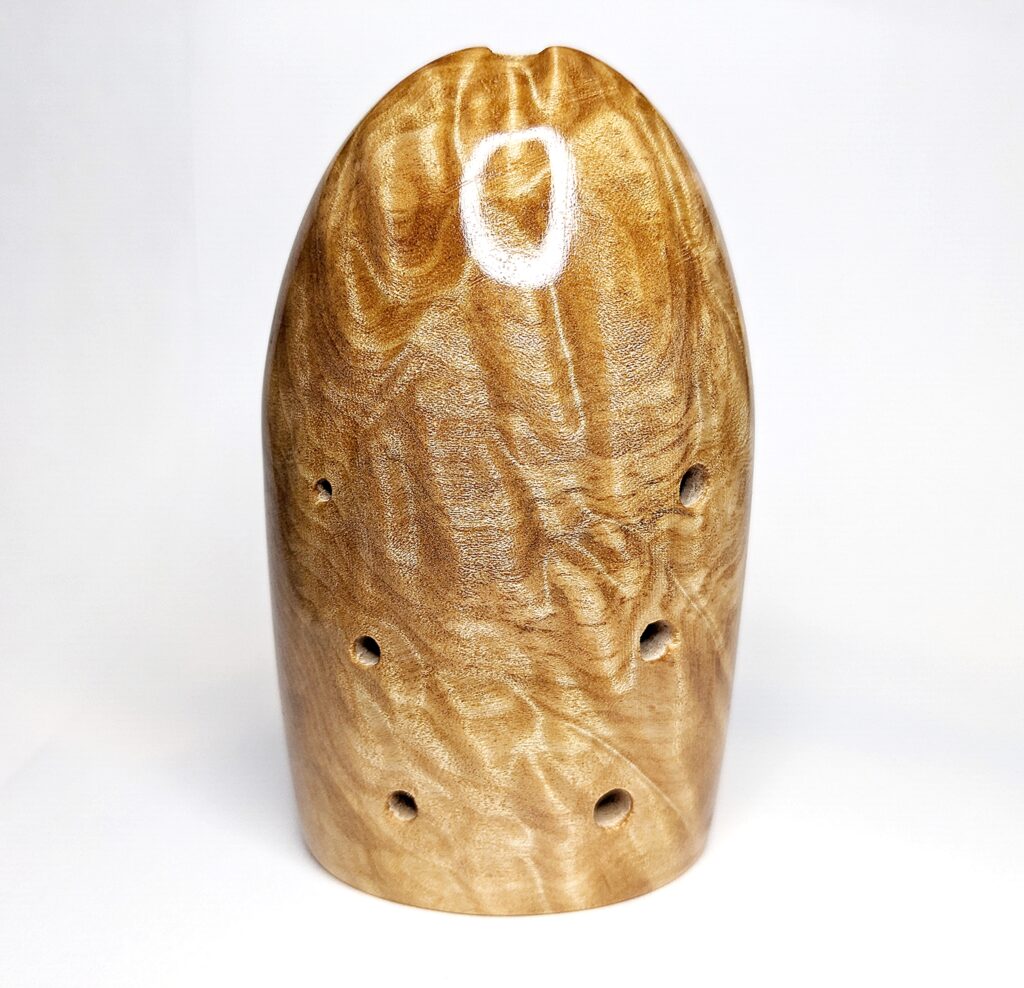
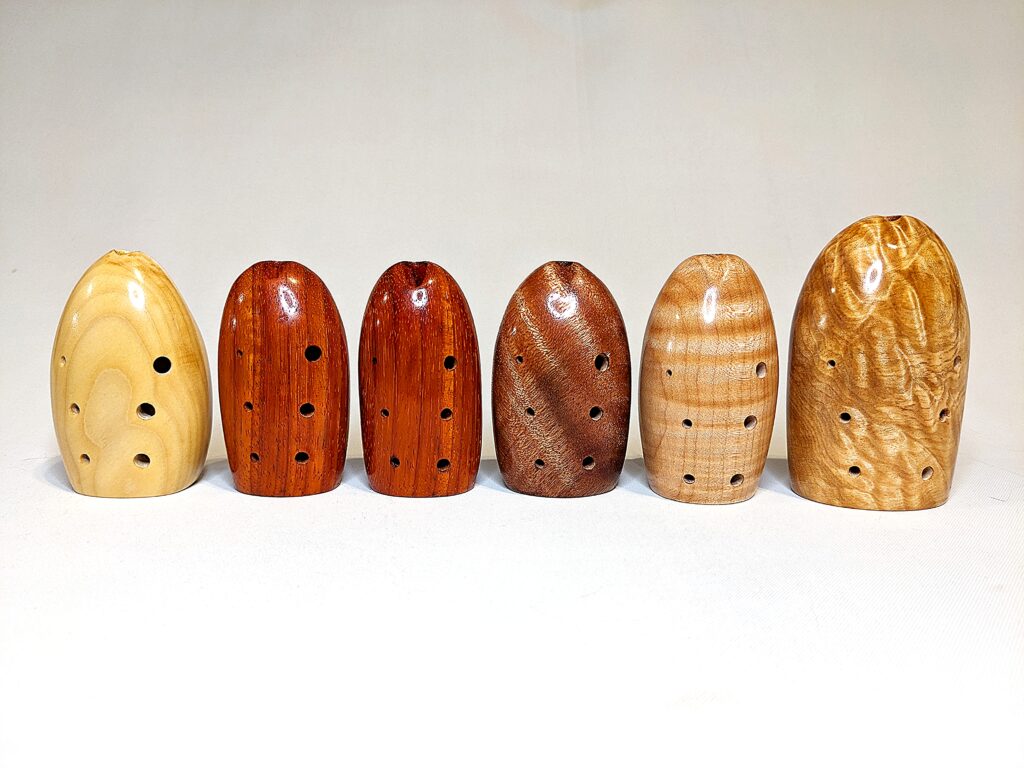
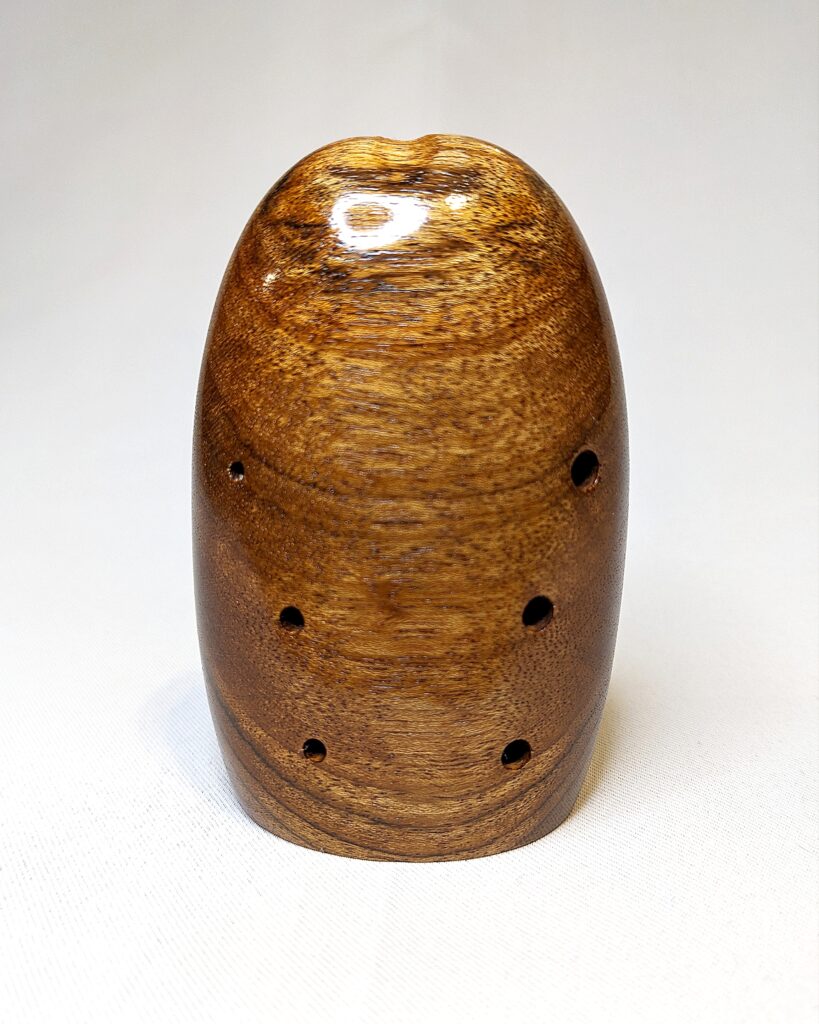
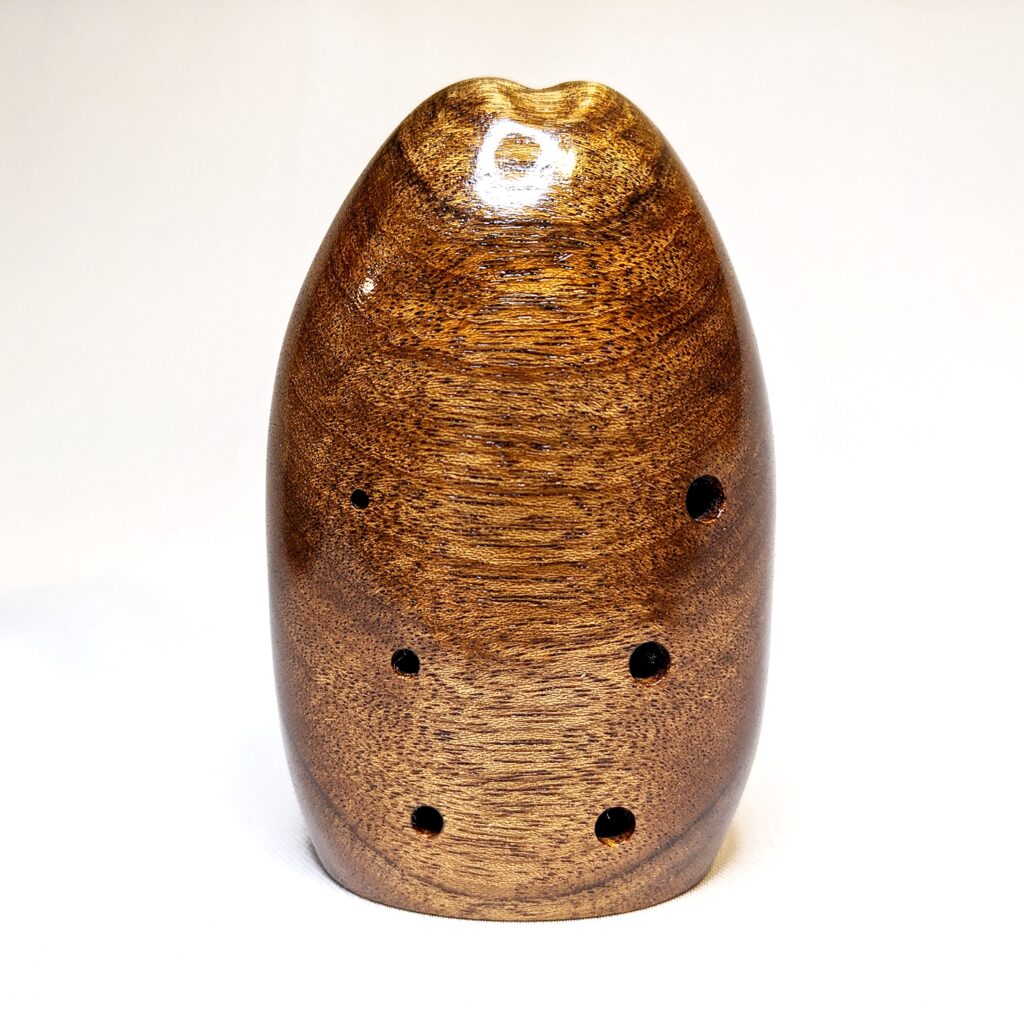
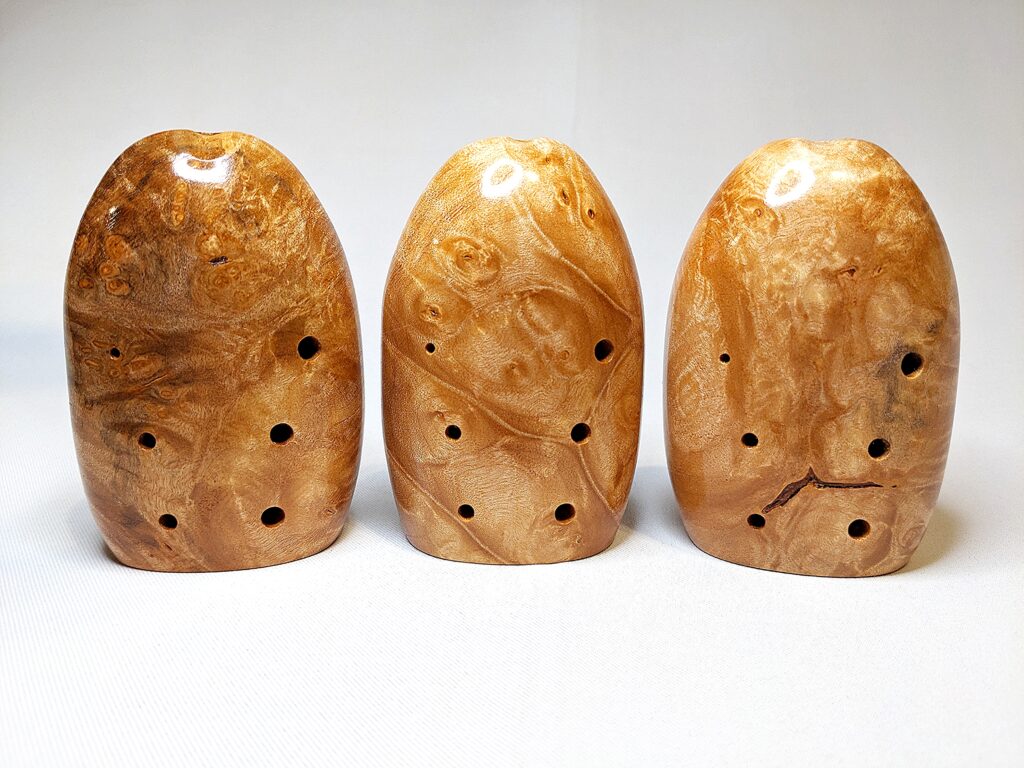
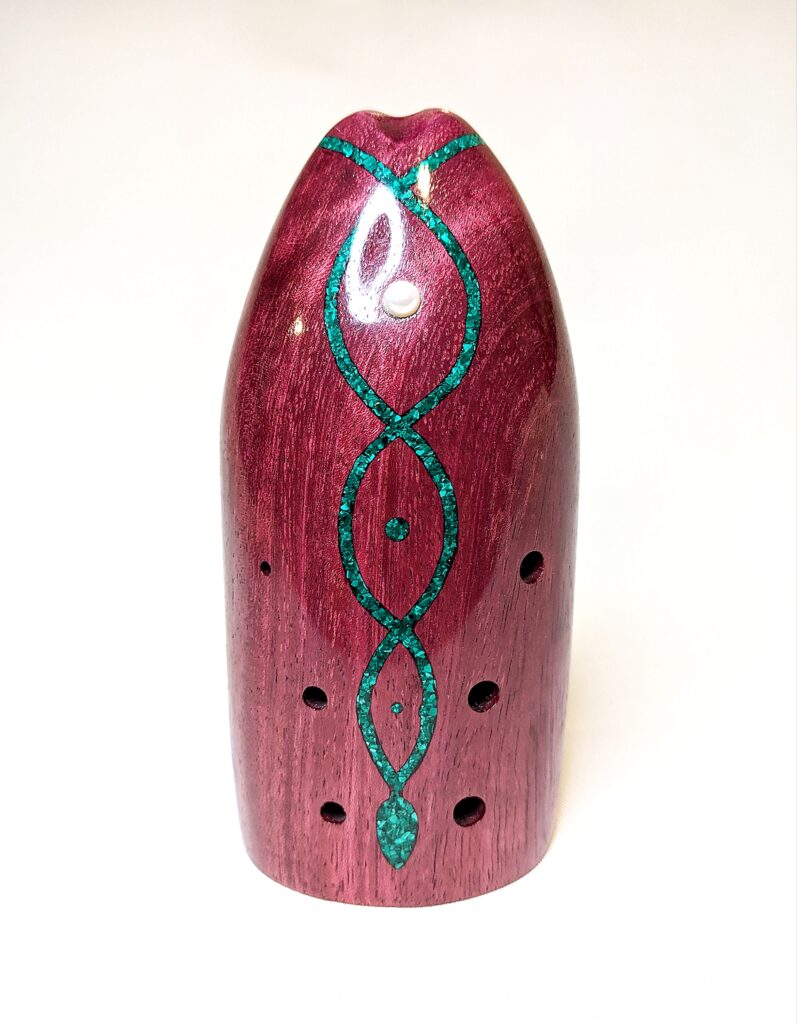
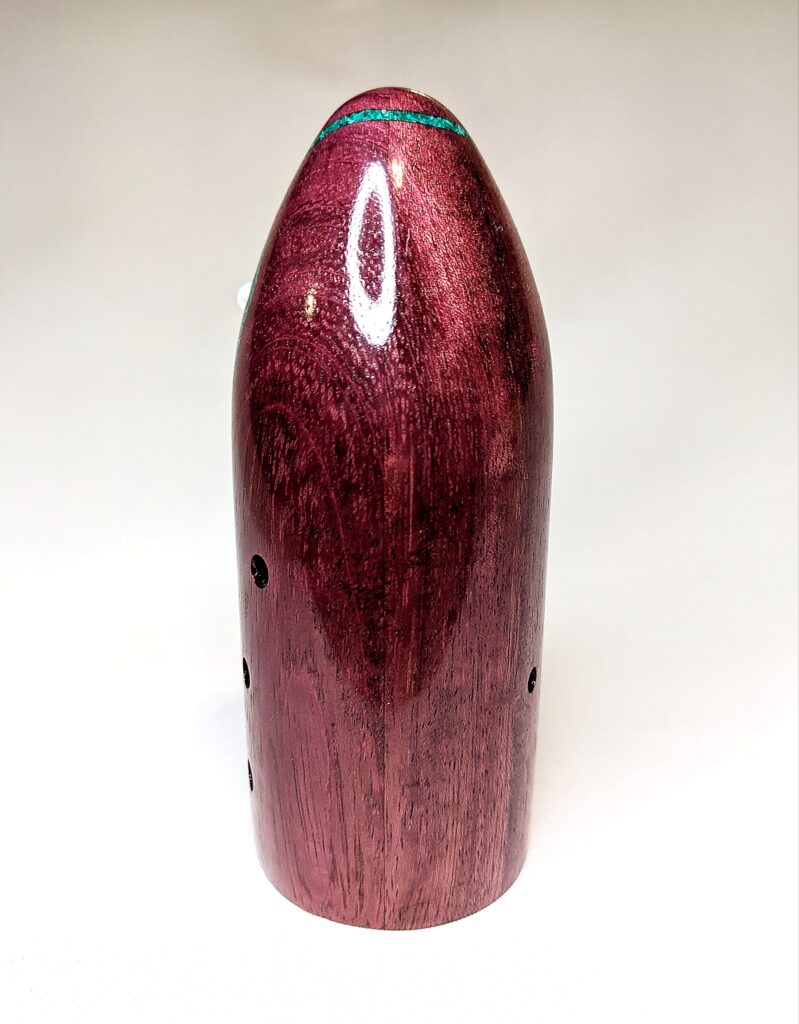
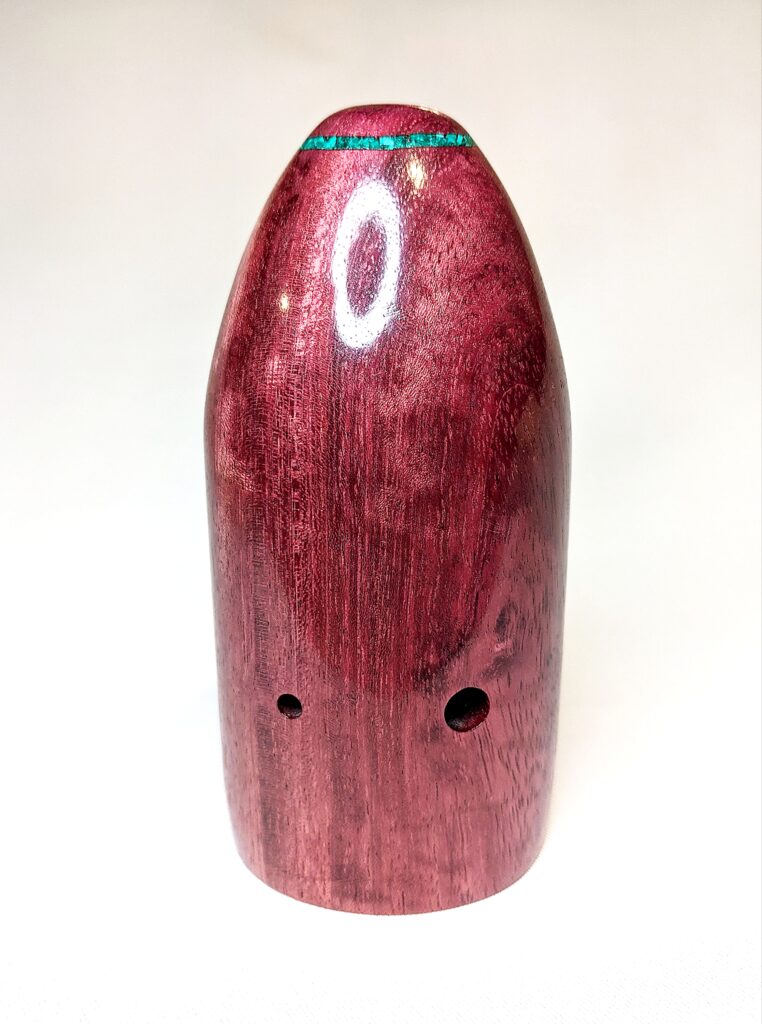
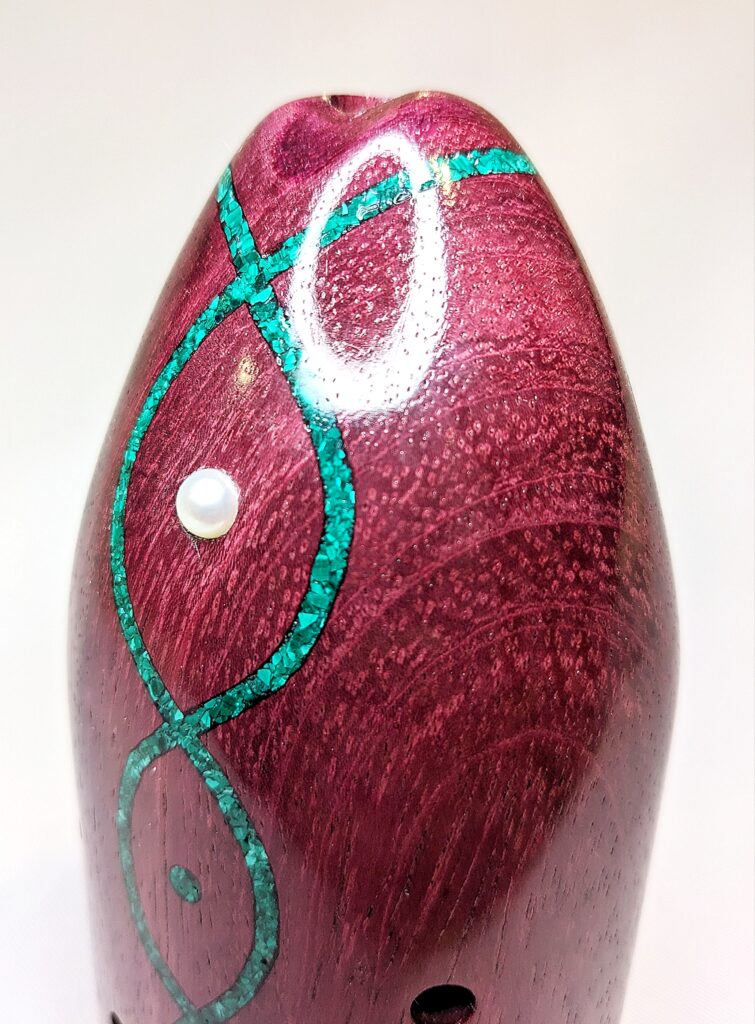
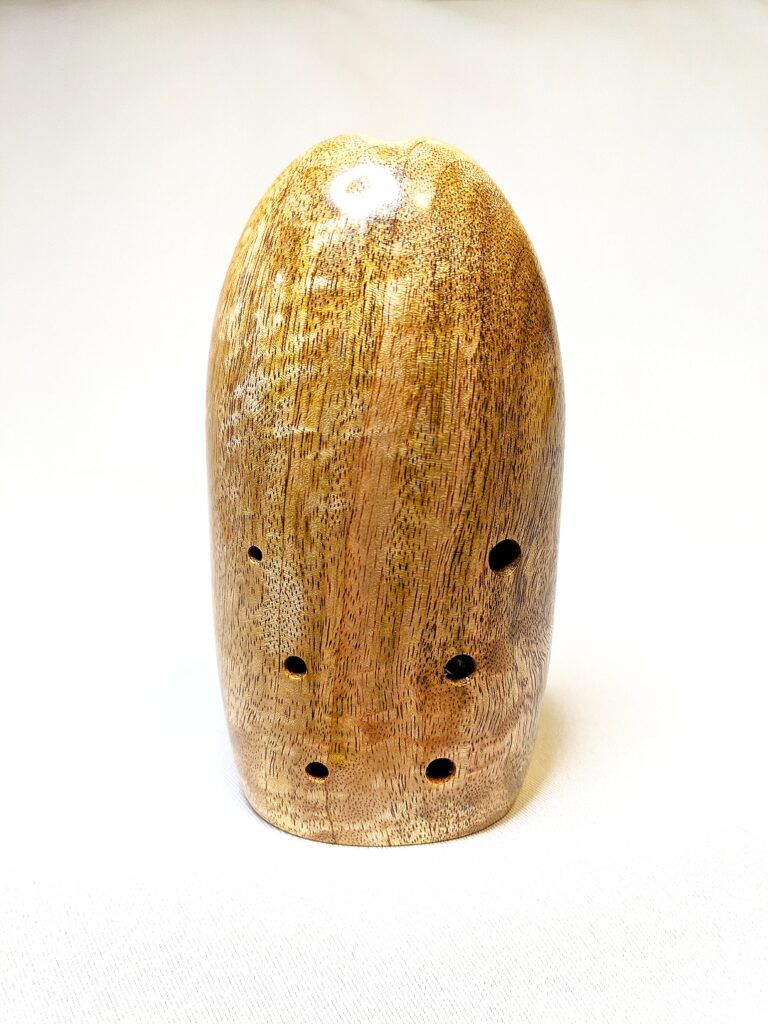
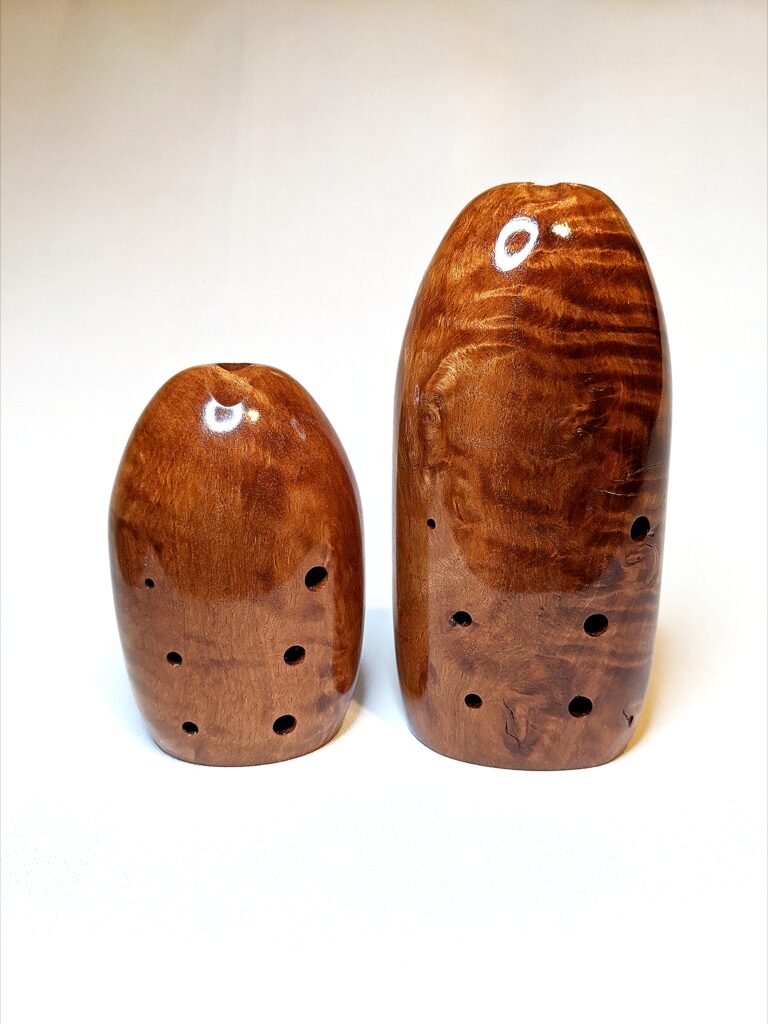
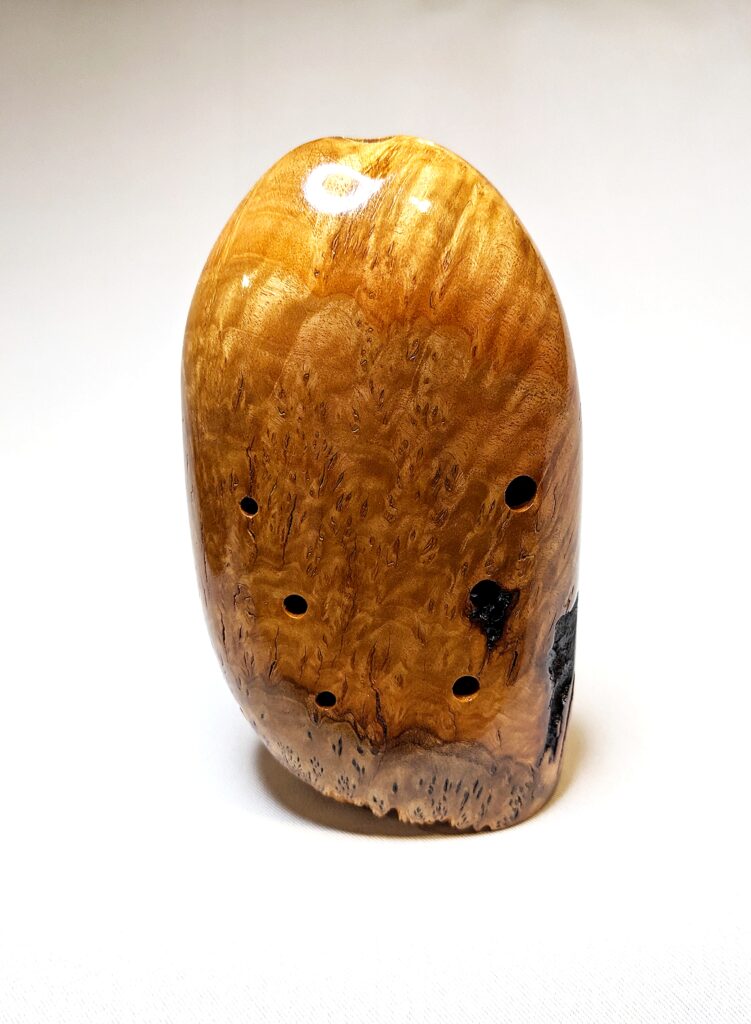
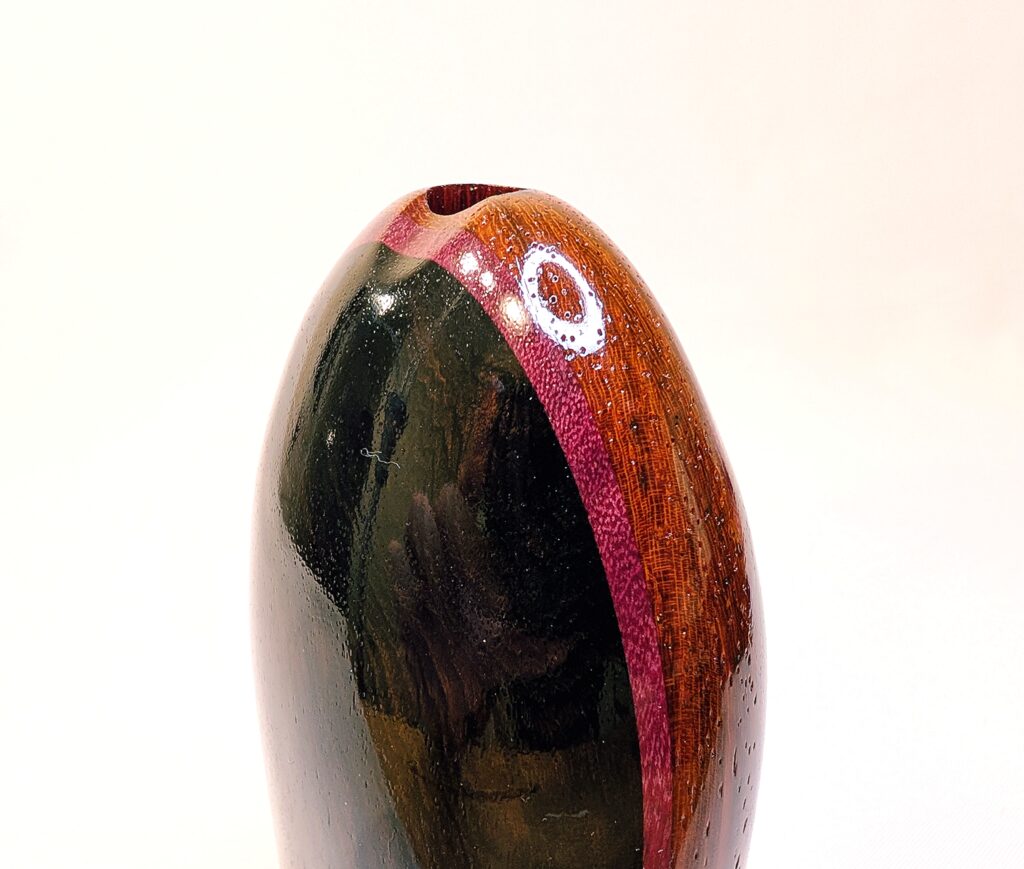
Unlike most xun which are typically made from clay, these modern xun are made from exquisite pieces of carefully selected and sourced exotic hardwood. Each xun is painstakingly crafted and voiced to play responsively across the range with a rich, haunting tone. A lot of focus in the voicing process goes into making an instrument that requires low breath pressure while being responsive at the low and high end, and it is the combination of size, voicing, and wood that all helps shape its unique tone. The xun I make are less globular and round in shape than traditional, with a flatter, more oval profile, which I find makes them easier to hold and play. Fingering has also been greatly simplified, leveraging a linear-type fingering similar to what you would find for an inline ocarina, and tuned with simple cross-fingering so no half-holing is needed for any accidentals. The balance of the xun is also specifically made as low as possible, with the fingerholes placed close to the bottom to allow easy support of the instrument with the pinkies as you climb up the scale, and combined with the overall shape, fingerhole design, and layout, allows these xun to play a wide range of music, from slow meditative melodies to more fast-paced and upbeat songs. Being made from wood, they are also significantly lighter than their clay counterparts while being more durable to damage if dropped. These xun are also made as 8-hole instruments, which prioritizes playability and balance over the range. The xun are also uniquely voiced with a smaller than typical soundhole, which not only allows the xun to be much deeper in tone than other equivalent sized xun on the market, but helps balance the tone across the range, and keeps the fingerholes very small for ease of playing. The soundhole also uses a more modern sharpened notch design which makes playing higher notes easier, and the overall voicing of the xun allows for easy bending of the notes, giving a total range of 17 notes (including 2 notes below the fundamental). All of my 8-hole xun are tuned using inline fingering for the diatonic scale to make playing much simpler, and relatively simple cross-fingering for accidentals. This standardized fingering across all keys of Bretti xun allows you to easily switch between different sizes while keeping the same fingering.
Each xun is finished with numerous layers of hardening, penetrating oil varnish, which brings out the richness and beauty of the wood while protecting the instrument from moisture and daily use. Because these xun are fully sealed, no additional care such as oiling is required, making these wooden instruments maintenance free. Because xun are such a rarely requested instrument, each xun I craft is custom-made to order.
THE KEYS
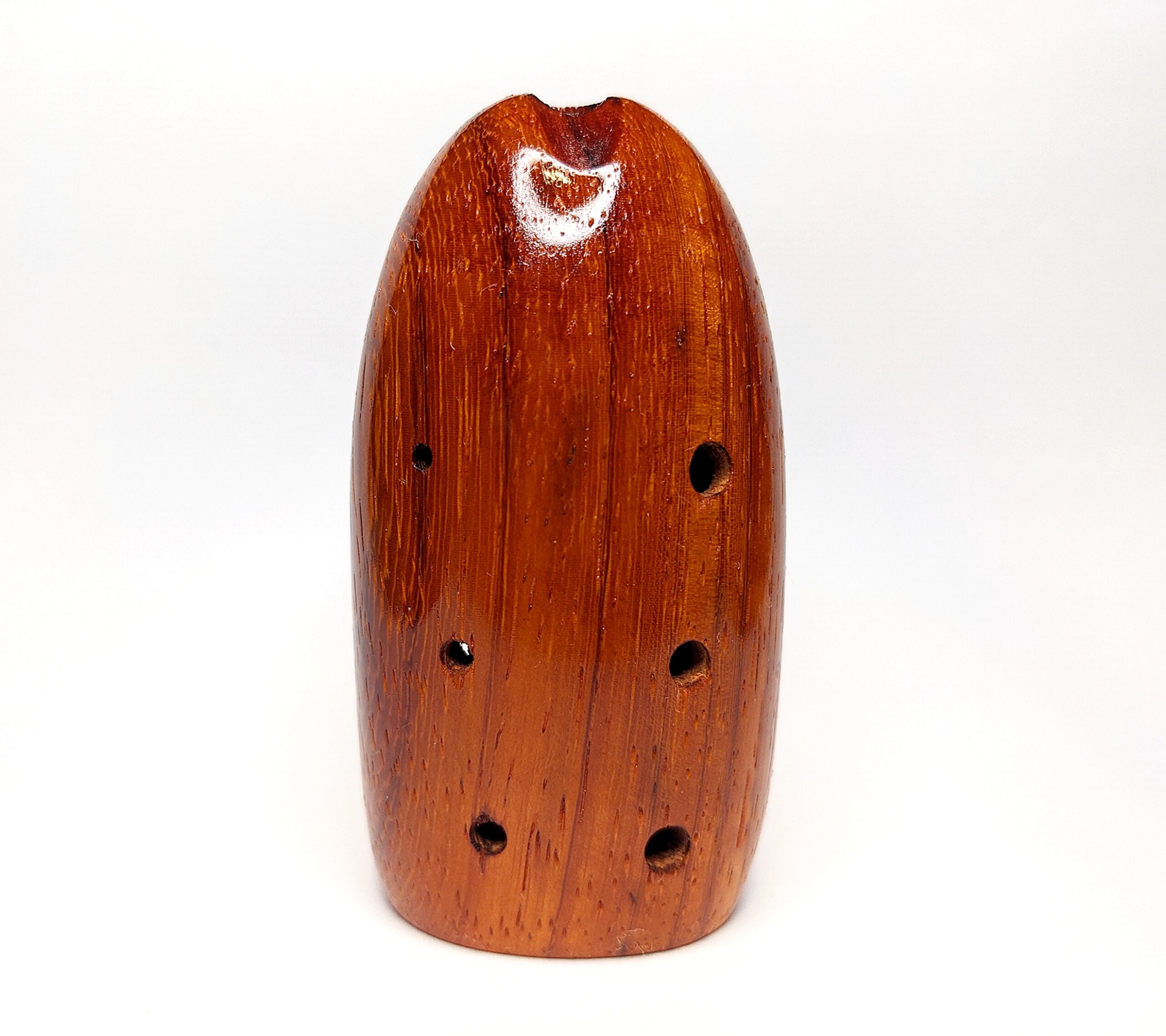
SOPRANO C5 WOODEN XUN
Range (C5): A#4-D6 (17 notes)
Size: 3.5″L x 2″W x 1.5″T
Comments: The smallest of the xun that I make, this xun is characterized with a bright, almost birdlike tone. This xun can be a bit more challenging to play, requiring a tight embouchure and good breath control to maintain the correct pitch. However, once you get the technique and muscle memory down, it is a wonderful little pocket flute to play wherever you go.
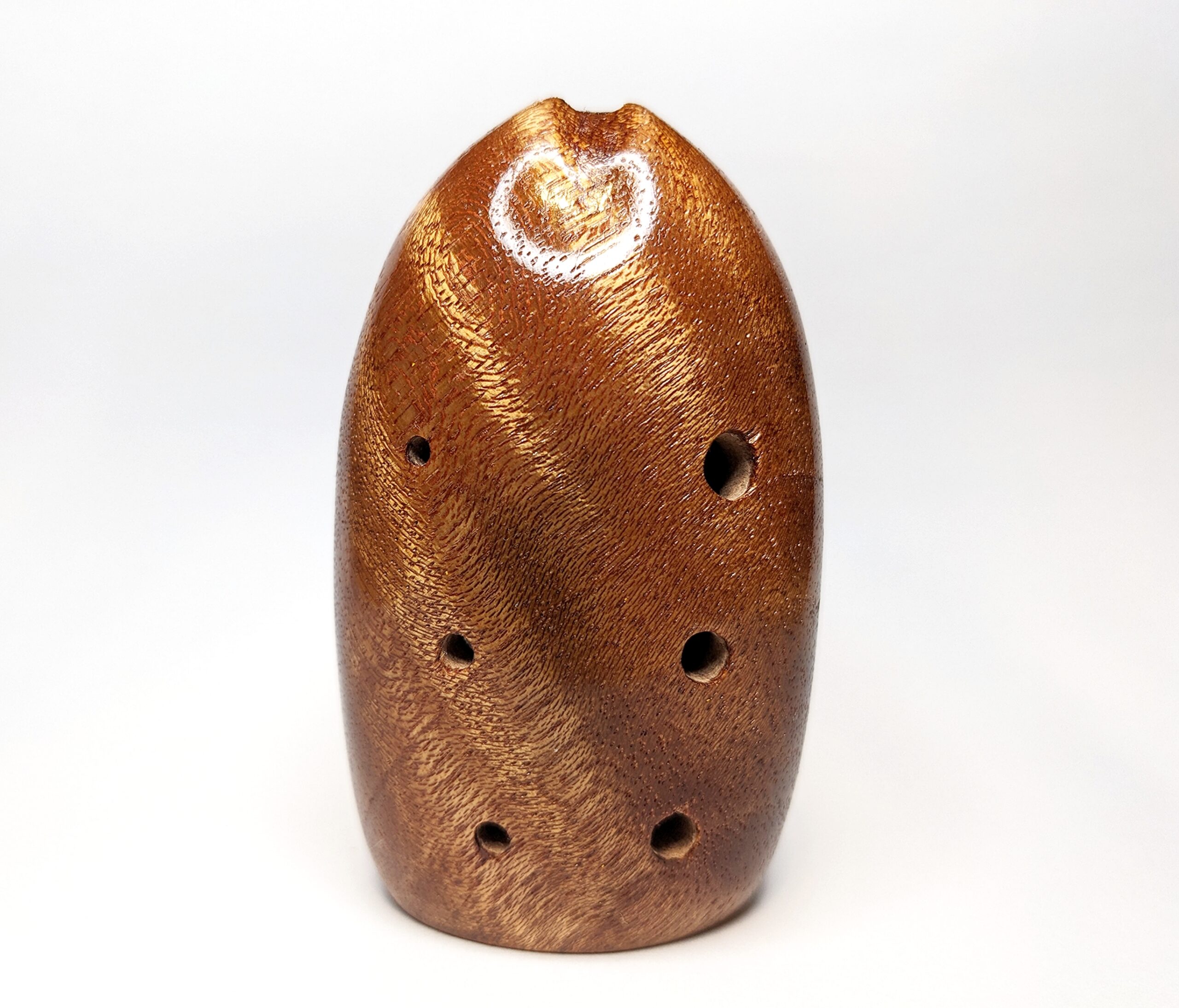
SOPRANO B4 WOODEN XUN
Range (B4): A4-C#6 (17 notes)
Size: 3.5″L x 2″W x 1.5″T
Comments: Another one of the smallest xun that I make, this xun is characterized with a sweet and bright tone. This xun can be a bit more challenging to play, requiring a tight embouchure and good breath control to maintain the correct pitch. However, once you get the technique and muscle memory down, it is a wonderful little pocket flute to play wherever you go.
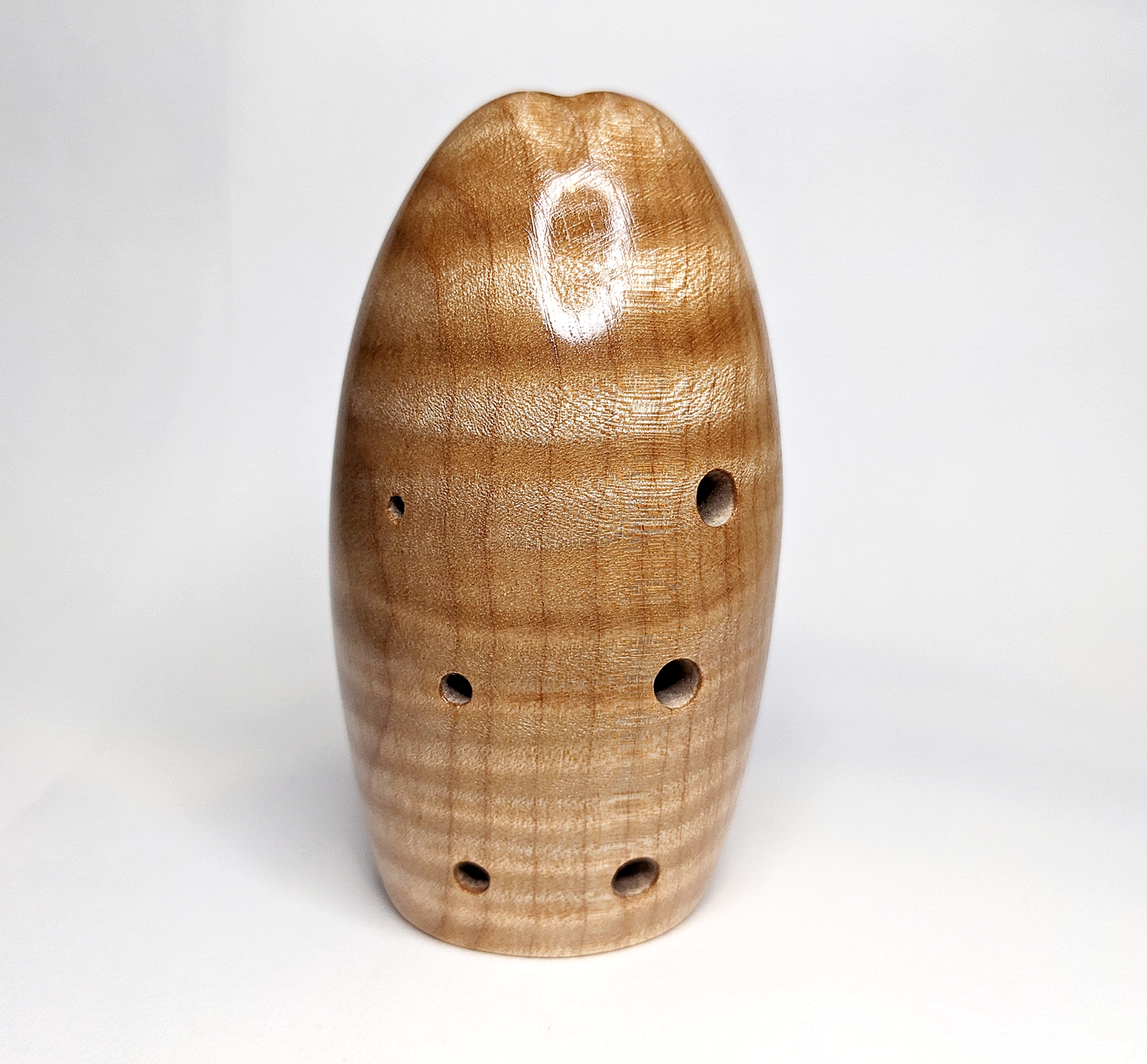
SOPRANO G#4 WOODEN XUN
Range (G#4): F#4-A#5 (17 notes)
Size: 3.5″L x 2″W x 2″T
Comments: A very small but warmer toned xun with a more rounded body and feel to it. This xun can be a bit more challenging to play, requiring a tight embouchure and good breath control to maintain the correct pitch. However, once you get the technique and muscle memory down, it is a wonderful little pocket flute to play wherever you go.
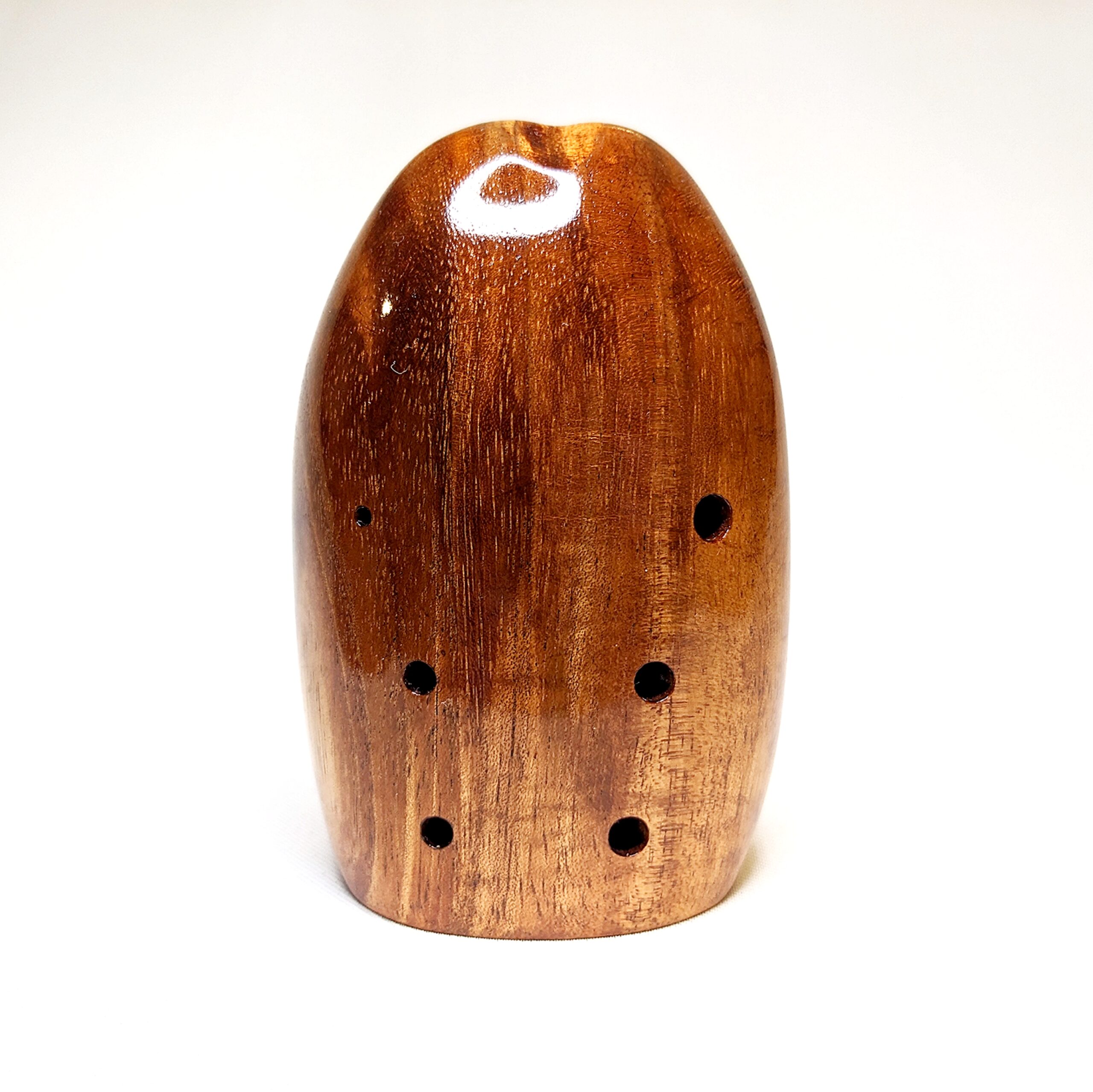
ALTO E4 WOODEN XUN
Range: D4-F#5 (17 notes)
Size: 4″L x 2.75″W x 2″T
Comments: The alto E4 xun is one of my most popular sizes. Larger than the soprano, this xun has a noticeably deeper and more mellow tone, yet remains a very compact instrument. The E4 is easier to play than the soprano
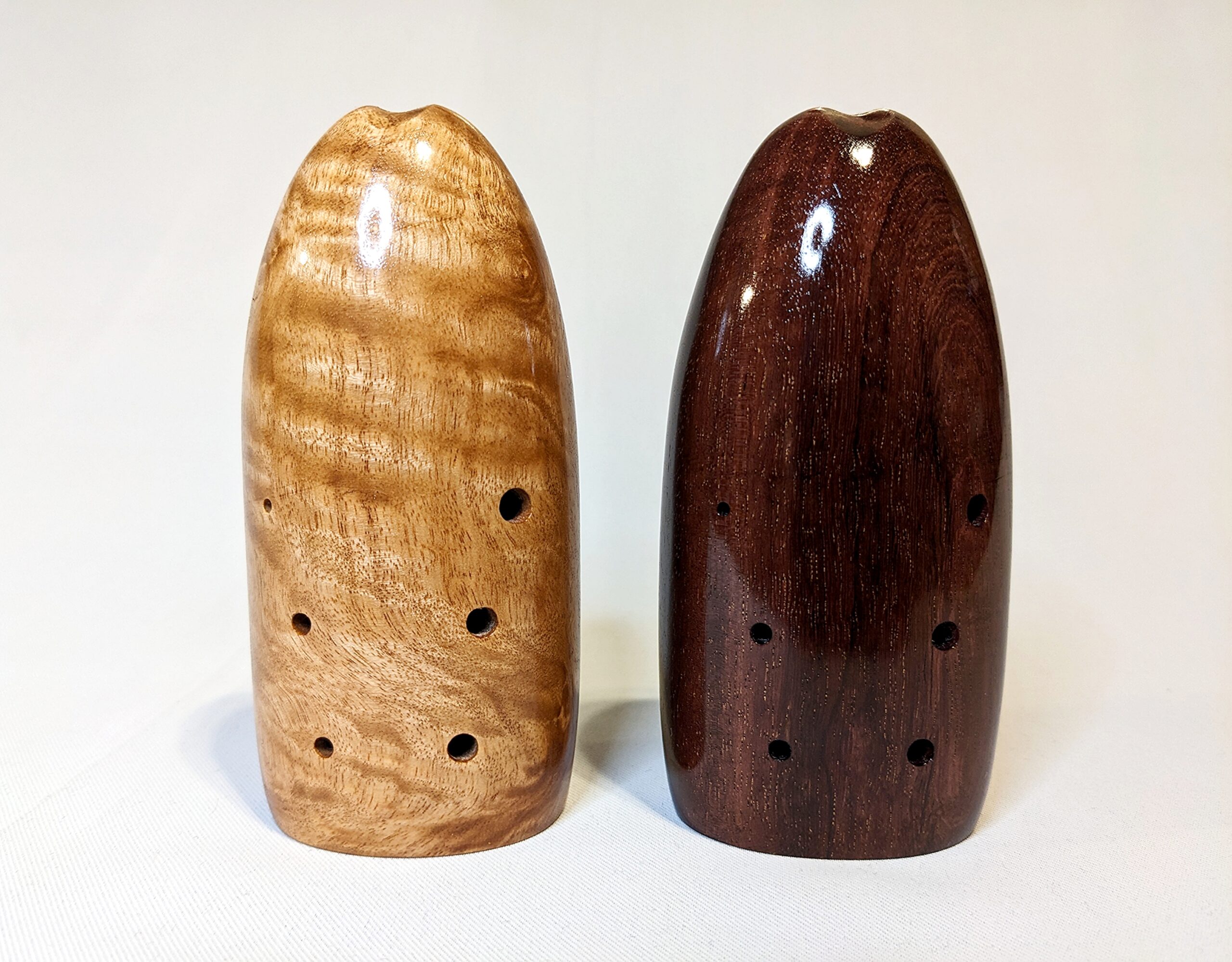
ALTO Eb4 WOODEN XUN
Range: C#4-F5 (17 notes)
Size: 5″L x 2.5″W x 2″T
Comments: The alto Eb4 xun is a semitone deeper than the E4 for a bit richer tone. This xun is slightly narrower and taller in shape than the E4. Because of the more elongated internal volume, this xun has a distinctly more “bottle-like” tone, and coupled with the sonic profile of wood, gives it a bit of a unique character.
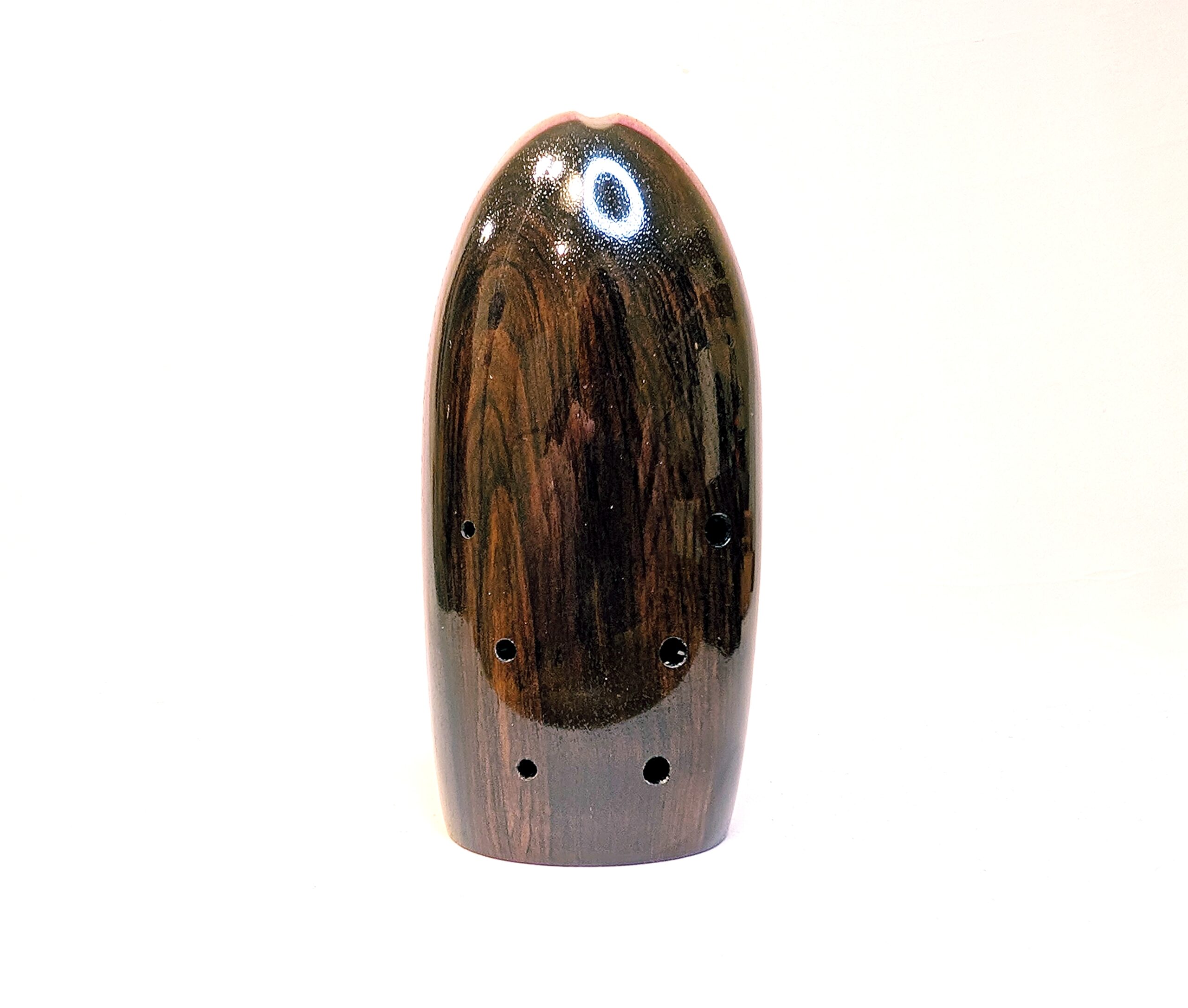
BASS C4 WOODEN XUN
Range: A#3-D5 (17 notes)
Size: 5.75″L x 2.875″W x 2.25″T
Comments: The bass C4 xun is a relatively newer model that I developed for those who love the haunting deep tone of the bass but would like a more common key to play along with familiar music and tunes. The tone is deep and rich, with a haunting quality to it. Despite it being one of the largest size xun I make, while the breath requirements are a little more than the alto size, this xun is one of the easiest xun I make to play, requiring a more relaxed embouchure. Its size makes it still a very light and compact instrument, yet is large enough to really show off the beauty of the incredible figured woods I often use to make these xun.
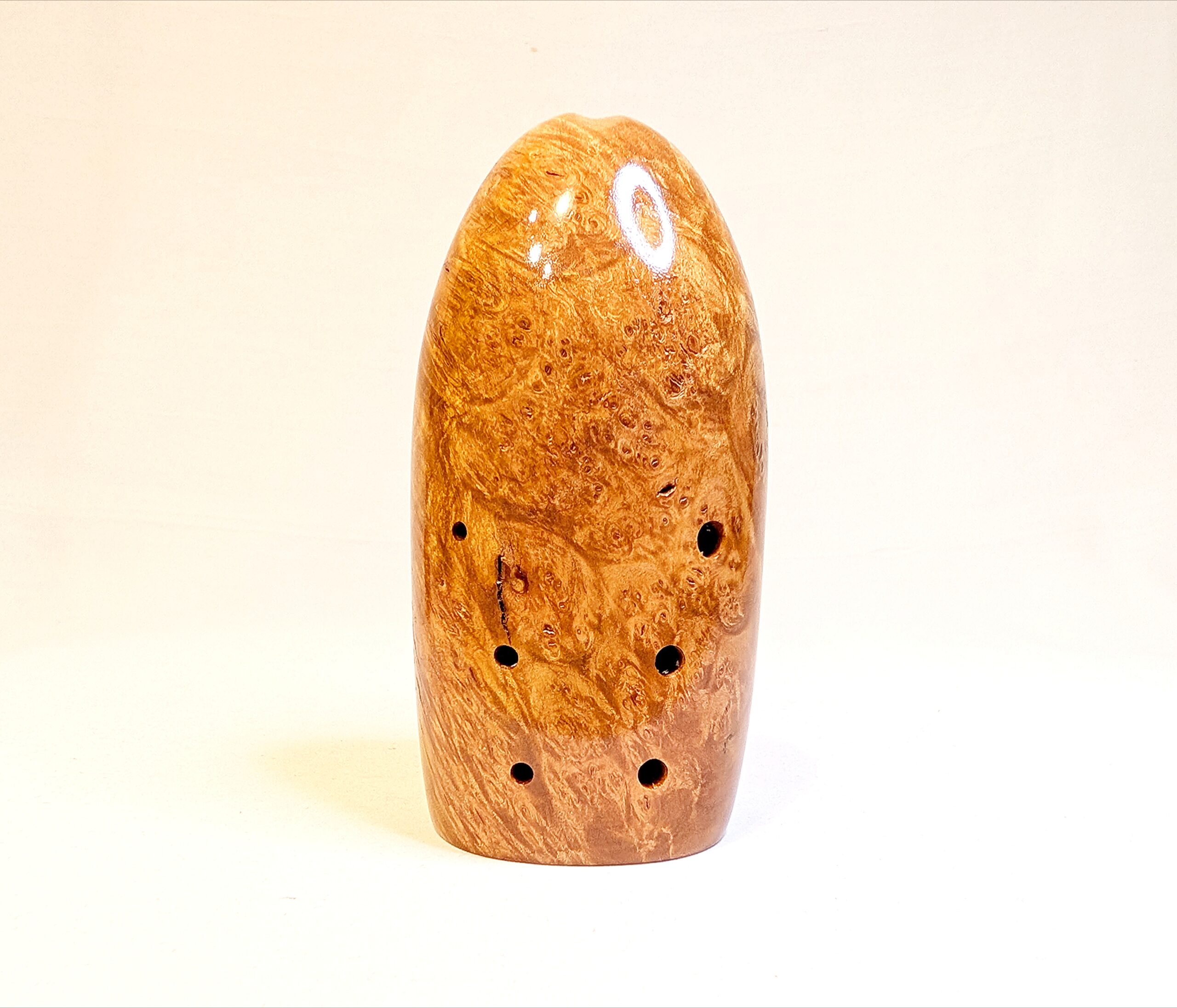
BASS B3 WOODEN XUN
Range: A3-C#5 (17 notes)
Size: 5.75″L x 3″W x 2.5″T
Comments: The bass B3 xun is my most popular size, and the deepest of the xun that I currently offer. Despite being a bass xun, it is surprisingly small for the tone – an ocarina with the equivalent tuning wood be the size of a football in comparison! The tone is deep and rich, with a haunting quality to it. Despite it being the largest size xun I make, while the breath requirements are a little more than the alto size, this xun is one of the easiest xun I make to play, requiring a more relaxed embouchure. Its size makes it still a very light and compact instrument, yet is large enough to really show off the beauty of the incredible figured woods I often use to make these xun.
THE GALLERY