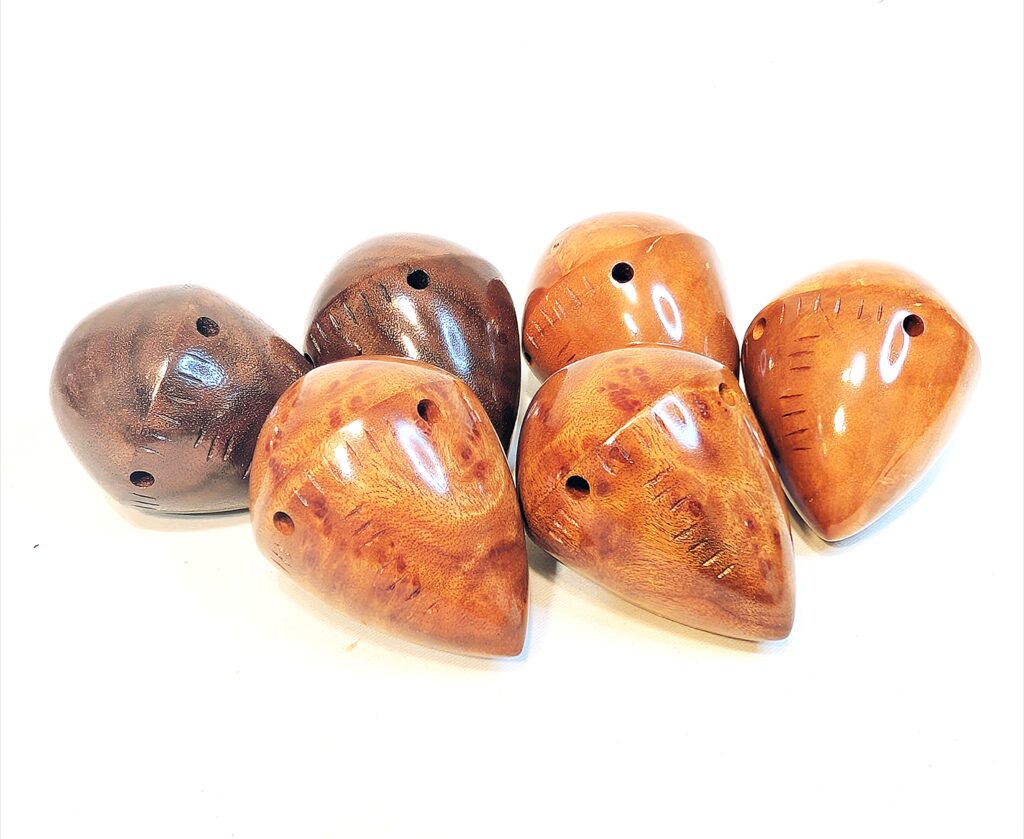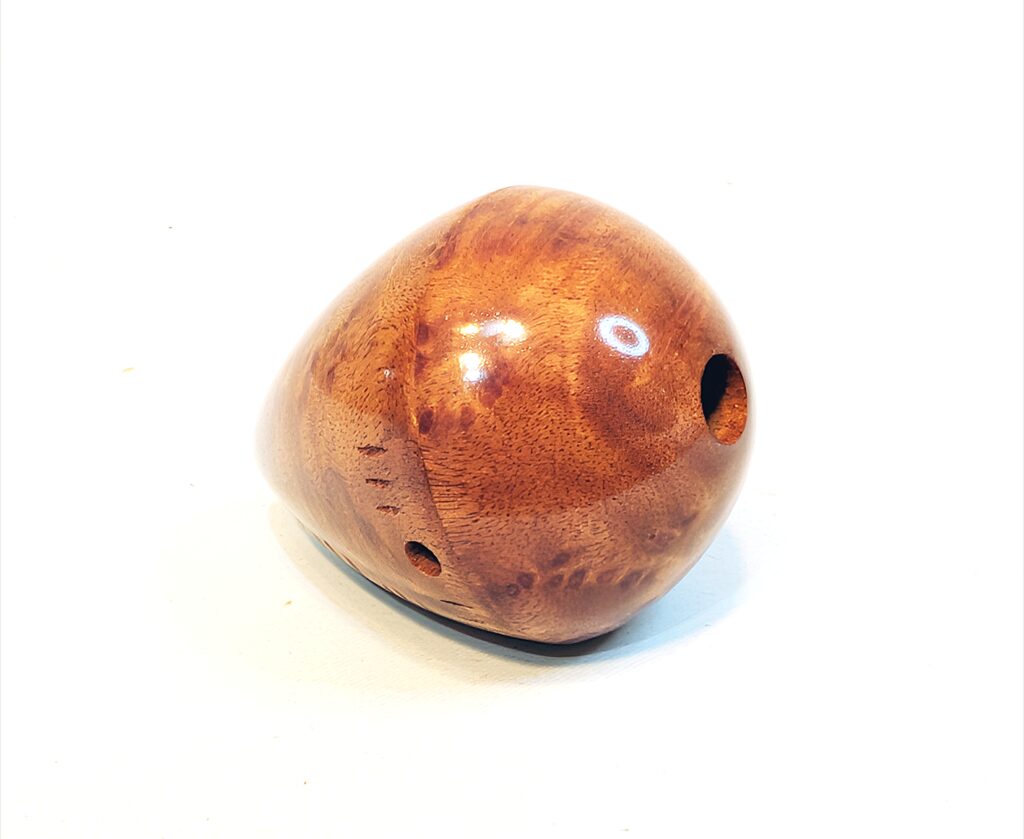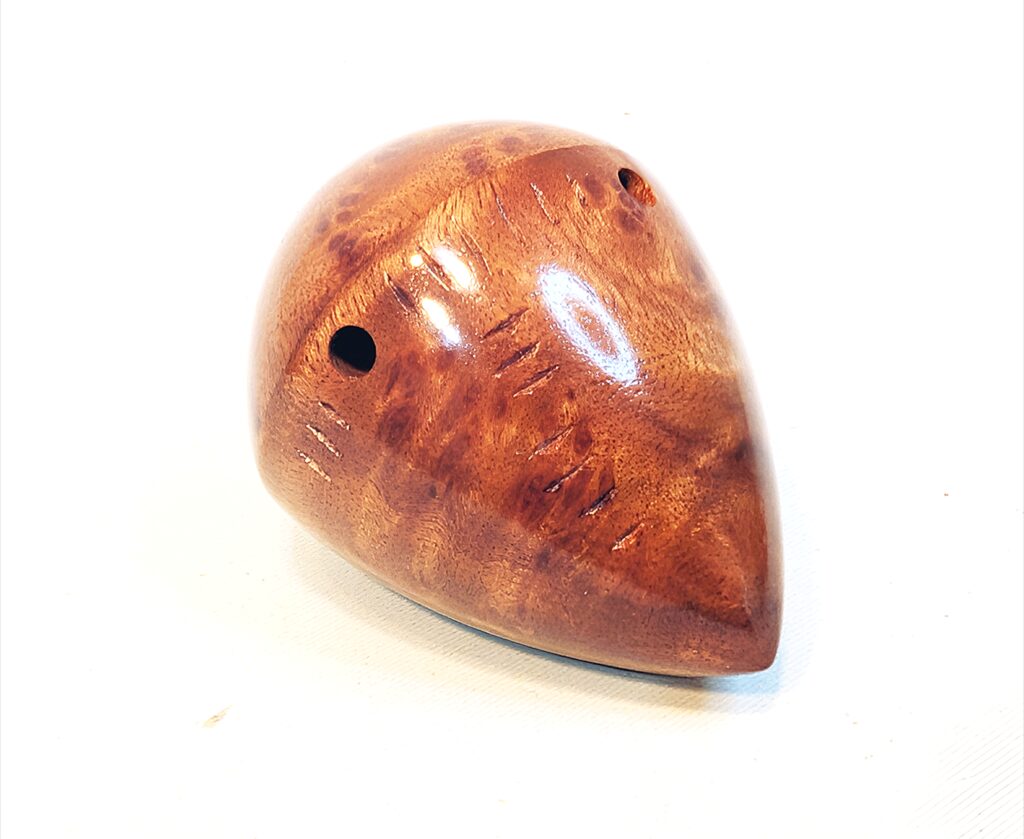
ABOUT THE RUNIK OCARINA
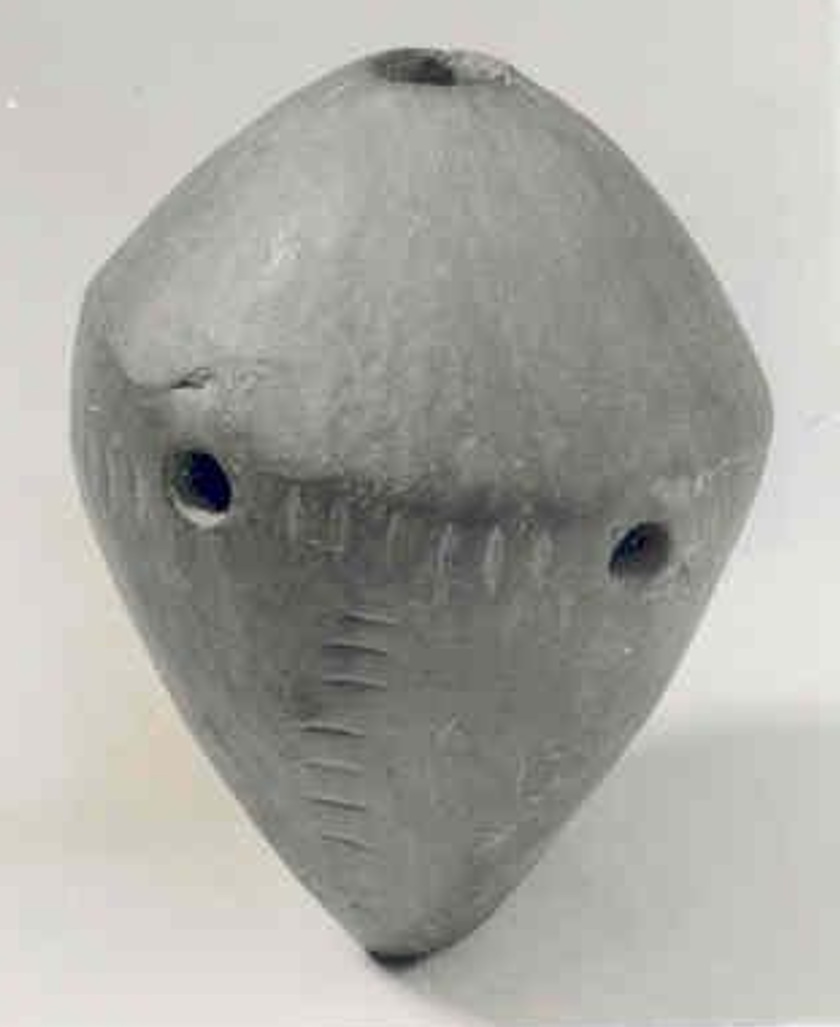
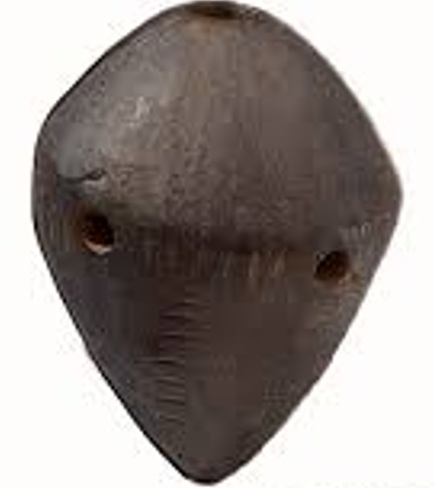
The Runik Ocarina is a fascinating piece of archeological and ancient musical history. Discovered during a major excavation in the late 1960s (1968-1969) in the village of Runik in Skenderaj, Kosovo, this clay earthenware artifact measuring only 8cm in height is the first and only one of its kind discovered to date. Dating back to a minimum of 6000 years, with most estimates placing it as old as 8000 years, the Runik Ocarina represents one of the oldest, if not the oldest, vessel flute ever discovered (unlike the commonly circulated numbers that ocarinas and vessel flutes are 12000 years old or older, these numbers are not backed by any verified, published archeological records or artifacts from any culture around the world, and have unfortunately arisen due to the very poor overall reporting, recording, and understanding of ancient vessel flutes as a whole.)
What is perhaps the most exciting part about this artifact is that it is fully in-tact and virtually undamaged, making it one of the oldest fully-playable instruments ever discovered as well. Unlike its name suggests (which has been adopted both by the culture and for historical reporting), the Runik Ocarina is not in fact a true ocarina, but rather a rim-blown vessel flute, played exactly like similar analogous instruments such as the Chinese xun. Unfortunately, there are no known recordings of the original artifact, however with the available information, we can very accurately extrapolate the critical dimensions and parameters needed to replicate this artifact to a very high degree of accuracy to understand what ancient neolithic humans of the time might have played and heard. And that is exactly what has been done here at Bretti Musical Instruments!
ABOUT THE BRETTI MUSICAL INSTRUMENTS REPLICA
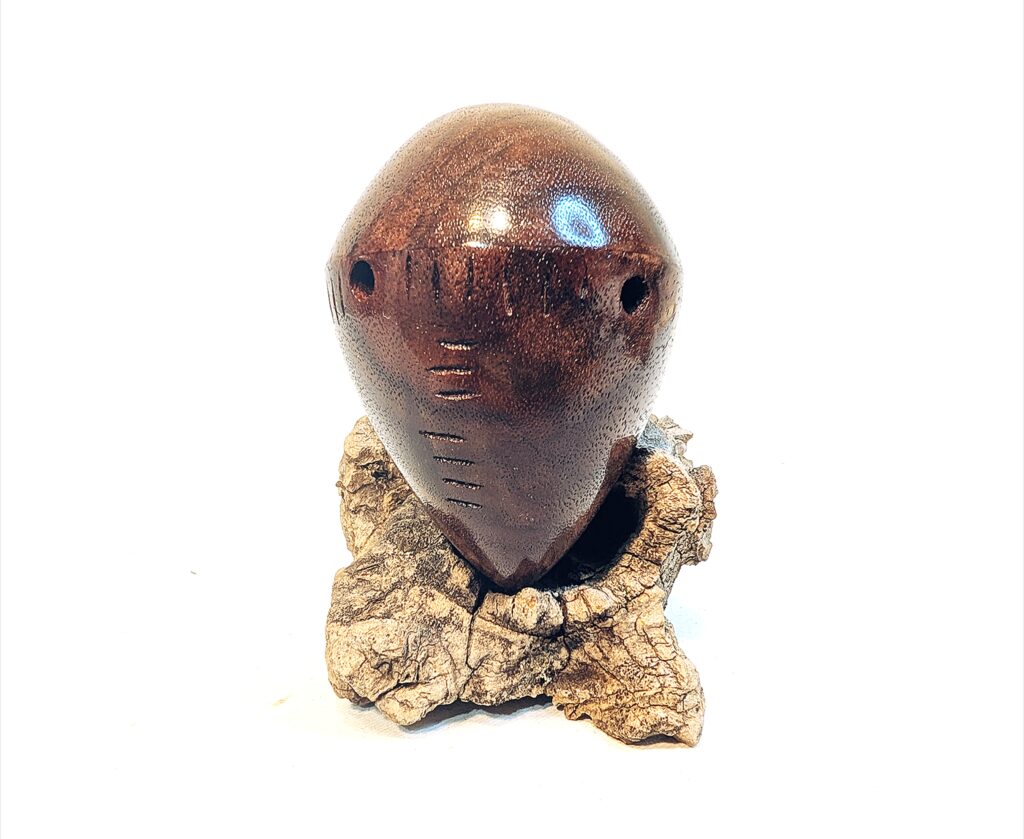
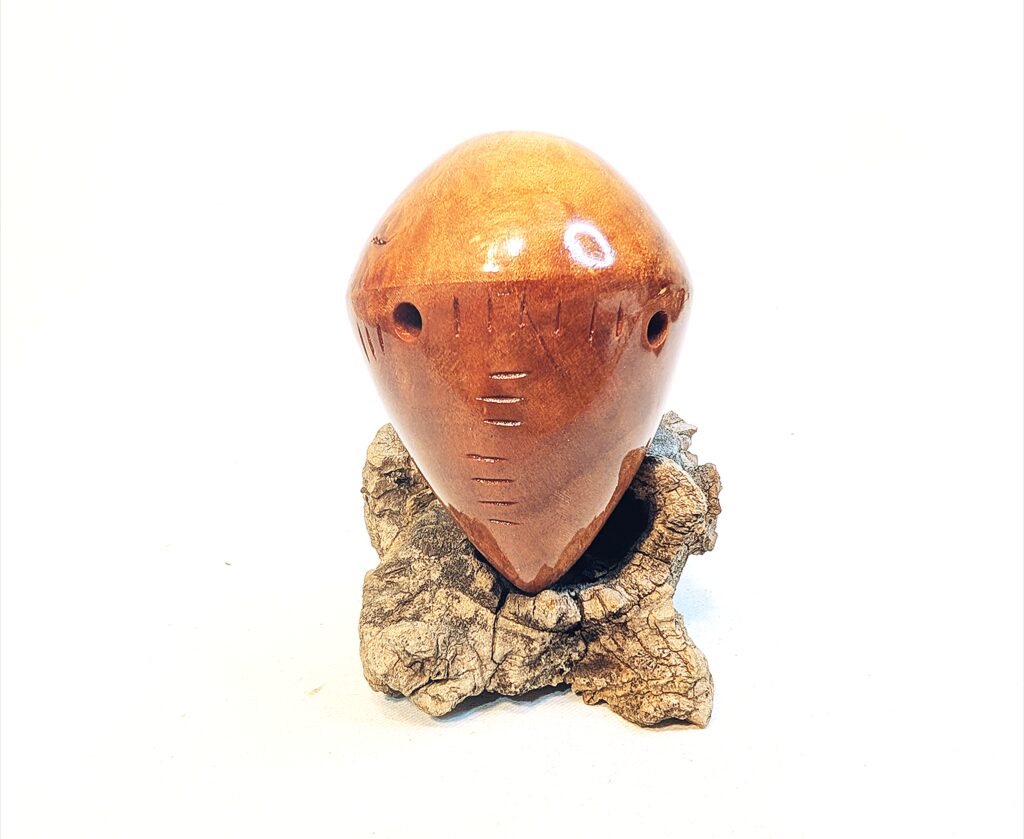
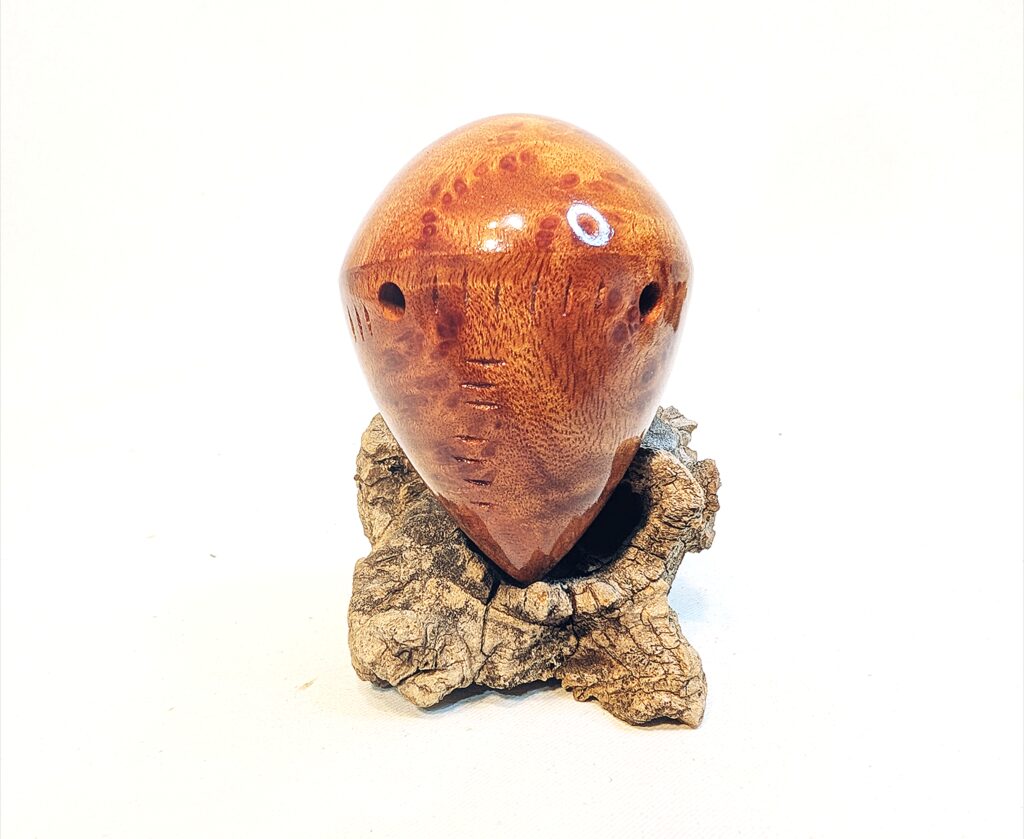
In replicating the Runik Ocarina, I didn’t want to just create a representation or inspired instrument, but a model as physically close to the original dimensions and features of the ancient artifact to better understand and represent the original form and tuning of the instrument. Although is very little published details on the original artifact, with just some general pictures and articles on the dig, as well as the facts that are known about the instrument we can accurately recreate and rebuild the original instrument and its close to original tuning.
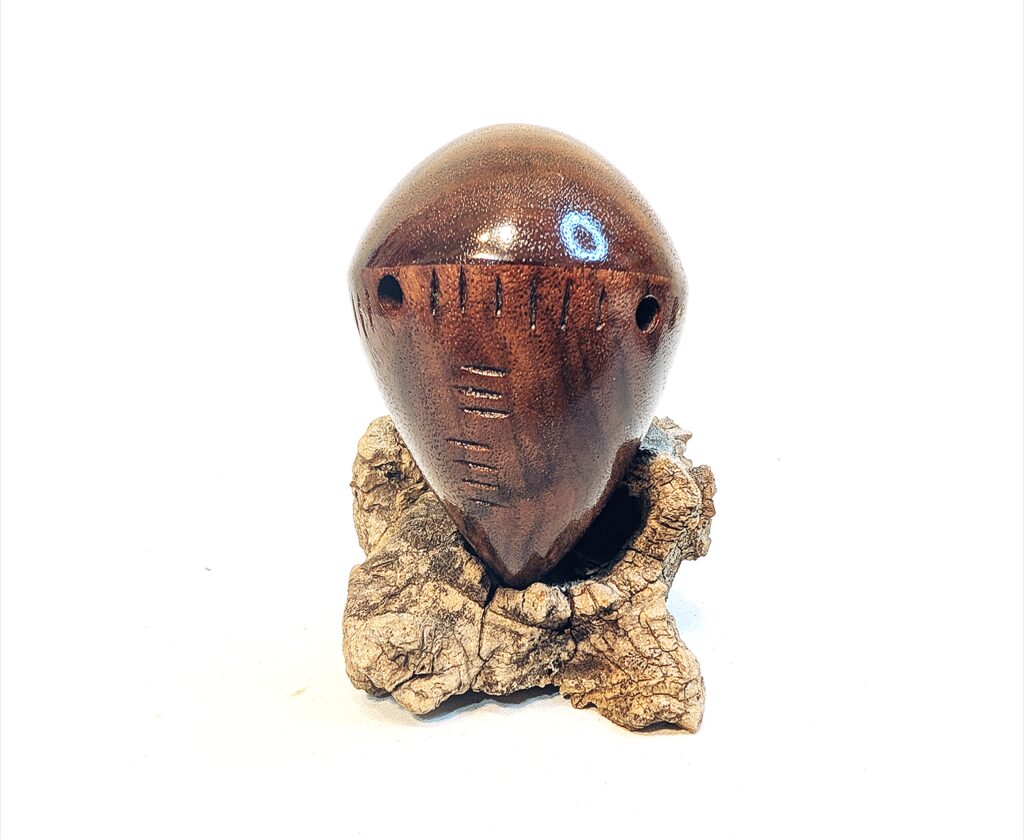
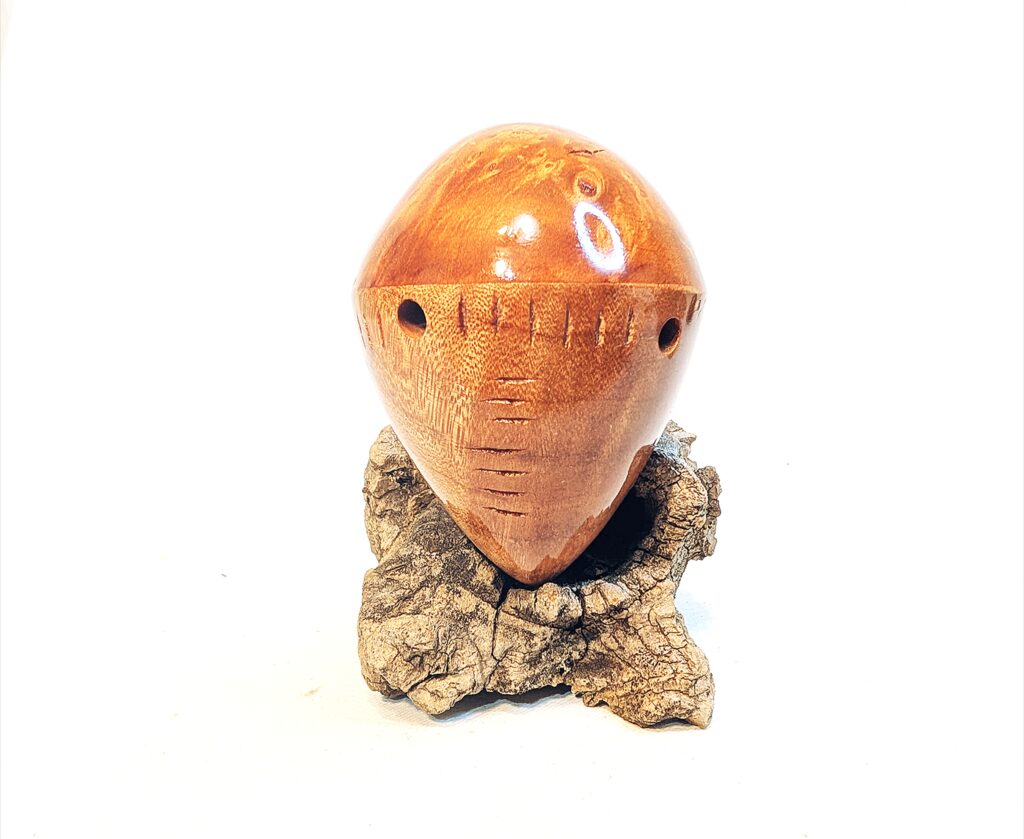
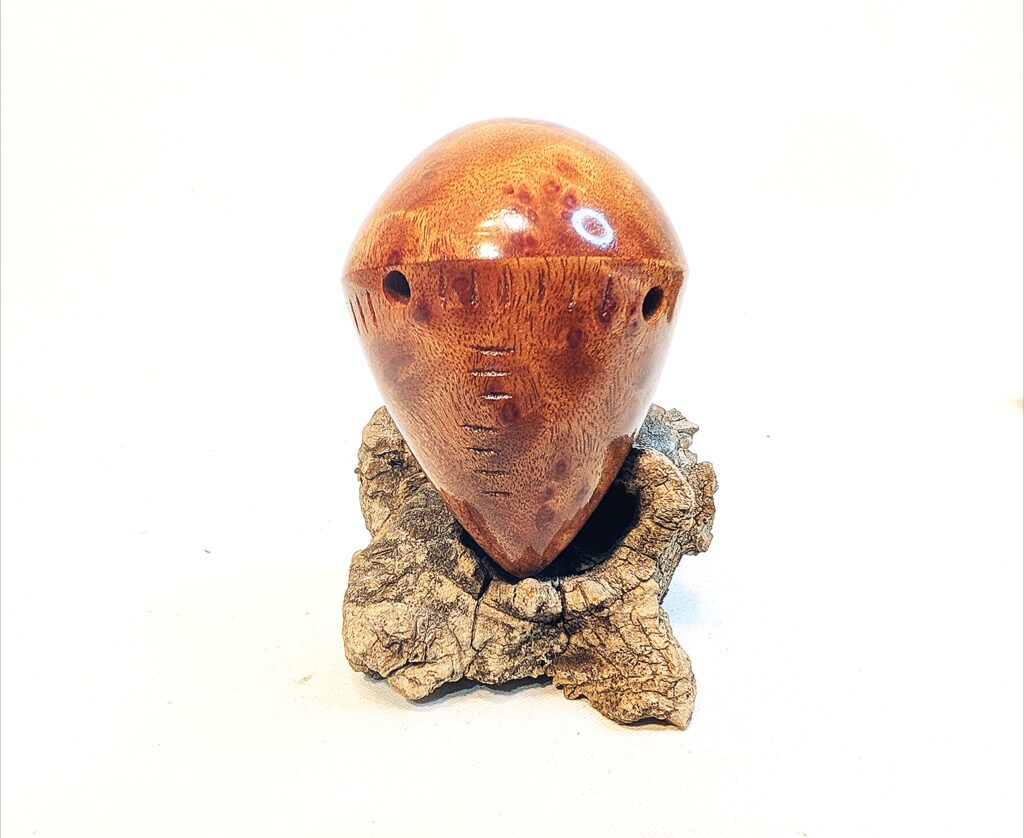
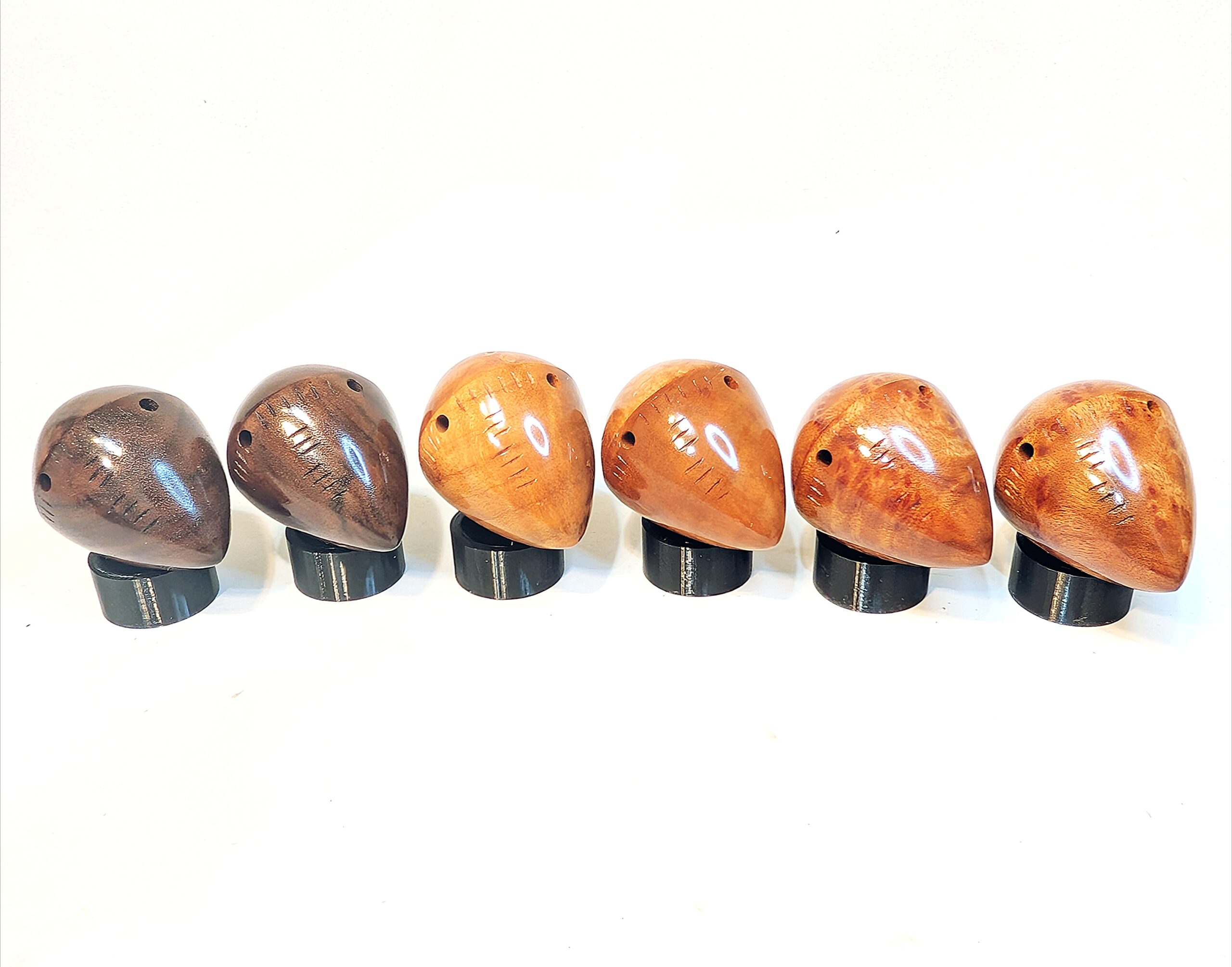
While any historical replica will not be 100% accurate, I strive to do my absolute best with underlying research and design, and to present the material as transparently and well-informed as possible. Now, in my process, I have to make two major concessions. The first is material. While the original artifact was a fired earthenware clay vessel, my replica (like all of my replicas) are made from wood. As I have come to specialize in wooden vessel flutes, with significant experience now through my xun and ocarina efforts, I have developed the necessary knowledge, tools, techniques, and skill with my processes for wood. At the current time I do not have the infrastructure for pottery, and while this may change in the future, for now I am leveraging my expertise in wood to recreate these artifacts. While the material is not exact to the original and may have some minor differences from the original timbre, the size, shape, physical features, and tuning (to the best of my abilities to derive from the information available) will be extremely close to the original artifact. While material does play a role in sound, this role is still overall minor compared to the actual craft on an instrument, and you will find that any instrument, regardless of the material, will still sound like that instrument at its fundamental core, with the material only flavoring the core sound profile.
The second concession is in determining the wall thickness. While the major length is known, from which I can extrapolate the major diameter, holes sizes, and overall proportions, no known information is published about the wall thickness and cavity size. As a result, I have had to take my experience as a wooden vessel flute specialist and apply best practices from my knowledge to reasonably approximate the wall thickness to the best of my ability. We know that the original walls could not have been too thin otherwise the artifact would not have survived. However, based on my experience the walls for a vessel flute of this size could also not be excessively thick. Therefore, applying my practical knowledge of instrument making, along with modeling and testing, have come up with what I believe is a very good idea to what may be reasonable for the wall thickness. Why does this matter? With the external shape remaining the same, a change in wall thickness will change the fundamental note and tuning slightly. However, for this size the effect will only be minor, and I believe this current model will be very close the original artifact as a result.
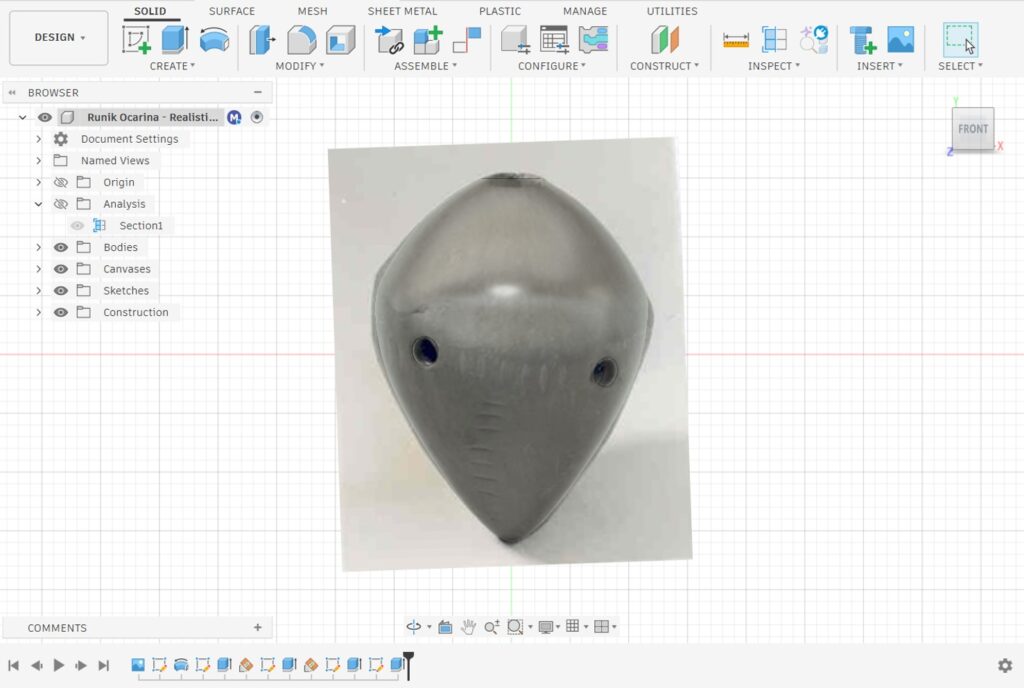
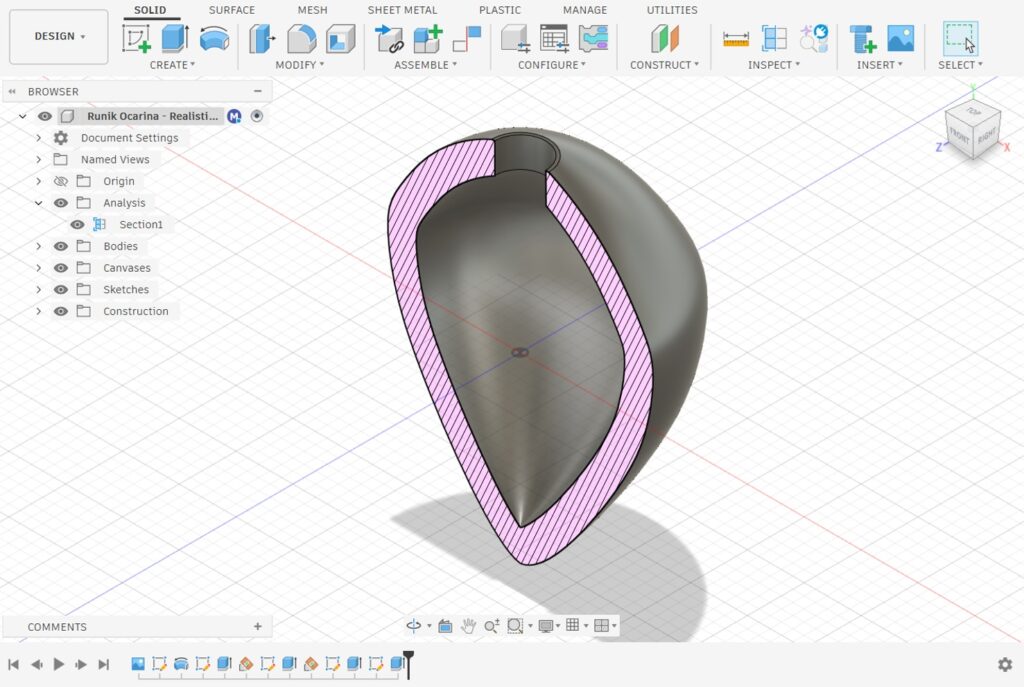
Taking these considerations into play, from the available information and pictures I have been able to recreate the fingerhole and soundhole sizes to replicate the potentially original tuning of the artifact as close as possible aside from physically taking measurements in person. At this present time, there have been no published recordings or observations on the tuning of the original artifact, and as such the replication efforts at Bretti Musical Instruments represents the first publicly reported and documented findings. Based on my reproduction efforts, for the given size cavity and holes, I have found the Runik Ocarina would most likely have the following note range and progression (based on the standard of A4=440Hz): C#5, E5, F#5. If you play these notes out, you will come to a surprising realization: the tuning follows a pentatonic scale progression!
THE WOODS
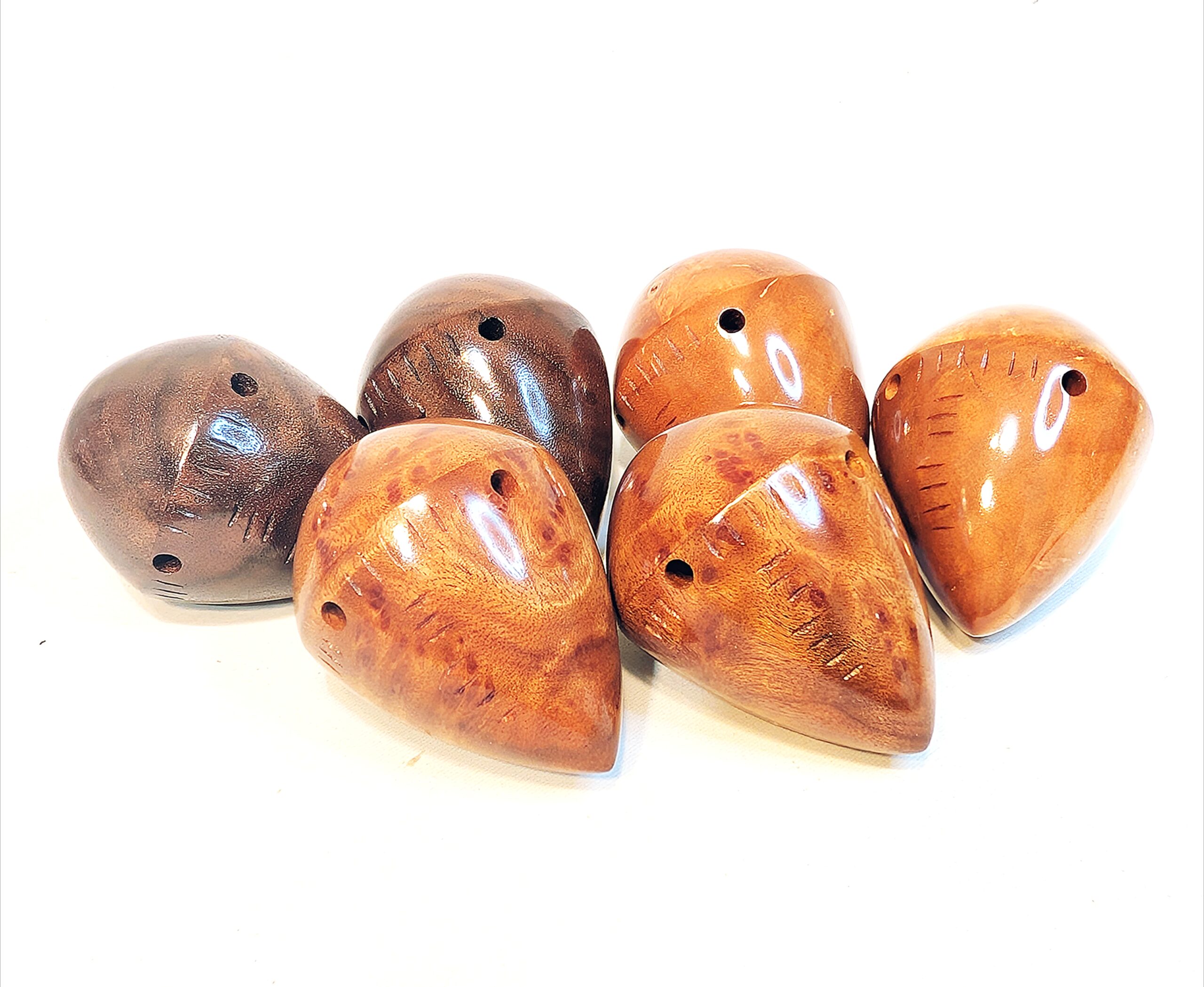
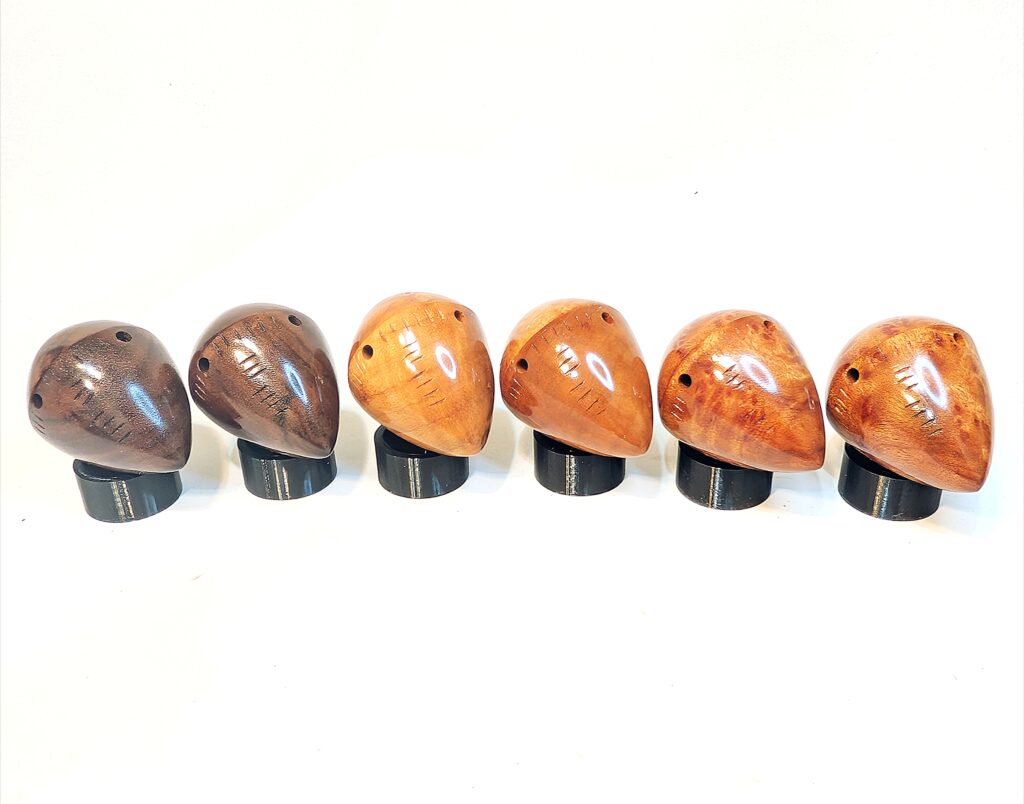
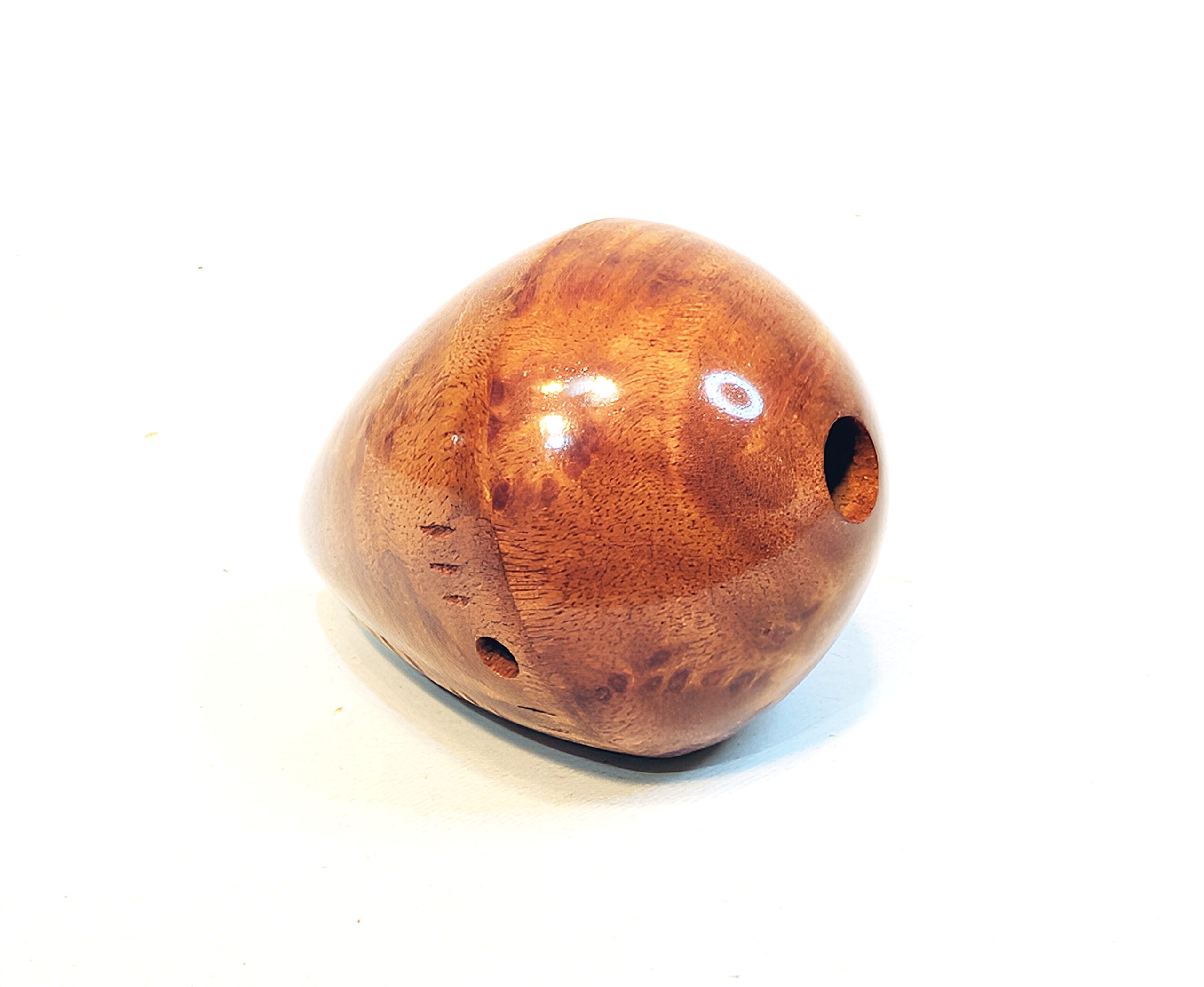
Like my other flagship instruments and historical replicas, the Runik Ocarina can be made from virtually any wood in the world as long as I can source it. Because of the way vessel flutes function and are crafted, like my xun in particular I can use woods that have live edge features, cracks, checks, and bark inclusions as requested, carefully integrated into the overall design. While the material may have some effect on the resulting tone, note that for a small vessel flute such as this the effects are very minor, and I have found that both soft and hard woods will have a rich, breathy, and bold voice.
THE FINISH
Each Runik Ocarina replica is fully sealed on the inside of with several coats of high grade shellac to protect it from moisture during regular practice. For the outside, I offer two styles of finish. The first is several layers of hand wiped oil-based hardening varnish which I use for most of my instruments, which penetrates into the wood to not only bringing out the rich beauty of each wood used even more, but provides a hard, durable, and glossy finish for a modern look. The second is a 100% pure tung oil finish, hand rubbed with at least 10 coats and cured for 30 days. This finish provides an extremely smooth, silky, and extremely natural feel of the wood itself, with a more raw matte finish. While this finish does not provide as much protection as my varnish finish, and should be maintained over time, it allows you to directly feel the wood, and may be more suitable at enhancing the beauty of certain woods like ancient bog oak, where the richness in texture may otherwise be lost to a glossy varnish. While both finishes provide extra moisture protection, please refrain from getting the instrument excessively wet.
GENERAL CARE
After each playing session, you should let the Runik Ocarina air-dry, giving it a good shake to remove excess moisture from the chamber. If cleaning is required, both the inside of the tubes as well as the outside may be sterilized with a very lightly dampened cloth or paper towel using a dilute mixture of water and dish detergent. Like any wooden flute, it is best to keep the instrument out of excessively cold or hot environments for extended periods of time, and if the instrument has been traveling in a cold environment, allow it to warm back up prior to playing, and take care to refrain from playing the replica in the cold winter air. For replicas finished with pure tung oil, it is recommended to reapply a few coats at least once a year for maintenance, and I can provide additional instructions on my recommendations for this as needed. With proper care, your Runik Ocarina replica will enjoy years of wonderful music that you can treasure and discover a unique voice with!
GALLERY