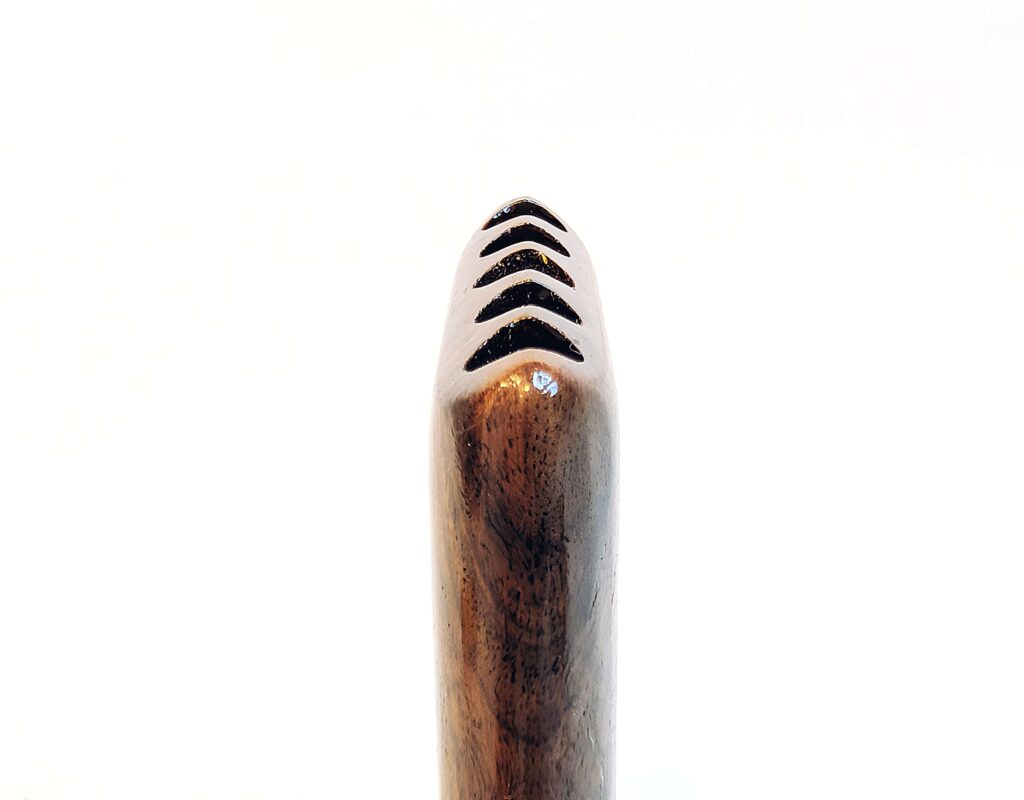
ABOUT THE JORVIK PANPIPE
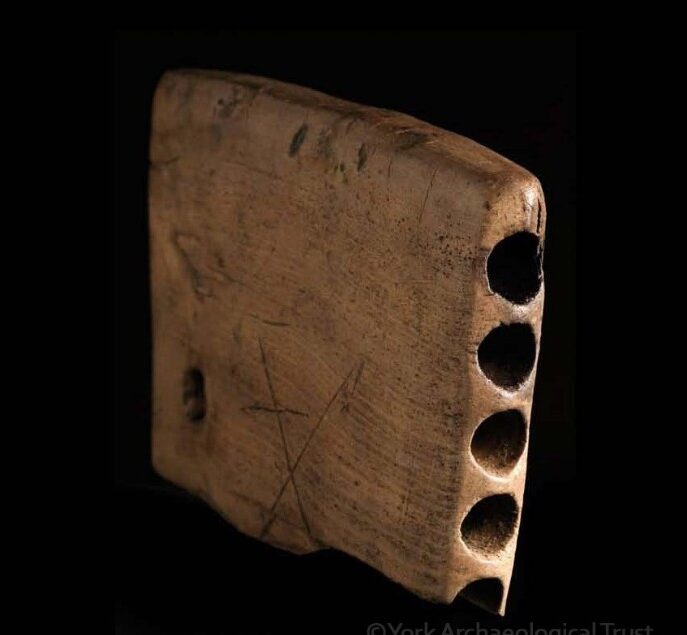
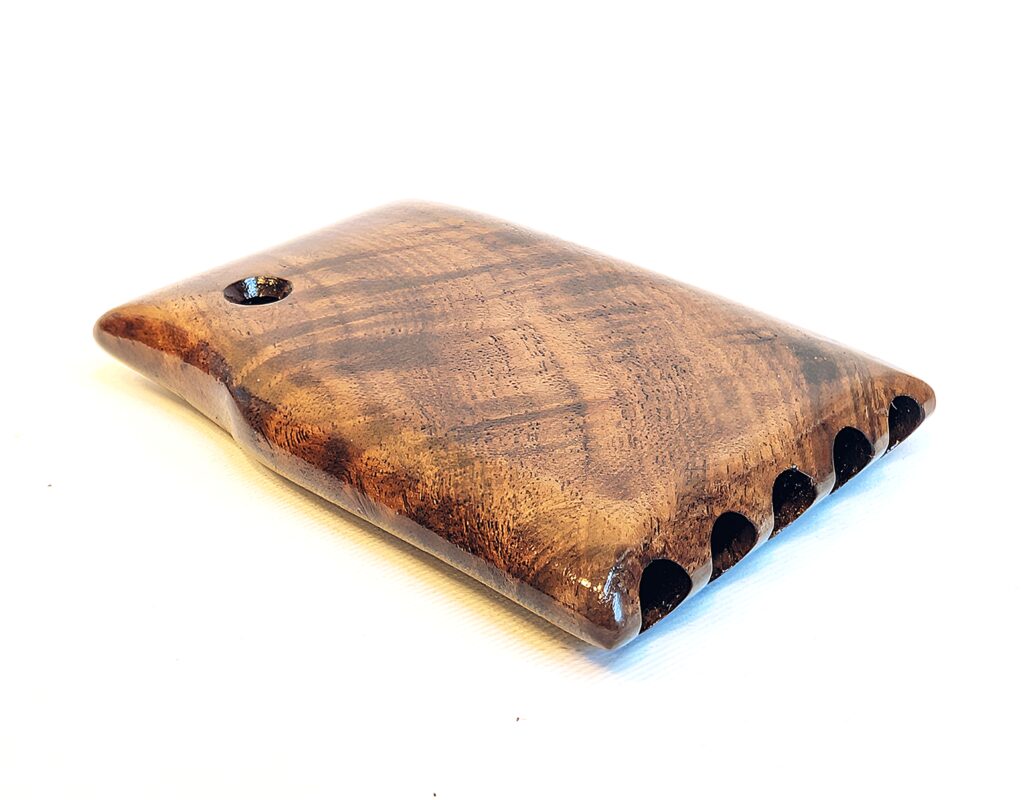
The Jorvik panpipe (artifact 9038) is a 1000-year-old Viking instrument discovered during the famous historical Copperfield dig at York in the UK, where a massive trove of tens of thousands of artifacts was unearthed, giving archeologists and researchers an unprecedented look into the everyday lives of people living during the Viking era. Only one of these panpipes was ever discovered, but the artifact was so well preserved that even after 1000 years buried in a peat bog it was found almost completely intact and nearly fully playable! The original panpipe was made from a slab of well-aged European boxwood, discovered with 5 tubes bored into the body (with 4 tubes remaining undamaged). The original tuning is roughly based on a minor key, however based on analysis of the tube lengths and recorded bore profile the historical tuning is not the same as what would be considered a typical common minor scale.
What is fascinating about the Jorvik panpipe is that while it is the only one of the Viking culture ever discovered, this style of panpipe has been found in numerous historic dig sited across Europe dating back to the Roman era 1000 years before the Vikings, made from a variety of materials including wood, clay, and even metal. The artifacts all share such extraordinarily similar characteristics that it is almost certain that the Jorvik panpipe was directly derived from these early Roman panpipes (also known as the syrinx). Not only were almost all of these made from boxwood, the shape, size, dimensions, tube bore diameters, and number of tubes are incredibly similar.
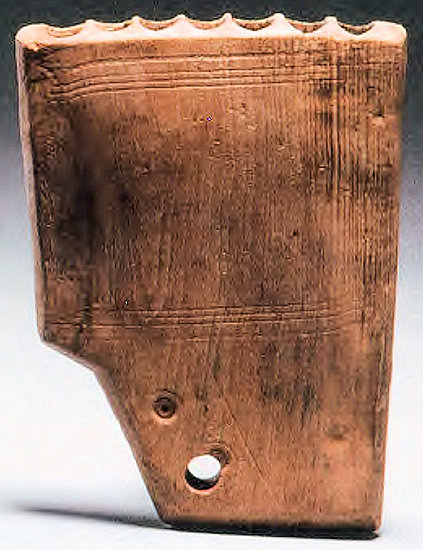
ABOUT THE BRETTI MUSICAL INSTRUMENTS REPLICA
In replicating the Jorvik panpipe, I wanted to create a very accurate model reflecting the actual features and details of the authentic historical artifact. While there is unfortunately overall little information published about the original artifact, the dimensions are known and published, and very accurate historical reference drawings can be found in numerous literature references: “The Viking Dig: Excavations at York” by Richard Hall, as well as the more recently updated “The Archeology of York: The Small Finds 17/13 Craft, Industry, and Everyday Life – Wood and Woodworking in Anglo-Scandinavian and Medieval York” by Carole A. Morris. By using the known dimensions and accurately scaling the drawings, I could create very accurate templates for my design based on the original artifact.
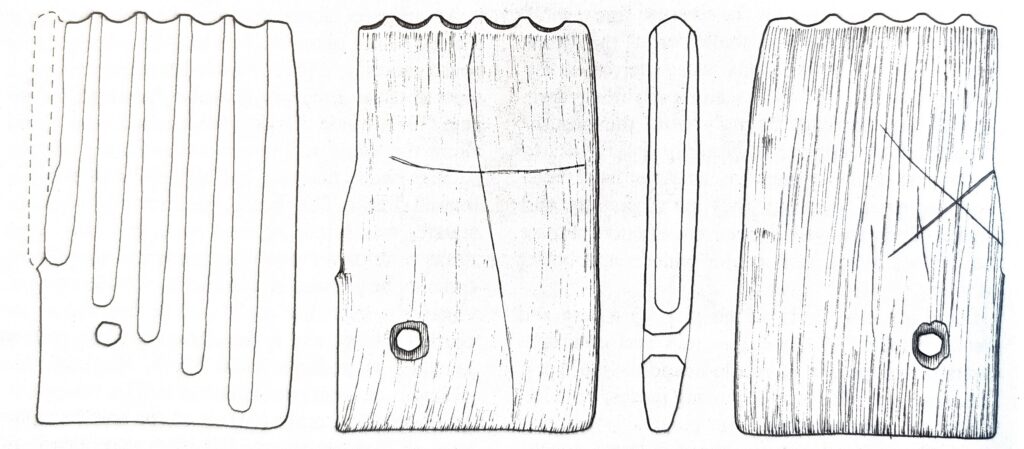
In diving into the details of this instrument, it has become very apparent in just how exceptional the craftmanship of the original instrument was. Based on analysis of the growth rings and grain, the original panpipe was made from a very aged and large piece of 100-200 year old boxwood, tangentially cut across the growth rings, which even at the time would have been a very expensive and prized piece of wood. The narrow bores which make up the pipes were very carefully and meticulously drilled using a parallel bore spoon auger, a simple but highly effective bit used since antiquity for drilling extremely precise and deep holes in wood, anywhere from only a few mm in diameter to tens of mm. The bores are also spaced only 2mm apart, which given the manual hand drilling process is simply extraordinary.
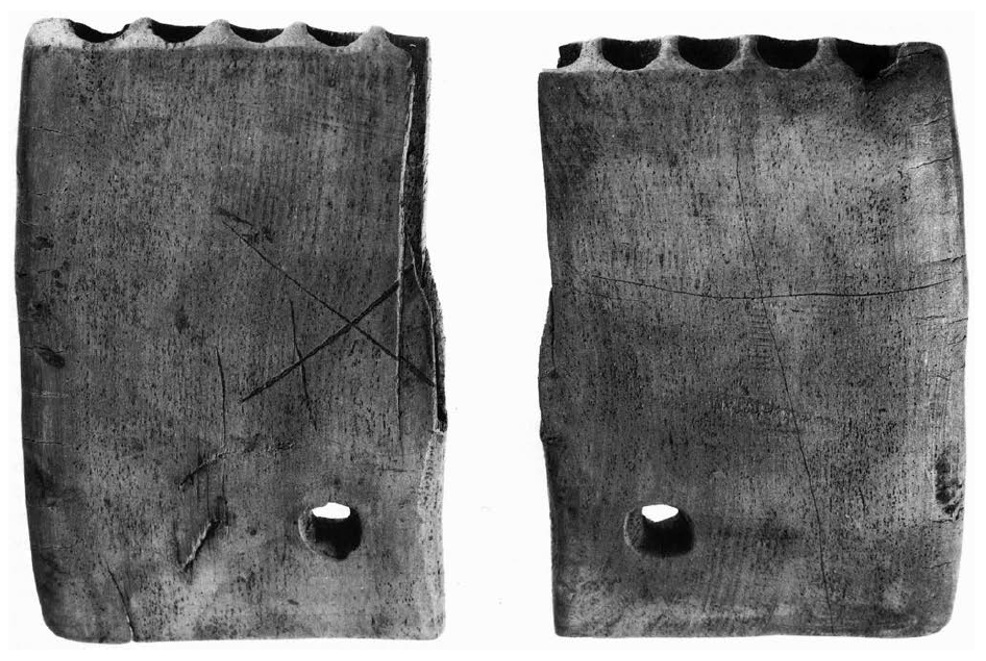
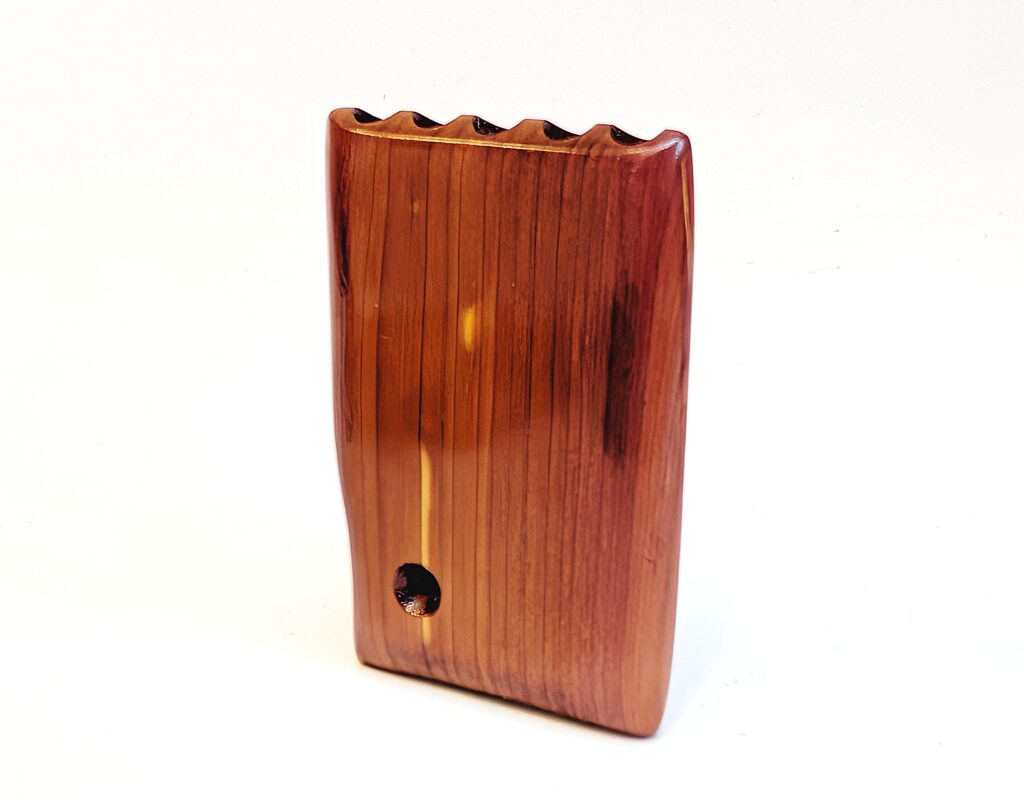
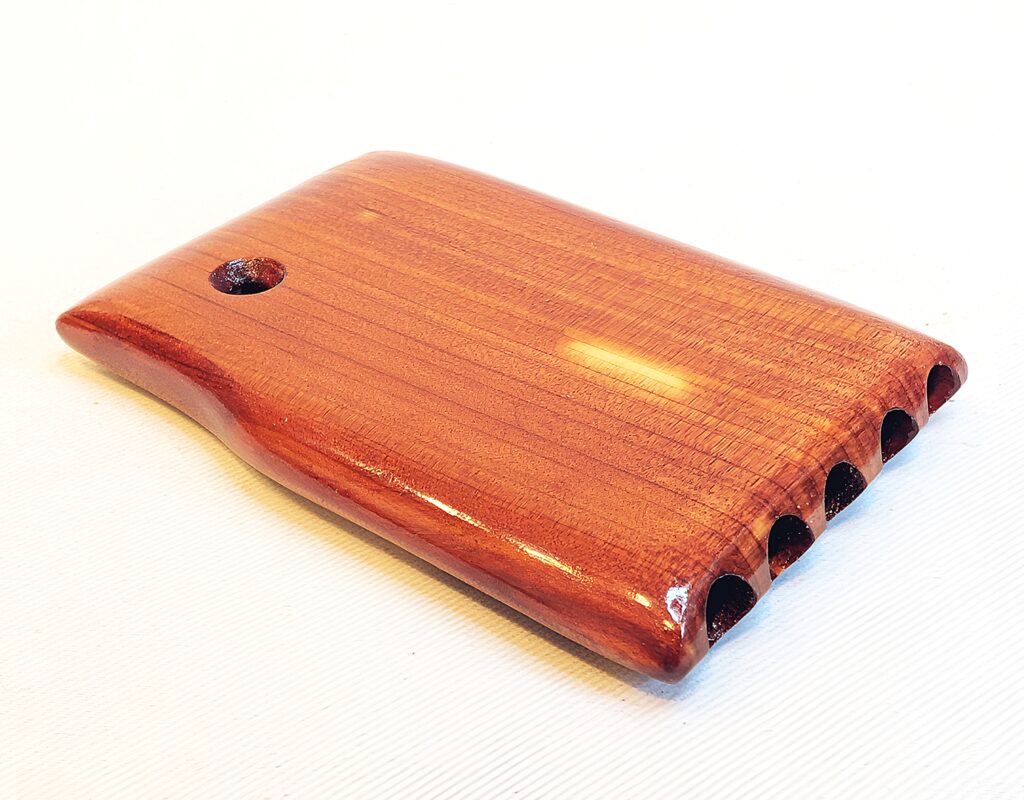
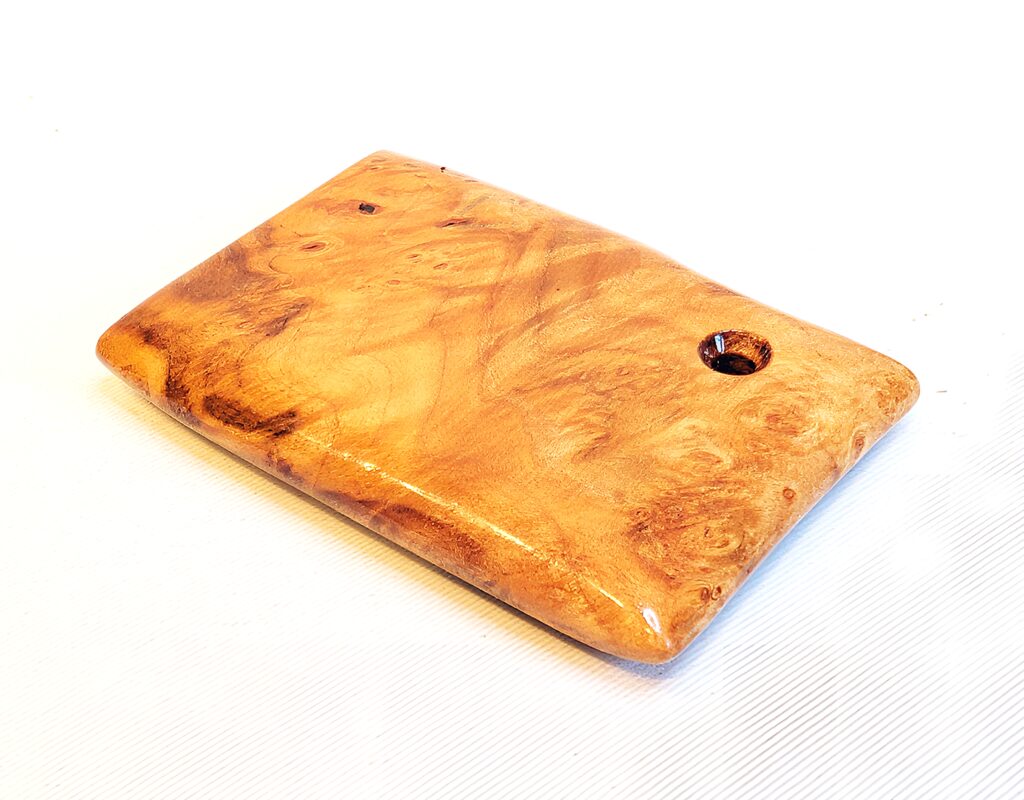
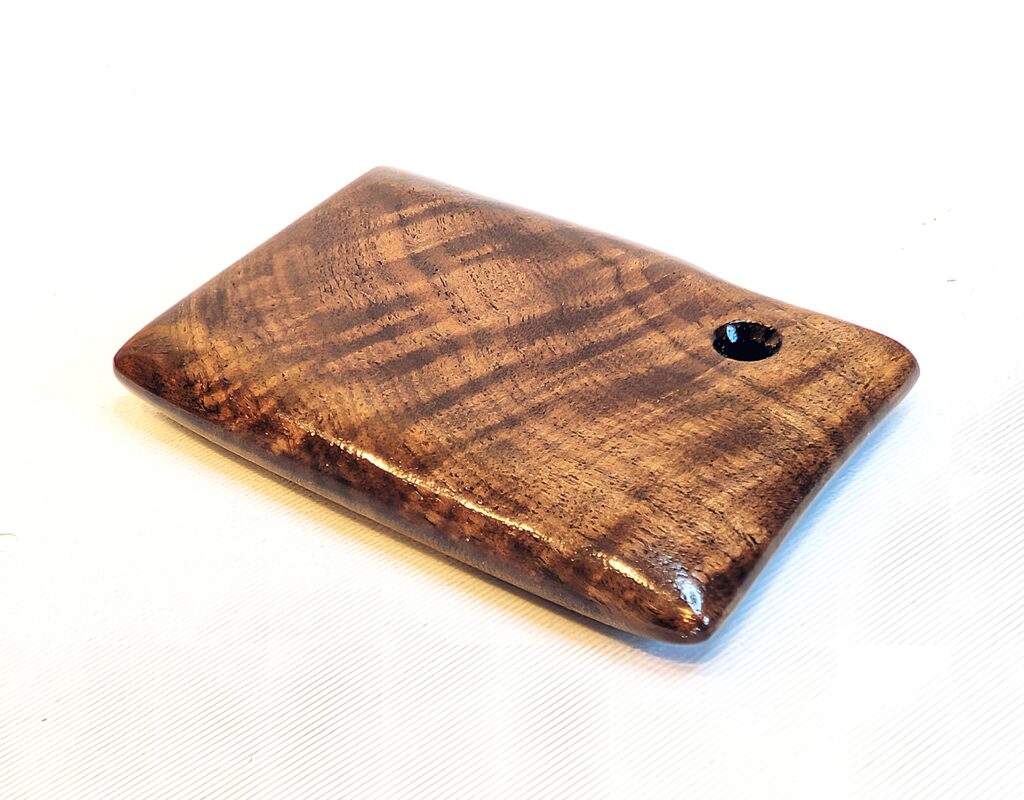
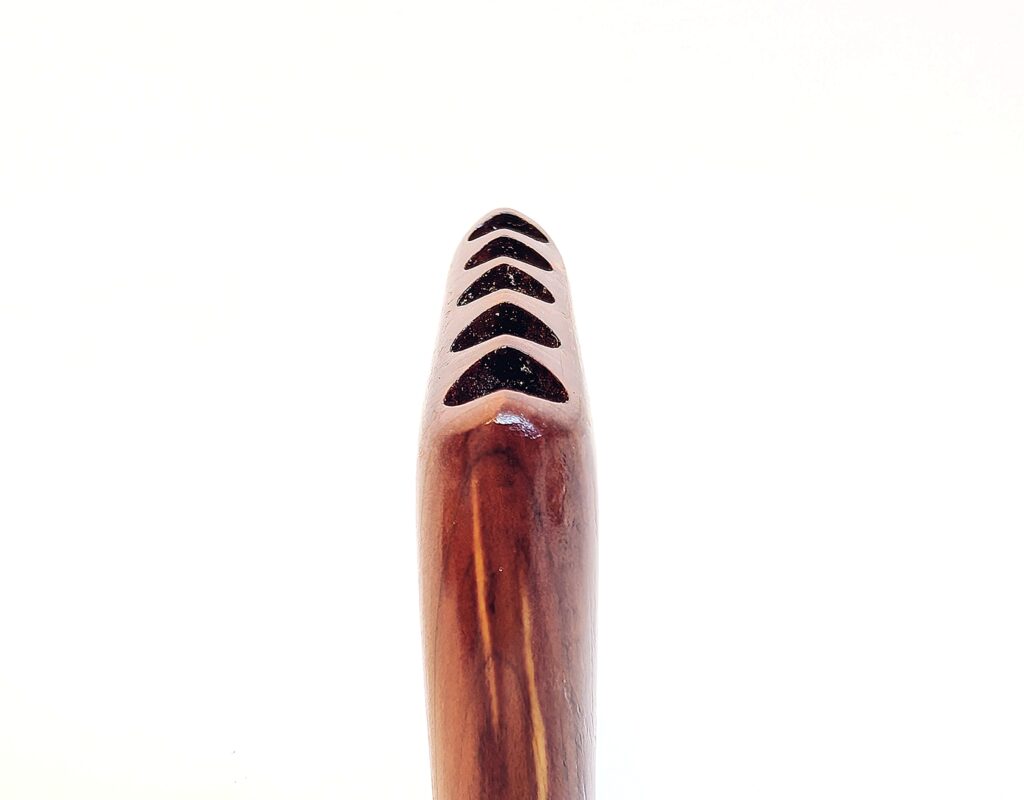
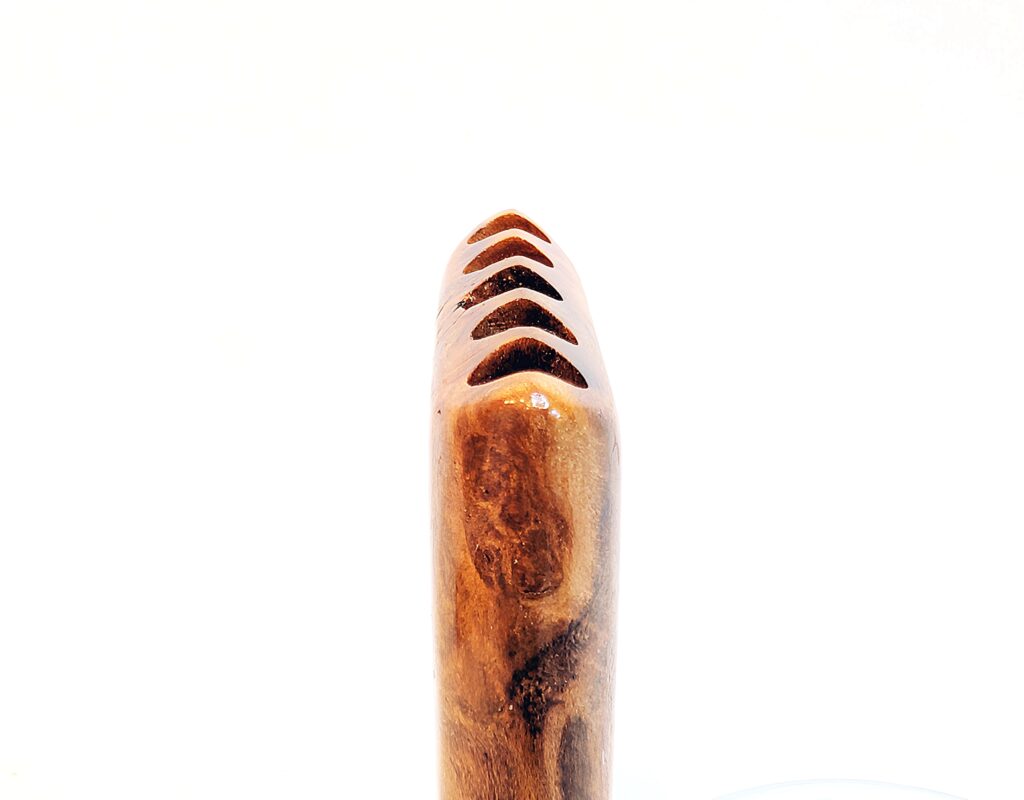
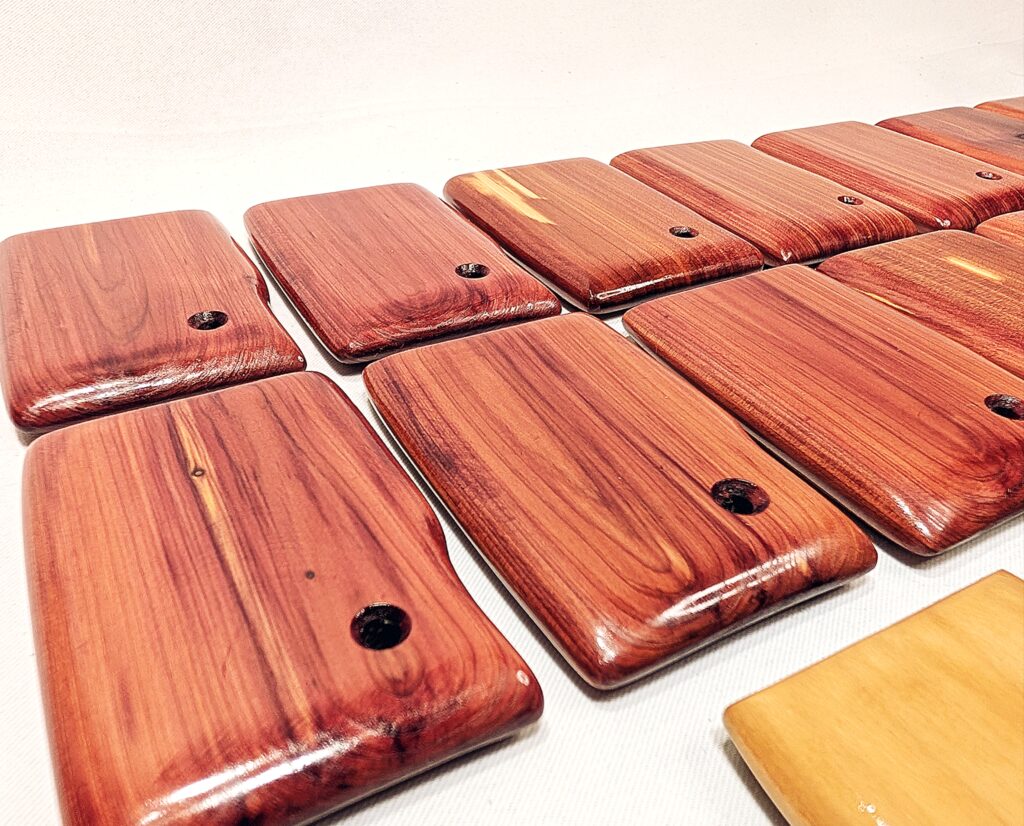
As a result, I have taken great care in reproducing all of the subtle nuances of the artifact as best as I can – from slight curves on the sides and bottom, to the triangular cut tapered top of the blowing edge, to the bevels in the carrying strap hole, and even replicating the broken side of the found artifact as it was theorized to have looked from the original dig site notes, and for the historical tuned models, drilling down to the original depths using the original bore diameter, while incorporating corrections for the spoon auger taper at the end.
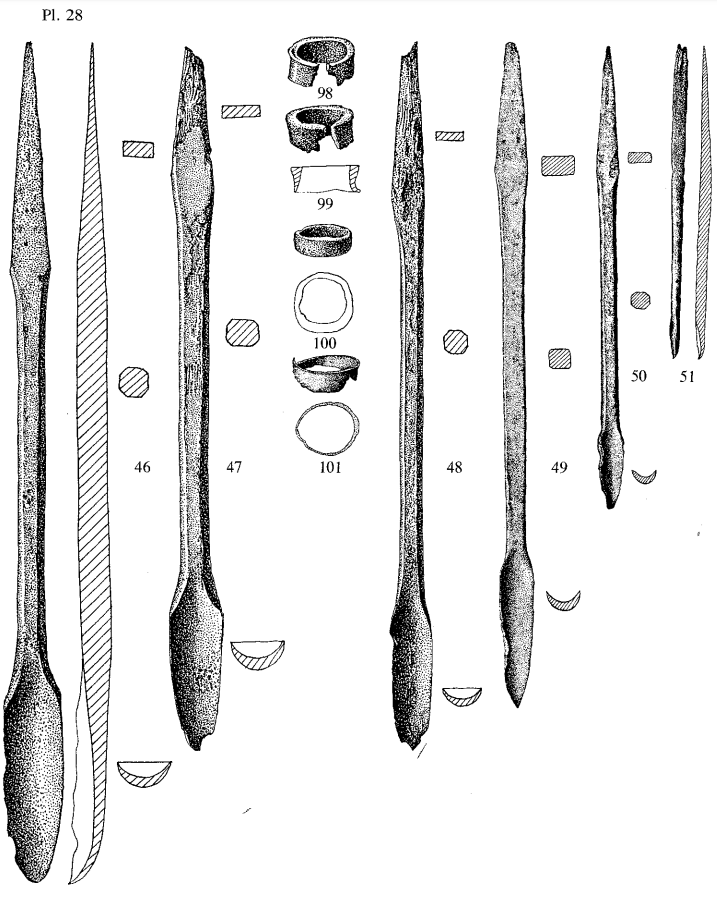
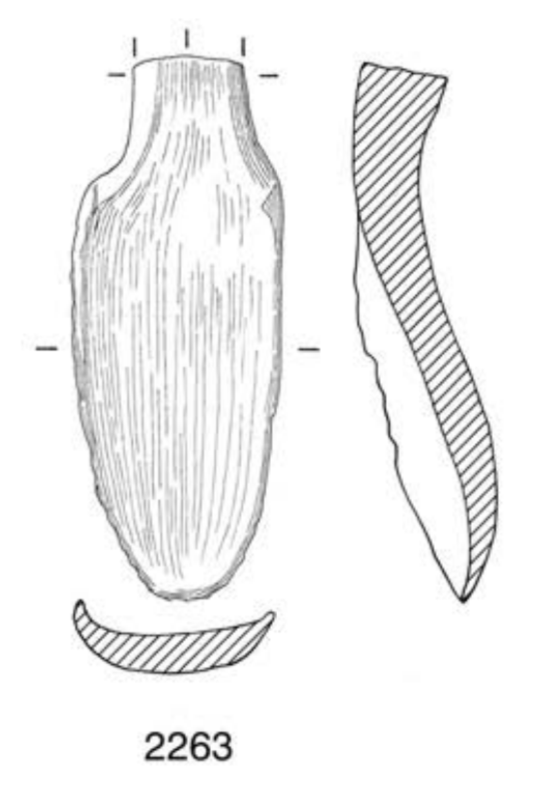
Because of the attention to these nuanced details, as far as I am aware this model is currently the most accurate reproduction of the Jorvik panpipe on the market, and perhaps the most accurate replica created even in published literature. This adds much more time and effort to the crafting process, but makes for a much more historically informed model.
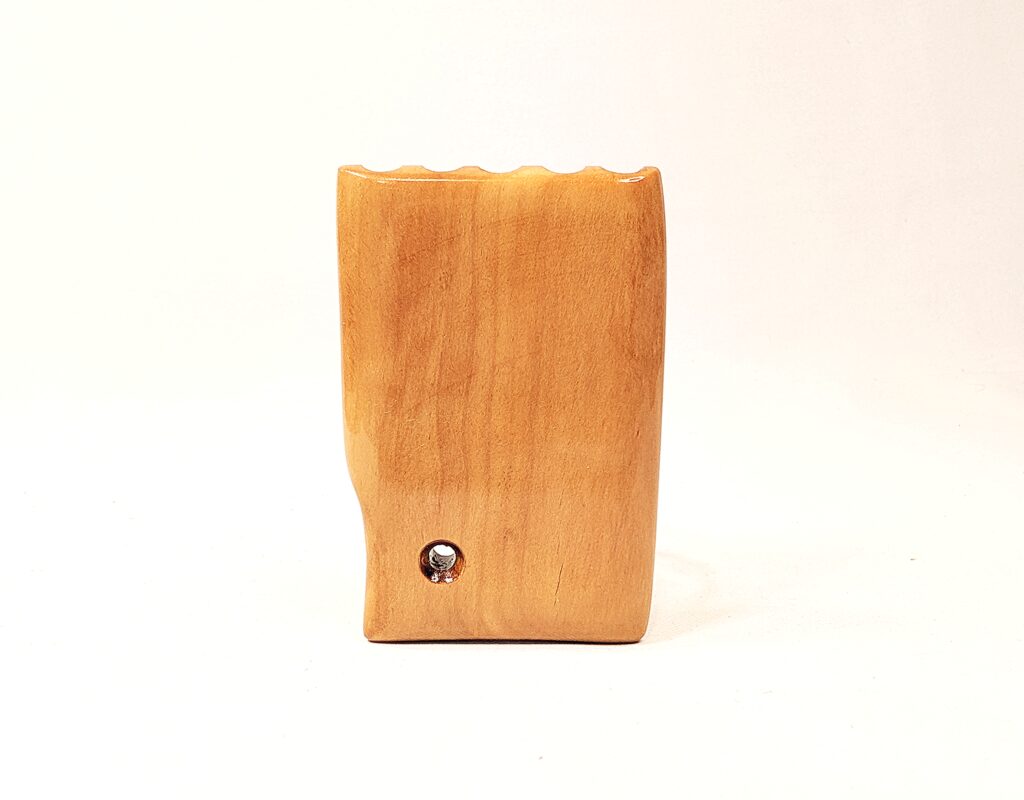
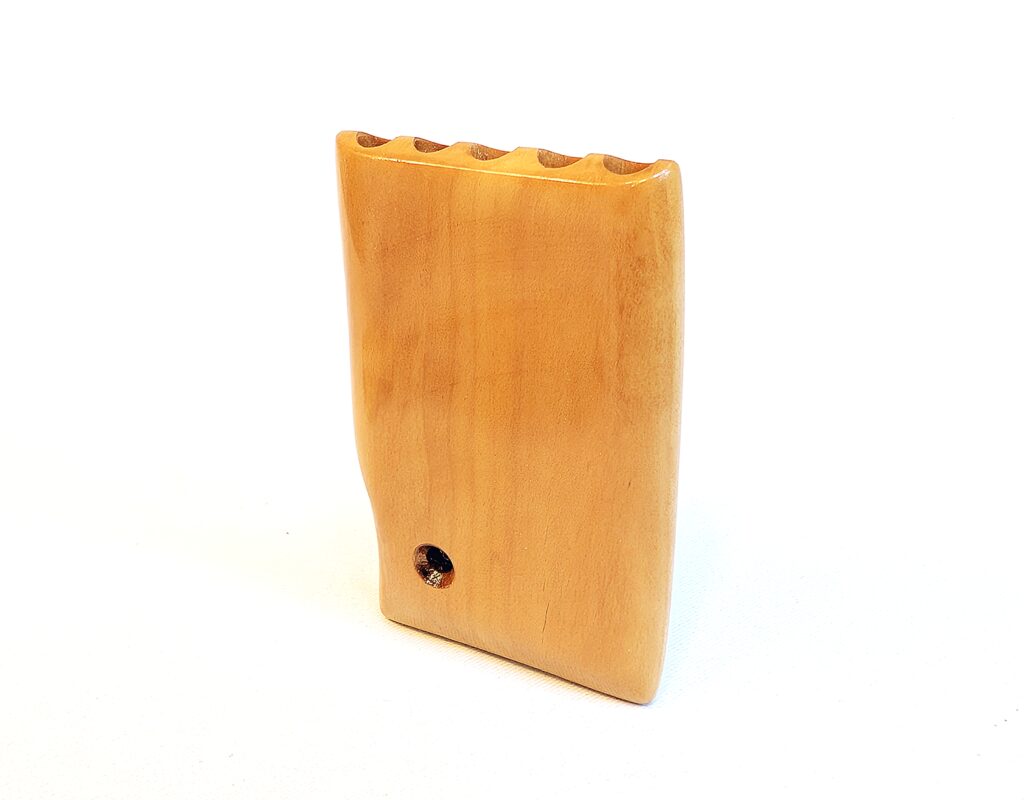
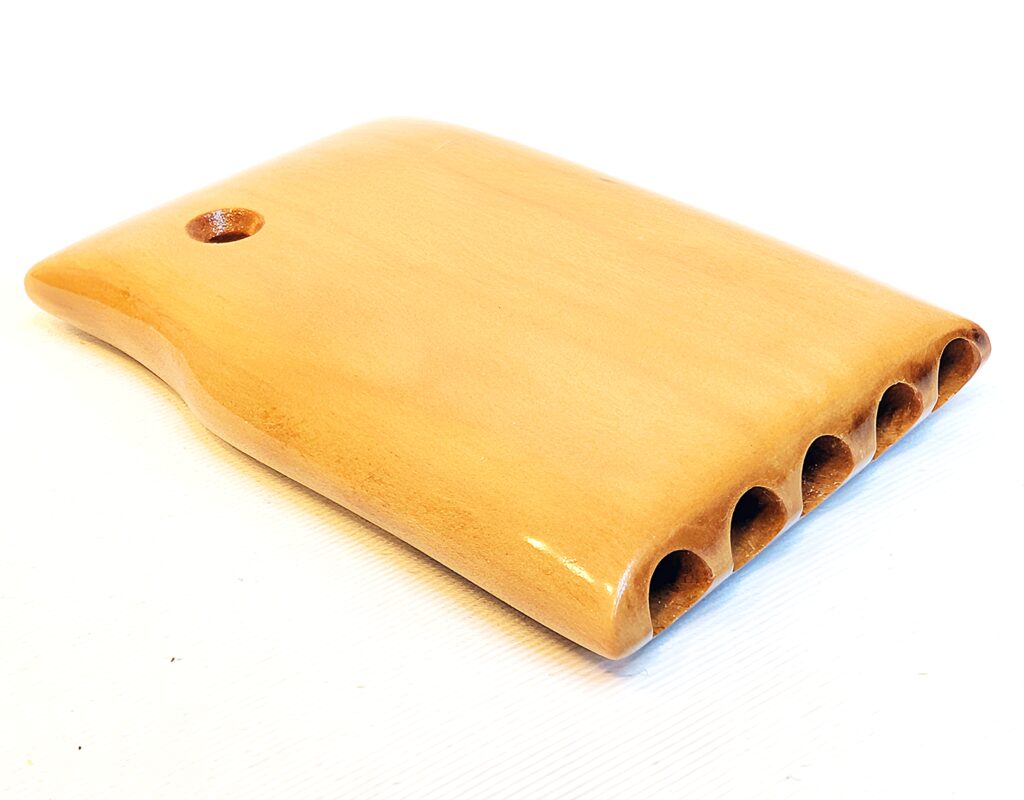
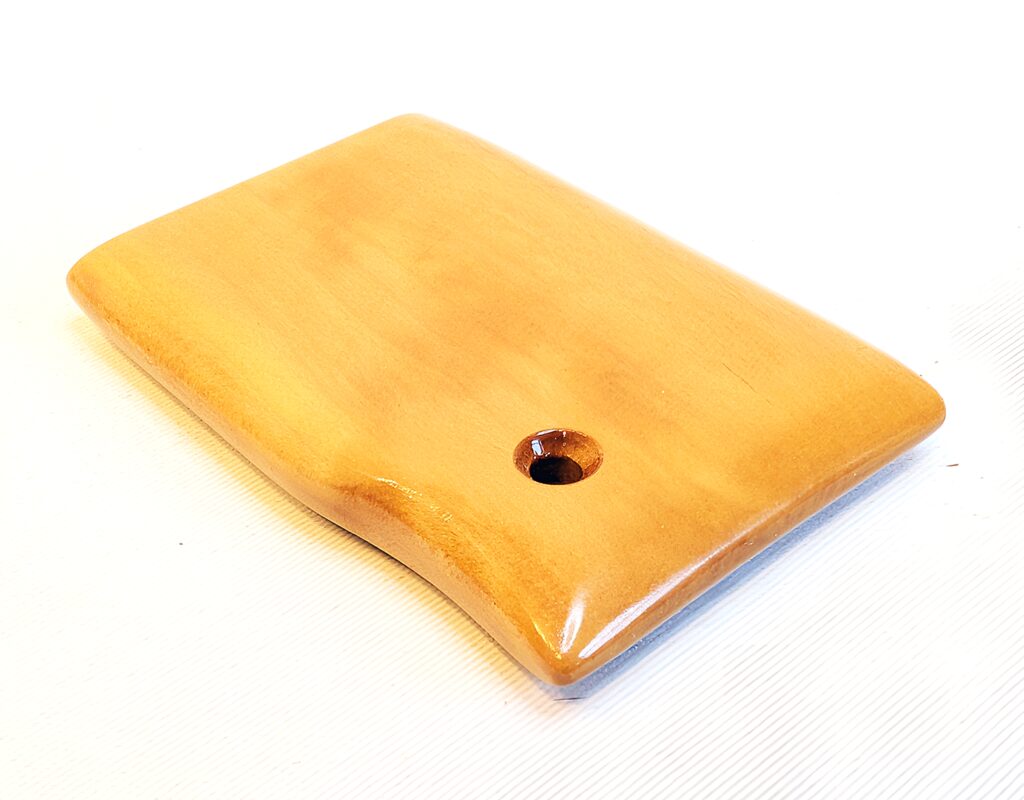
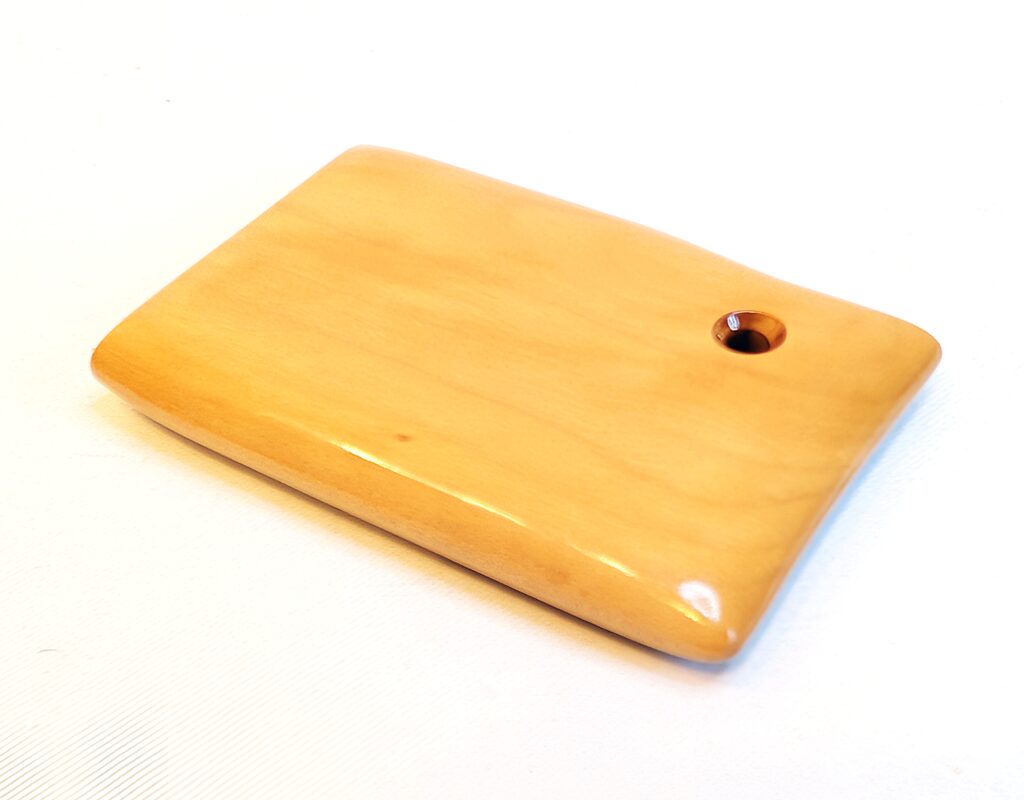
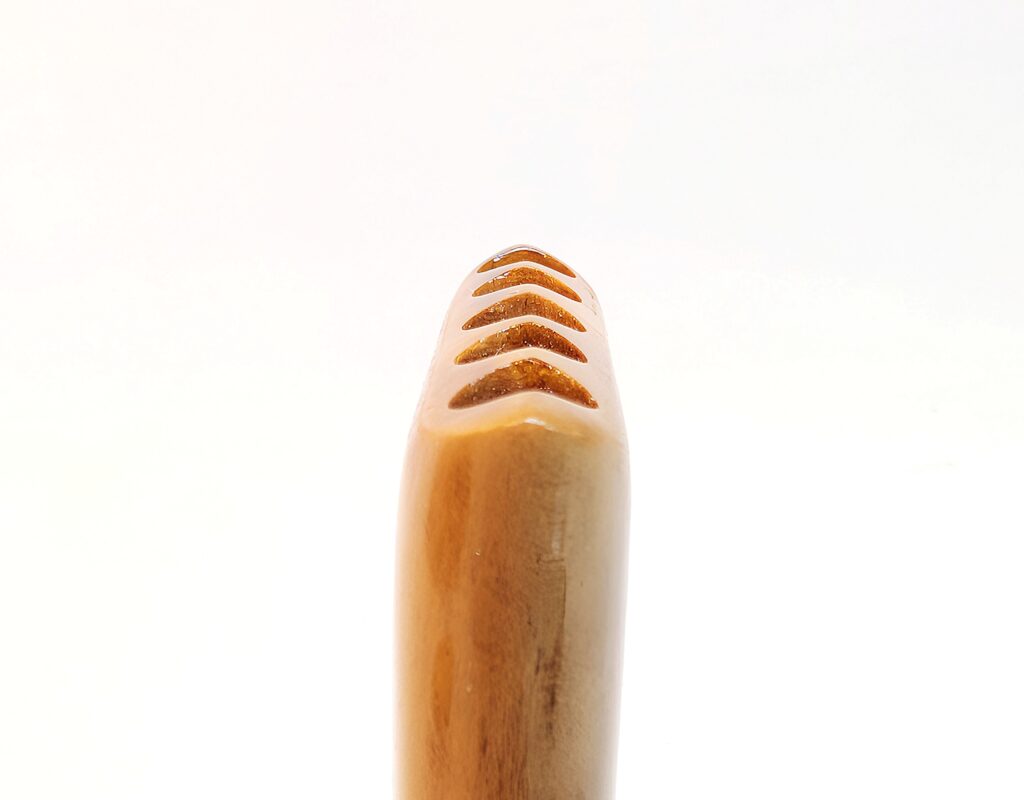
In regards to tuning, because the historical tuning of the original artifact might not appeal to everyone, I have decided to offer three different models of tuning for customers to explore: a modern A-minor tuned model reflecting the spirit of the original design, a modern A-major tuned model for those who would like the option to explore variations in songs with a more upbeat feel, and an authentic historical tuned model, in which I replicate the actual bore depths to reflect the genuine tuning of the historical artifact for those who would like to explore the original model and potential of the instrument as it was originally made. As a note, all three models look exactly the same from the outside, accurately replicating the subtle features, curves, and dimensions of the original historical artifact, and can be made from the same exact woods – the only difference is in the tuning of the bored pipes in the body.
THE WOODS
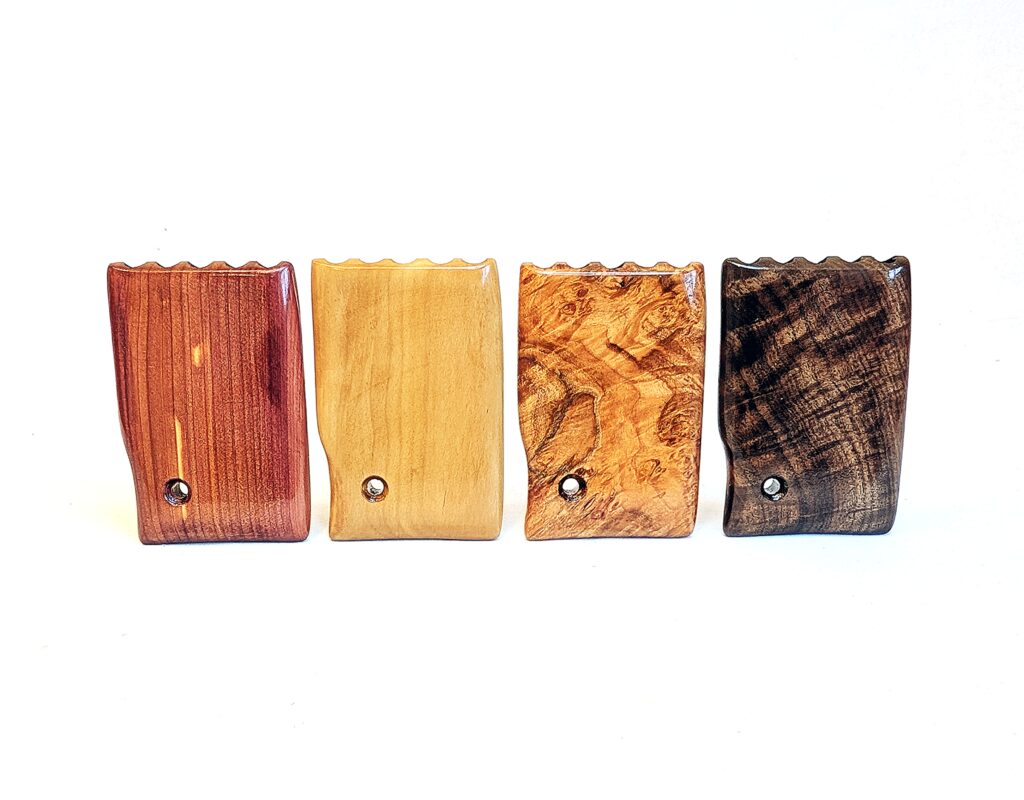
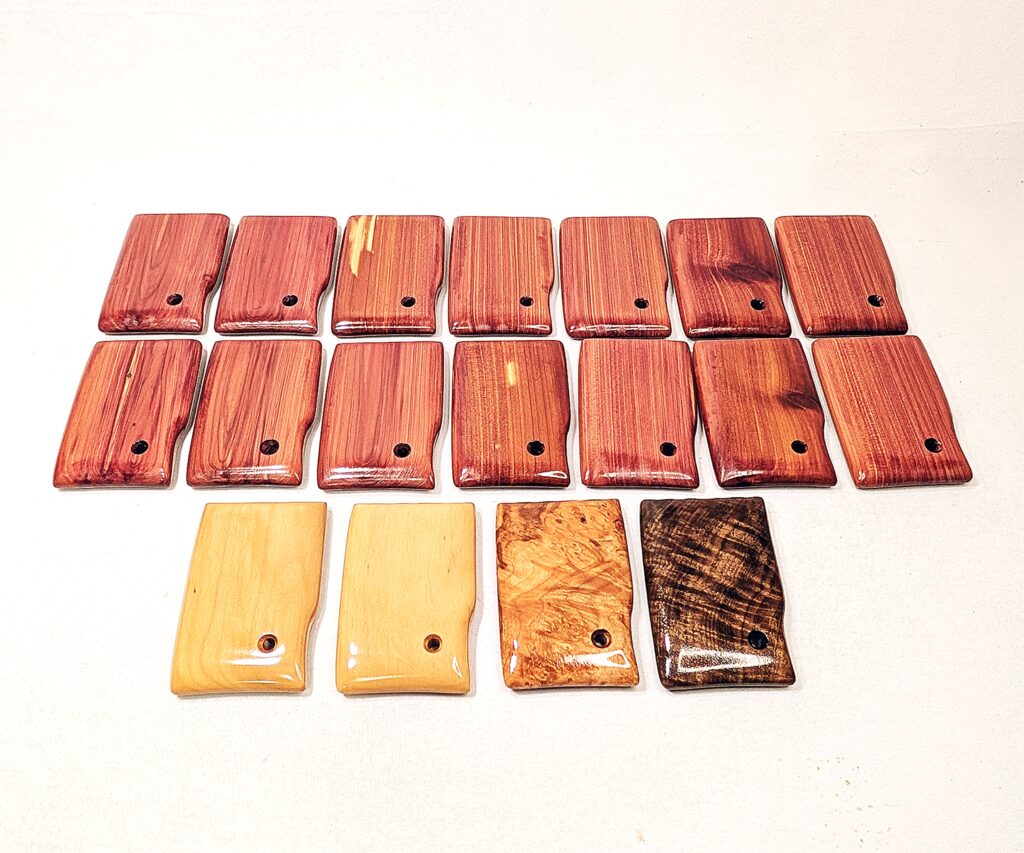
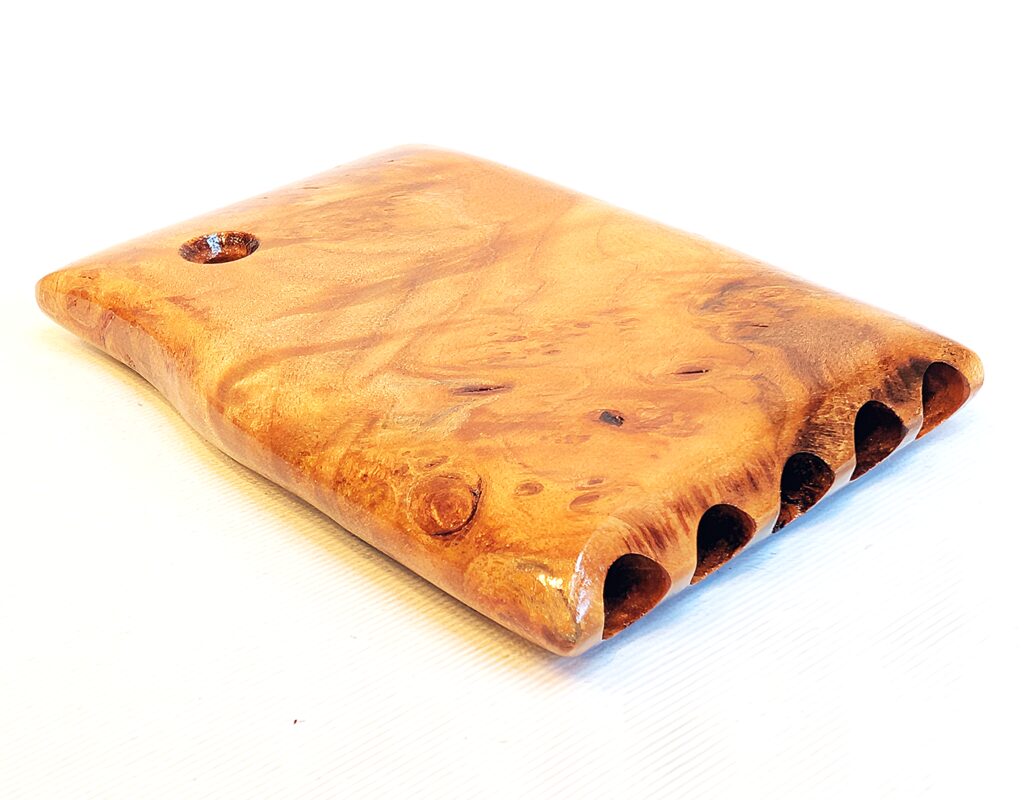
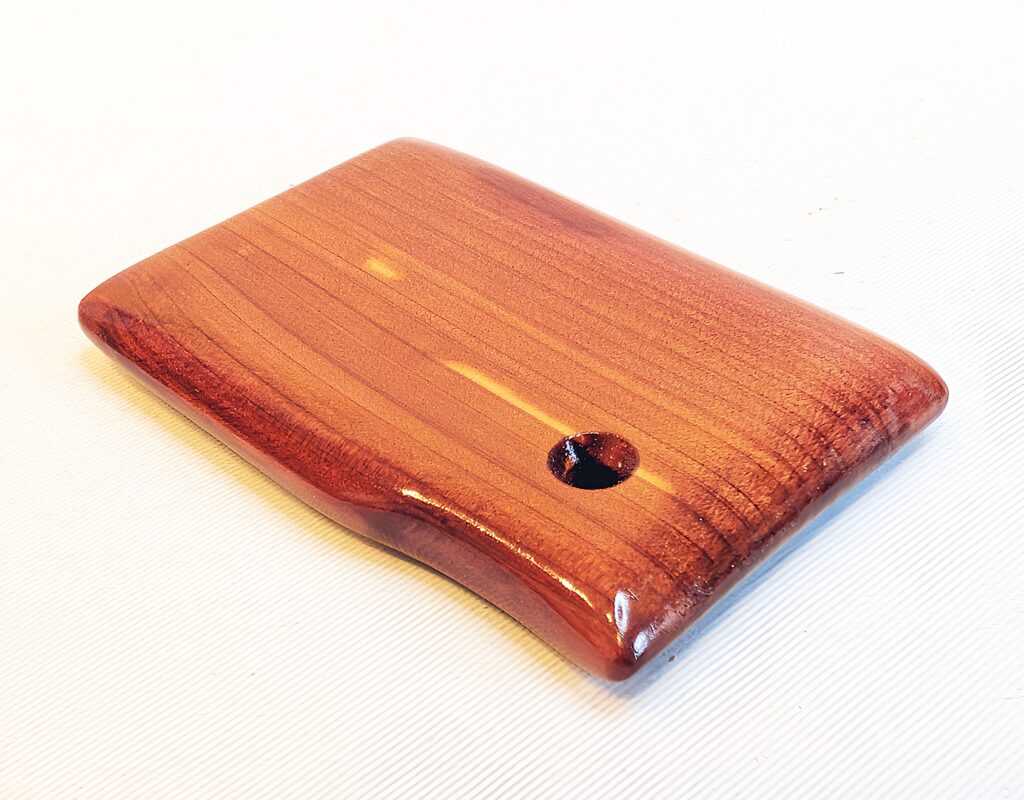
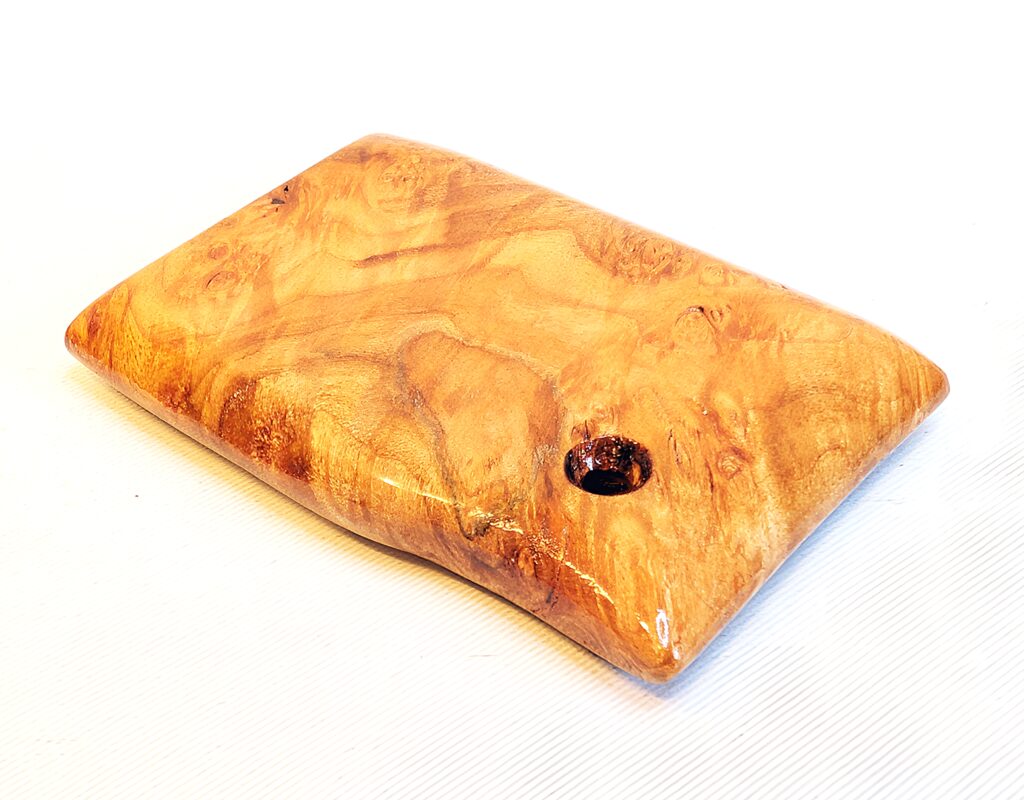
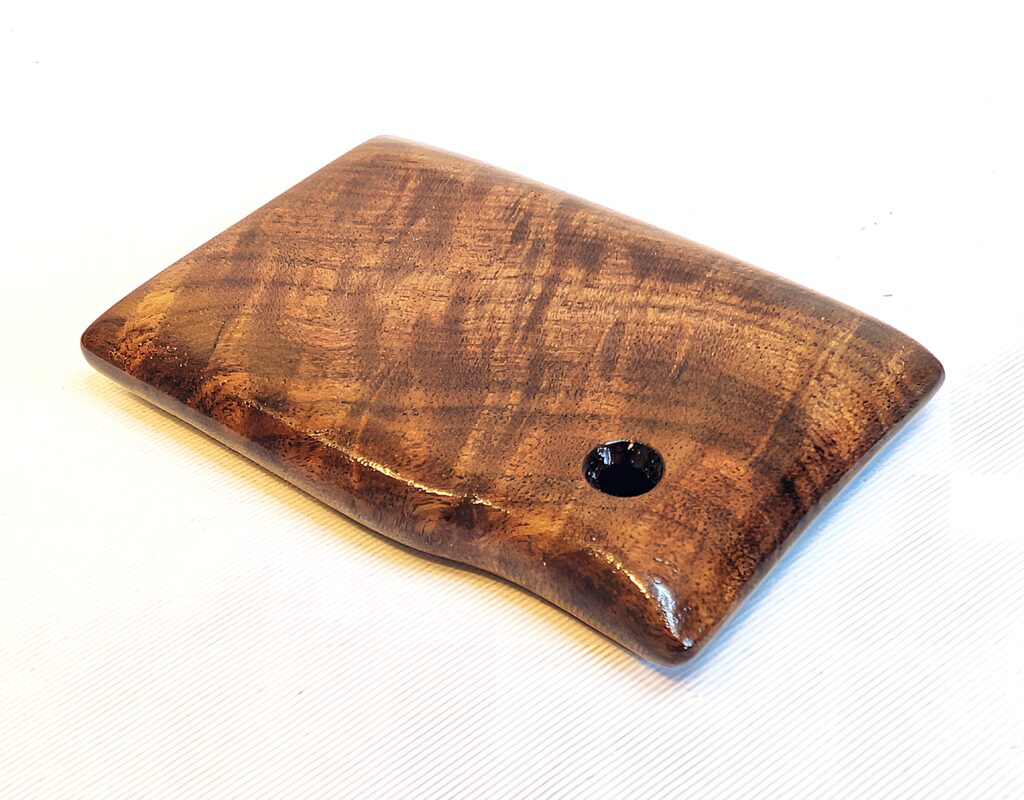
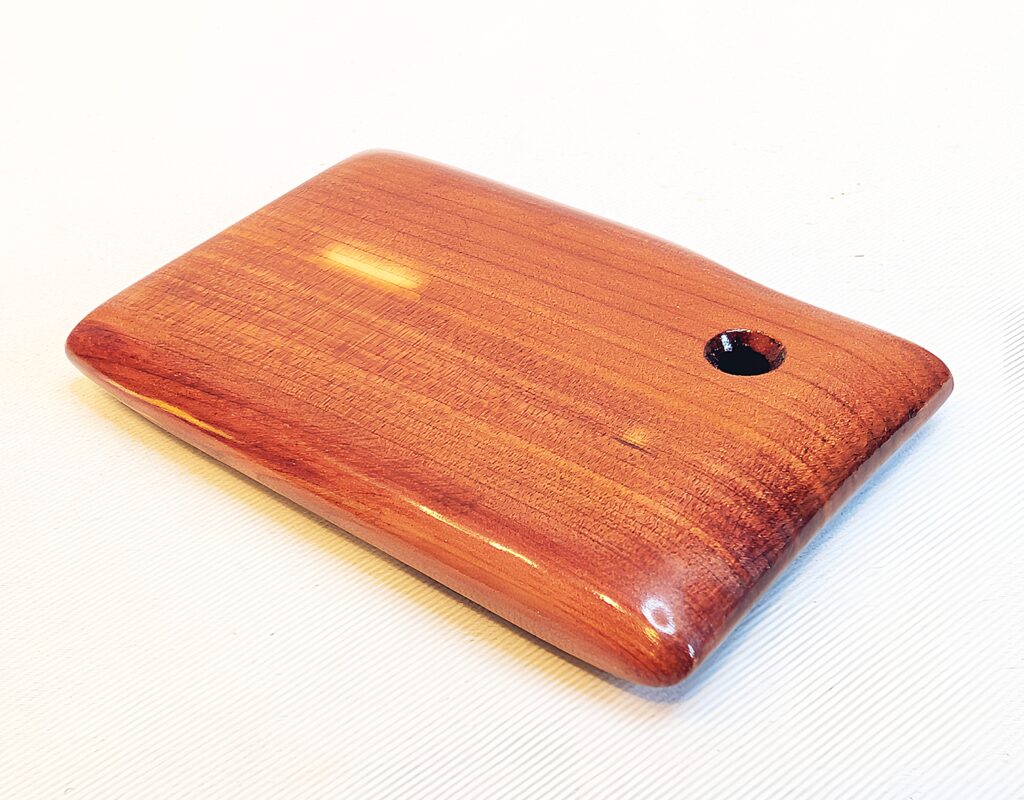
Like my flagship ocarina and xun builds, the Jorvik panpipe can be made from virtually any wood in the world as long as I can source it. However, it should be noted that unlike vessel flutes, which will still work perfectly fine with natural checks, voids, and inclusions, the wood for the panpipe must be clean without any cracks or defects, as the slightest void or crack in the walls of the bored tubes will render the tube unplayable. Therefore, for specialty woods like burls, more care will be needed in the selection of the wood. In the case of large internal checks and voids, I do a pre-drilling, then back fill and stabilize the bore with deep pour epoxy, followed by a full redrilling. However, the Jorvik panpipe will sound bold and loud regardless of wood used, and while each wood will impart a different subtle flavor and feel to the tone, both soft and hard woods will make equally fine instruments. Upon request, for the most authentic historical models, I can replicate the original design and tuning in a true boxwood (as supplies permit), even including the original markings found on the surface of the panpipe from the dig.
THE MODELS
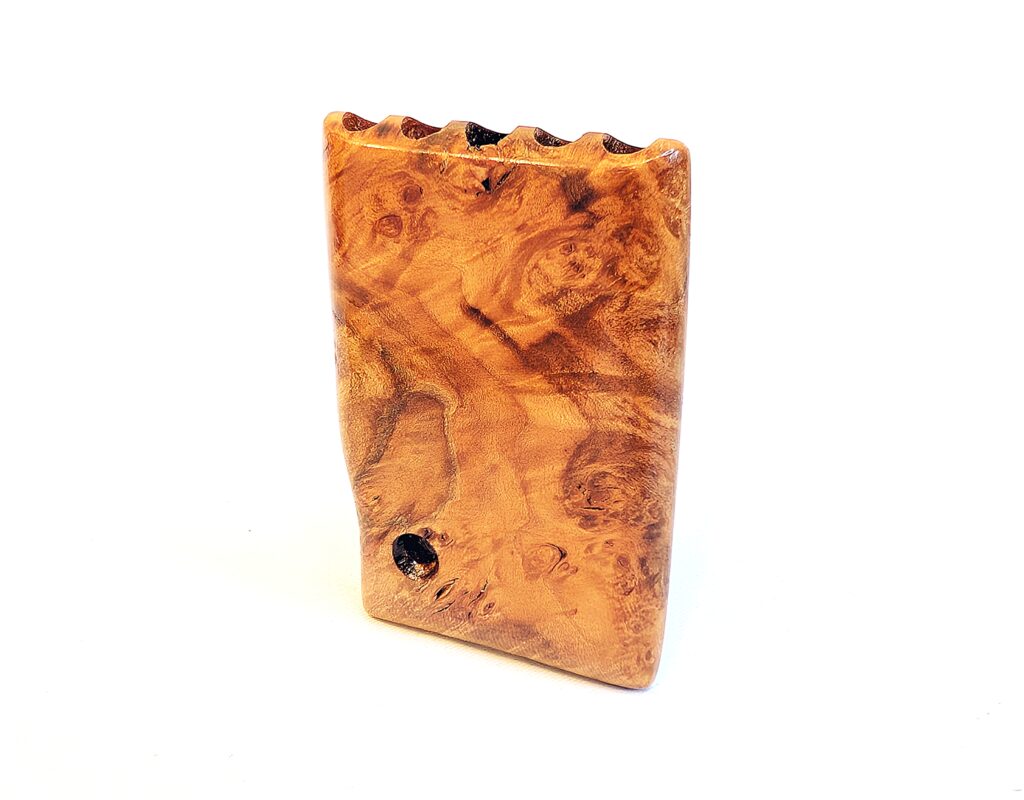
MODERN A-MAJOR MODEL
Tuned to A4=440Hz major scale, this tuning has a very upbeat, and provides a different feel and compliment to the minor tuned scale, offering versatility and flexibility in playing and composing simple melodies for this panpipe. With bending techniques, all accidentals between the five fundamental notes can be played, and the historical tuning can be still replicated.
Notes are as follows: A5, B5, C#6, D6, E6
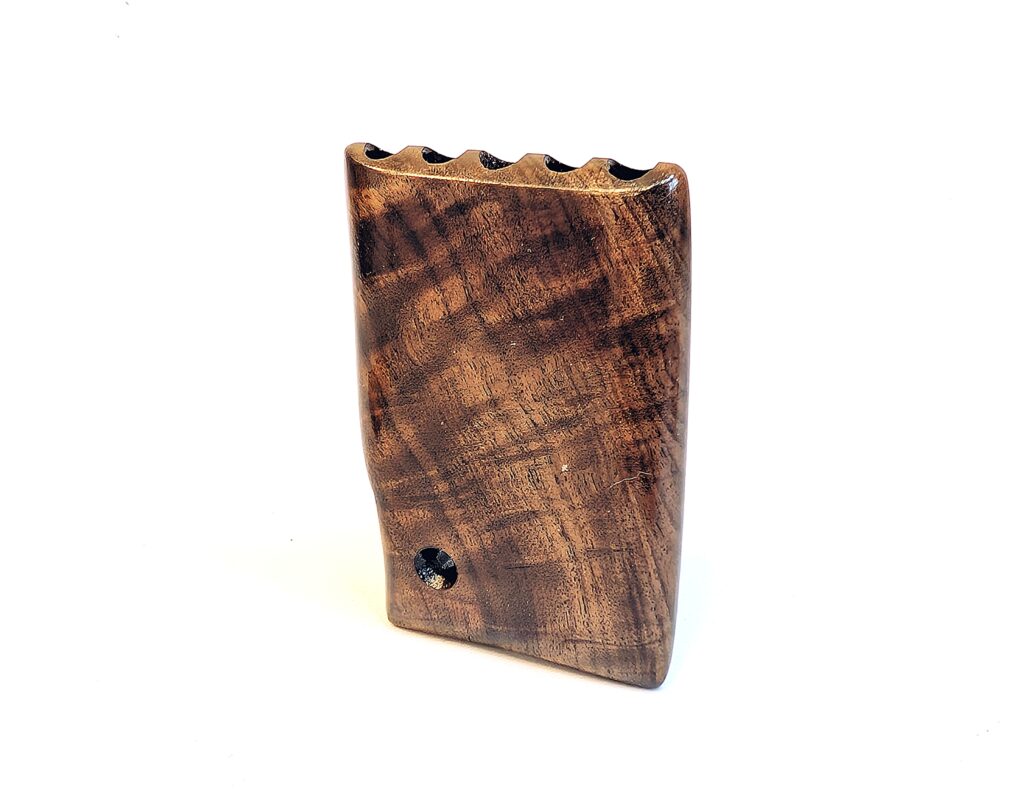
MODERN A-MINOR MODEL
Tuned to A4=440Hz minor scale, this tuning is a bit closer to the original historical tuning while offering more versatility and flexibility in playing and composing simple melodies for this panpipe. With bending techniques, all accidentals between the five fundamental notes can be played, and the historical tuning can be still replicated.
Notes are as follows: A5, B5, C6, D6, E6
HISTORICAL TUNING MODEL
Following the original bored pipe depths, with the tapered profile of end ends of each bore modeled out using analysis and approximated step drilling to match Viking spoon augers, this tuning is the most authentic and closest model to the real Jorvik panpipe. However, it should be noted that the original tuning uses a rather unconventional interval, which while more close to the minor scale, is not quite exactly the same, and may sound “out-of-tune” to most modern ears. As a result, this model is recommended for those who are looking for a very accurate historical replica, or those who would like to explore the music and tuning in a historical context. The historical tuned model brings to light what the Vikings may have played 1000 years ago.
Notes are as follows: A5, B5 (-30-50c), C6, D6 (-30-50c), E6
FINISH
Each panpipe is fully sealed on the inside of the tube bores with several coats of high grade shellac to protect the bores from moisture during regular practice. For the outside, I offer two styles of finish. The first is several layers of hand wiped oil-based hardening varnish which I use for most of my instruments, which penetrates into the wood to not only bringing out the beauty of each wood used even more, but provides a hard, durable, and glossy finish for a modern look. The second is a 100% pure tung oil finish, hand rubbed with at least 10 coats and cured for 30 days. This finish provides an extremely smooth, silky, and extremely natural feel of the wood itself, with a more raw matte finish. While this finish does not provide as much protection as my varnish finish, and should be maintained over time, it provides for a more authentic feel, and is especially well suited for historical tuned models, as well as enhancing the beauty of certain woods like ancient bog oak, where the richness in texture may otherwise be lost to a glossy varnish. While the finishes provide extra moisture protection, please refrain from getting the instrument excessively wet.
GENERAL CARE
After each playing session, you should let the panpipe air-dry, giving it a good shake to remove excess moisture from the tubes. If cleaning is required, both the inside of the tubes as well as the outside may be sterilized with a very lightly dampened cloth or paper towel using a dilute mixture of water and dish detergent. Like any wooden flute, it is best to keep the panpipe out of excessively cold or hot environments for extended periods of time, and if the panpipe has been traveling in a cold environment, allow it to warm back up prior to playing, and take care to refrain from playing the panpipe in the cold winter air. For panpipes finished with pure tung oil, it is recommended to reapply a few coats at least once a year for maintenance, and I can provide additional instructions on my recommendations for this as needed. Each panpipe also comes with a waxed cotton cord for wearability, making it a fantastic musical companion for the everyday musician, as well as a carrying pouch for travel. With proper care, your Jorvik panpipe replica will enjoy years of wonderful music that you can treasure and discover a unique voice with!
GALLERY